
Albania Unrest Intensifies as Rama Defies Resignation Demands Amid Violent Clashes
Albanian security forces clashed with demonstrators in Tirana as Prime Minister Edi Rama refused calls to resign, threatening foreign direct investment and European integration timelines.
Geopolitical & Core Developments
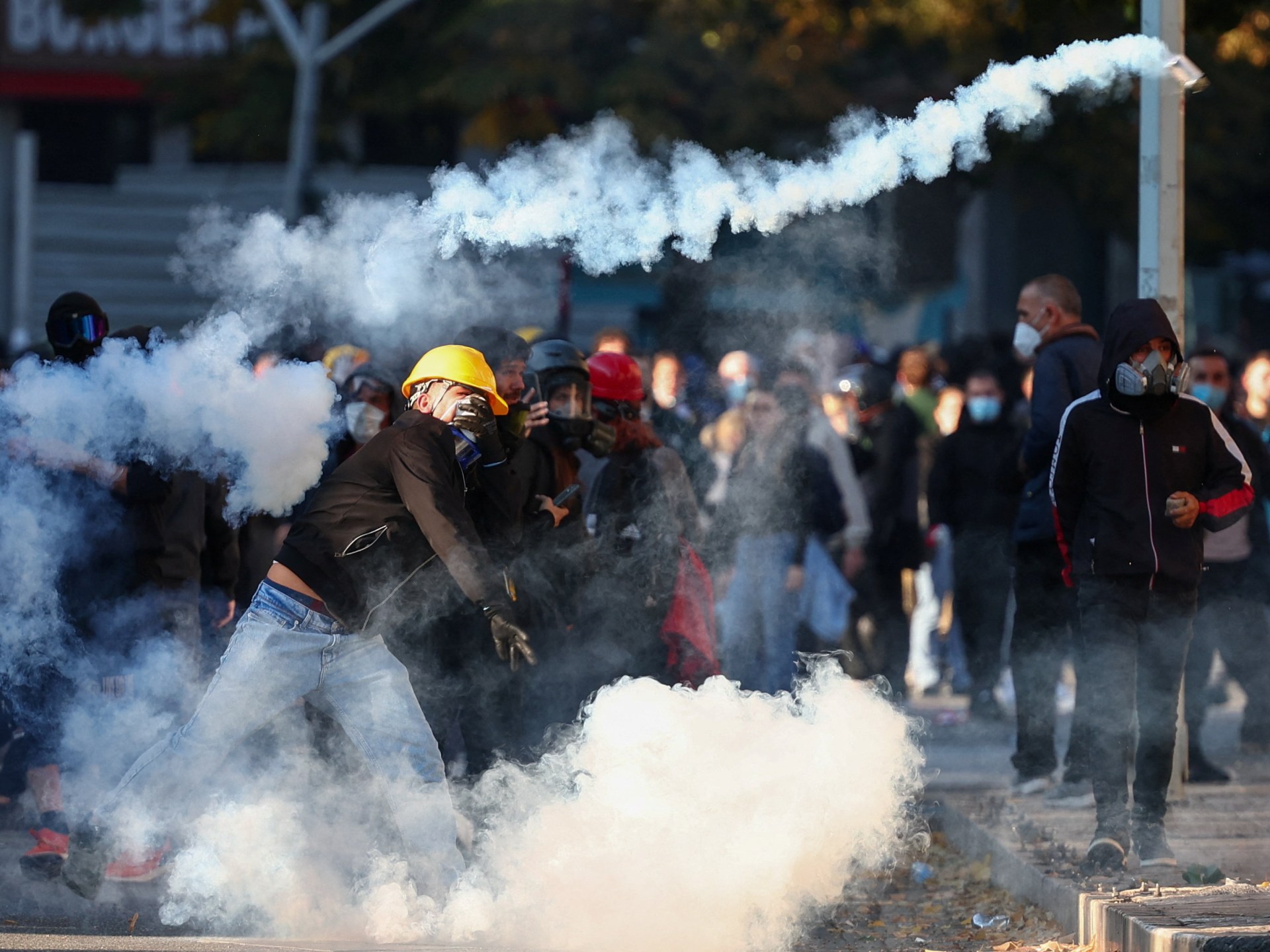
Tirana has entered its sixth consecutive day of intense civil unrest as security forces engaged in severe crackdowns against hundreds of anti-government demonstrators. Law enforcement units deployed rubber bullets, water cannons, and sustained volleys of tear gas to disperse crowds attempting to breach security perimeters around key government installations, including the Prime Ministry and parliament buildings. Protesters, coalescing under a broad opposition coalition alongside civil society groups, continue to demand the immediate resignation of Prime Minister Edi Rama over systemic corruption allegations, electoral irregularities, and deteriorating economic conditions.
Prime Minister Rama has maintained an unyielding stance, firmly rejecting calls to resign or dissolve parliament to trigger snap elections. Rama's administration has characterized the sustained demonstrations as orchestrated attempts by political opponents to subvert democratic processes through extra-parliamentary violence. The confrontation marks one of the most volatile domestic political crises in Albania in recent years, testing the resilience of state institutions and threatening to destabilize the strategic Western Balkan nation, which serves as a vital NATO link in southeastern Europe.
Global Trade & Economic Ripples
While Albania's economy accounts for a modest share of direct global trade, prolonged instability carries notable downstream implications for regional supply corridors and energy integration. Albania occupies an increasingly pivotal geographic position for European energy diversification, serving as an entry conduit for the Trans Adriatic Pipeline (TAP), which transports natural gas from the Caspian region to Western European markets. While pipeline facilities remain operational and protected, acute unrest raises investor risk premiums across sovereign debt markets and energy infrastructure projects throughout the Adriatic-Ionian corridor.
International logistics operators and maritime freight companies are monitoring potential disruptions to the Port of Durrës, Albania's primary commercial maritime hub. Persistent domestic disruption risks creating logistics bottlenecks for landlocked Balkan neighbors, notably North Macedonia and Kosovo, which rely on Albanian transport arteries for bulk commodity imports, building materials, and refined fuel products. Furthermore, persistent violence risks deterring foreign direct investment across renewable energy initiatives and mining concessions, sectors critical to Tirana's medium-term fiscal stabilization.
Related Intelligence: Albanian Political Unrest Intensifies as Protests Demand Prime Minister Rama Resignation
International Reactions & Diplomatic Stances
The escalation has prompted cautious, urgent messaging from international stakeholders. The European Union delegation in Tirana issued an official communique urging maximum restraint from both security personnel and demonstrator leadership. The bloc emphasized that while peaceful assembly remains a fundamental democratic right, violent assaults on public infrastructure undermine the rule of law. EU officials warned that prolonged political deterioration could introduce complications into technical accession negotiations currently underway in Brussels.
The United States Embassy in Tirana echoed appeals for de-escalation, reiterating support for legal, institutional avenues to resolve governance disputes while cautioning against excessive police force. Conversely, regional analysts observe that institutional deadlock and protracted street confrontations could provide geopolitical room for non-Western powers to expand their influence in the Western Balkans, exploiting governance voids to weaken transatlantic coordination across the region.
Strategic Outlook & Future Scenarios
The trajectory of the crisis will depend on whether opposition factions can sustain mobilization against escalating police countermeasures. A continued hardline posture by the Rama administration, without opening credible dialogue channels, risks institutional paralysis and further violent friction. In the short term, emergency parliamentary sessions or mediation attempts by European intermediaries represent the primary mechanism to de-escalate tensions before regional spillover occurs.
Should demonstrations expand beyond the capital into peripheral industrial and port districts, external credit rating agencies may reassess Albania's sovereign outlook, raising borrowing costs on international sovereign bond markets. Unless institutional compromise emerges, the standoff threatens to stall crucial judicial and governance reforms mandated by the European Commission, effectively delaying Tirana's path toward formal European integration.
Join Our Official WhatsApp Channel
Receive live commodity alerts, policy changes, and commercial intelligence directly on WhatsApp.