
Prime Minister Inaugurates Islamabad Daanish School to Expand Educational Access
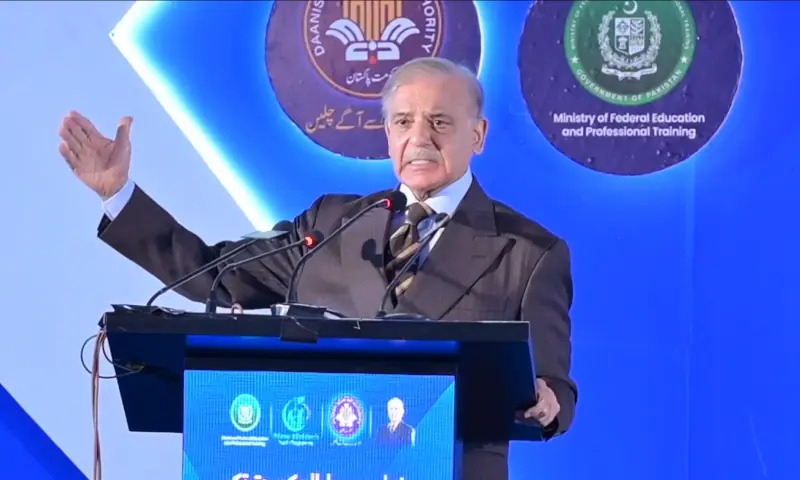
Prime Minister Shehbaz Sharif has inaugurated a new Daanish School campus in Islamabad, expanding the specialized boarding school model designed to provide underprivileged students with high-standard academic facilities.
The Core Development
Prime Minister Shehbaz Sharif on Sunday formally inaugurated a state-of-the-art Daanish School campus in Islamabad, marking the institutional expansion of the flagship public boarding school network into the federal territory. Originally launched during his tenure as Chief Minister of Punjab, the Daanish School Authority model offers comprehensive, fully funded residential education, nutrition, healthcare, and advanced pedagogical tools to high-achieving students from low-income households.
Speaking at the inauguration ceremony in the federal capital, the prime minister emphasized that the project seeks to bridge Pakistan's persistent socio-economic divide by providing marginalized children with academic facilities benchmarked against the country's most elite private institutions. Highlighting the long-term impact of the program, Sharif referenced notable alumni trajectories, including female graduates from remote regions such as Khyber Pakhtunkhwa and southern Punjab who overcame severe socio-economic adversity to secure admissions into professional medical and engineering colleges. The federal rollout forms part of a broader strategy to establish similar centers of excellence in underdeveloped administrative divisions, including Balochistan, rural Sindh, Gilgit-Baltistan, and Azad Jammu and Kashmir.
Commercial & Economic Implications
From a macroeconomic perspective, investments in targeted human capital development carry direct structural implications for Pakistan's labor productivity, income mobility, and economic modernization. Prolonged underinvestment in basic and secondary education has historically limited the supply of skilled human resources, creating persistent productivity bottlenecks across manufacturing, trade, and professional services. Initiatives that build high-caliber foundational skills among underprivileged demographics help correct systemic labor-market asymmetries over the multi-decade horizon.
However, the fiscal mechanics of the Daanish School framework continue to draw analytical scrutiny from public finance economists. Capital-intensive boarding school models require significant per-student operational allocations compared to standard municipal primary and secondary schools. With the federal budget constrained by strict fiscal consolidation targets under the International Monetary Fund Extended Fund Facility, allocating dedicated resources to specialized public institutions tests fiscal bandwidth. For local commercial suppliers, construction contractors, and educational procurement vendors, the institutional expansion generates short-term public procurement cycles, particularly for construction materials, specialized equipment, digital learning devices, and institutional catering logistics.
Related Intelligence: Nationwide French Riots Erupt Amid Escalating Civil Unrest and Economic Fallout
Stakeholder Perspectives & Market Reactions
Policy analysts and education advocates have offered mixed perspectives on the expansion. Proponents argue that high-standard boarding institutions are essential for breaking intergenerational poverty cycles, providing gifted students from vulnerable backgrounds with protective, resource-rich academic environments that local non-residential state schools cannot match.
Conversely, several development economists and public expenditure monitors have argued that public funding should prioritize the rehabilitation of Pakistan's estimated tens of thousands of underfunded, non-functional primary schools. Critics contend that per-capita spending on Daanish School beneficiaries creates isolated islands of educational excellence, whereas systemic sector-wide reforms are required to resolve the national crisis of millions of out-of-school children. Meanwhile, regional business communities and trade bodies have welcomed the emphasis on meritocratic educational access, urging federal authorities to integrate technical, digital, and vocational training into the secondary school curriculum to align graduates directly with private-sector workforce requirements.
Forward Outlook & Key Watchpoints
Moving forward, the federal administration's execution timetable for expanding the network across peripheral regions will serve as a primary indicator of policy commitment. Observers are closely tracking whether budgetary outlays for the planned campuses in Balochistan and Azad Jammu and Kashmir will be protected within forthcoming fiscal appropriations.
Key watchpoints include the governance and administrative independence of the federal Daanish School setup, public-private partnership models for operational sustainability, and measurable outcome metrics such as standardized examination performance and university transition rates. In the near to medium term, market observers and institutional stakeholders will assess whether the federal government can strike a sustainable balance between targeted excellence initiatives and broad-based public schooling reforms amid structural economic adjustments.
Join Our Official WhatsApp Channel
Receive live commodity alerts, policy changes, and commercial intelligence directly on WhatsApp.