
ADB and World Bank Eye $6.8bn ML-1 Railway Revamp
International lenders, led by the ADB and World Bank, have expressed strong interest in financing Pakistan's revised $6.8 billion ML-1 railway project following the withdrawal of Chinese funding.
The Core Development
In a major shift for Pakistan's national infrastructure landscape, international financial institutions have stepped forward to rescue the strategic Main Line-1 (ML-1) railway project. Originally conceptualized under the China-Pakistan Economic Corridor framework, the 1,800-kilometer Karachi-Peshawar railway corridor faced uncertainty following the withdrawal of Chinese financing. However, fresh momentum has emerged as multilateral lenders signal readiness to bridge the funding gap, recalibrating the project cost to a revised estimate of $6.8 billion.
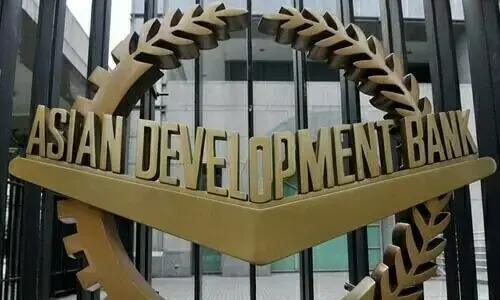
During a high-level briefing to the National Assembly’s Standing Committee on Economic Affairs, led by Committee Chairman Mirza Ikhtiyar Baig, the Economic Affairs Division (EAD) detailed the shifting financial architecture of the megaproject. EAD Secretary Humair Karim informed lawmakers that the Asian Development Bank (ADB) is currently positioned as the lead financing institution for the overhaul. Furthermore, substantial co-financing commitments have been secured from the Asian Infrastructure Investment Bank (AIIB) and the World Bank.
Beyond the primary consortium, international diplomatic and financial circles have shown broad interest. The European Investment Bank, the Islamic Development Bank, and the Japan International Cooperation Agency have all communicated their willingness to evaluate participation in various segments of the sprawling 1,800km transit upgrade, signaling robust global confidence in the strategic imperative of Pakistan's primary trade artery.
Commercial & Economic Implications
For Kalyar Traders and the wider Pakistani business community, the modernization of the ML-1 corridor carries profound commercial ramifications. Currently, Pakistan's logistics sector remains heavily reliant on road transport, which suffers from high fuel costs, rapid wear and tear on national highways, and significant transit delays. Shifting freight to a high-capacity, upgraded rail network promises to fundamentally slash transportation expenditures for wholesale distributors and retail supply chains.
Efficient freight movement across the Karachi port gateway up to Peshawar will directly reduce landed costs for imported raw materials and domestic agricultural produce. Lower logistical friction translates into tempered inflationary pressures across retail markets. Wholesale distribution networks, which currently absorb heavy overheads due to congested transport bottlenecks, stand to benefit from predictable, high-volume cargo schedules. By lowering the cost of doing business, the ML-1 project serves as a vital structural catalyst for industrial competitiveness.
Related Intelligence: Mali Marks 66th Independence Anniversary Amid Deepening Security and Trade Crisis
Stakeholder Perspectives & Market Reactions
Business and trade bodies across Sindh and Punjab have welcomed the involvement of multilateral lenders, viewing the transition from bilateral debt to institutional consortium funding as a stabilizing factor. Industry representatives have emphasized that institutional lenders like the ADB and World Bank typically enforce rigorous governance, transparency, and execution standards, which could mitigate historical delays plaguing public-sector megaprojects.
At the same time, fiscal analysts caution that multilateral financing will require stringent adherence to structural reforms, tariff rationalization, and operational restructuring of Pakistan Railways. Legal and financial experts note that while multi-agency co-financing dilutes individual risk exposure, coordinating between the ADB, World Bank, and AIIB demands flawless bureaucratic alignment from Islamabad to prevent administrative gridlock.
Forward Outlook & Key Watchpoints
As the EAD finalizes negotiations with the lead lenders, the immediate focus shifts to structuring the definitive loan agreements and finalizing the engineering, procurement, and construction frameworks under the revised $6.8 billion envelope. Key watchpoints for investors and market watchers include the finalization of lead lender mandates, the formalization of co-financing ratios, and the release of updated project execution timelines.
Policy enforcement and institutional oversight will remain critical as Pakistan transitions from preliminary interest to binding financial commitments. If executed efficiently, the ML-1 modernization will redefine the nation's economic geography, anchoring long-term trade resilience and supply chain modernization for decades to come.
Join Our Official WhatsApp Channel
Receive live commodity alerts, policy changes, and commercial intelligence directly on WhatsApp.