
Twin Cities Paralysis: Security Lockdown Chokes Islamabad and Rawalpindi
Islamabad and Rawalpindi face severe disruptions and heavy security lockdowns as authorities deploy thousands of containers and request Rs827 million to counter anticipated political marches.
The Core Development
Residents of the twin cities of Islamabad and Rawalpindi are bracing for significant civil disruption as security forces implement unprecedented lockdown measures to forestall planned political demonstrations. Law enforcement agencies have intensified preparations along major arterial routes, deploying over 2,000 shipping containers at strategic choke points across the capital and at the vital Attock Bridge, which serves as a primary gateway linking Punjab with Khyber Pakhtunkhwa and northern Pakistan.
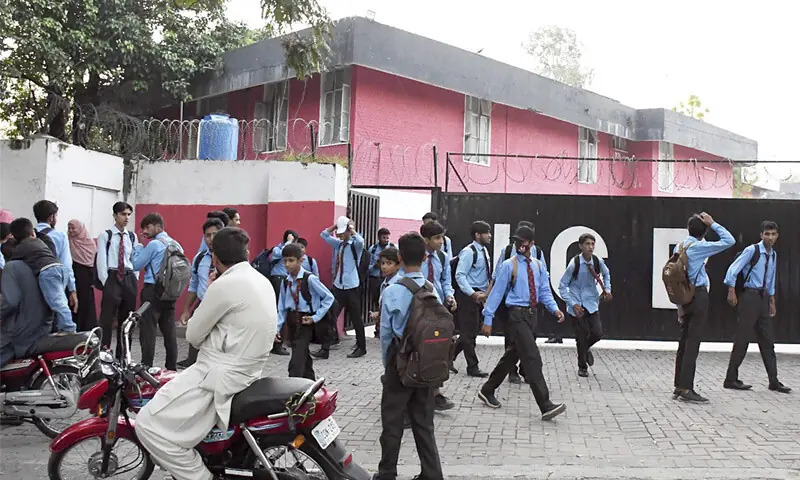
According to internal security assessments, the Islamabad police anticipate a mobilization of 20,000 to 25,000 protesters affiliated with opposition groups, notably the Pakistan Tehreek-i-Insaf (PTI) and Jamaat-i-Islami. To accommodate incoming reinforcements from peripheral law enforcement units, educational institutions including schools and colleges designated for personnel housing have been abruptly closed, severely disrupting academic schedules. Concurrently, the Islamabad Capital Territory (ICT) police have formally requested an emergency budgetary allocation of Rs827 million to defray operational expenditures, including logistics, fuel, anti-riot gear, and allowances for deployed personnel.
Commercial & Economic Implications
Repeated political confrontations and security lockdowns inflict severe collateral damage on the commercial vitality of the twin cities and national supply chains. The erection of barricades and closure of major highways immediately paralyzes wholesale distribution networks and retail trade across Rawalpindi's bustling commercial hubs, such as Raja Bazaar and Committee Chowk, as well as Islamabad's industrial and commercial centers.
Transport operators face steep losses due to route diversions and prolonged transit delays, driving up freight costs that inevitably trickle down to retail prices for perishable goods and consumer staples. Furthermore, restricted mobility dampens consumer sentiment and retail footfall, translating into daily revenue losses running into billions of rupees for small and medium-sized enterprises (SMEs). For a national economy striving to stabilize inflation and stimulate private sector growth, recurrent logistical paralysis acts as a severe tax on commercial productivity.
Related Intelligence: Security Forces Neutralize Four Terrorists in Panjgur Intelligence Operation
Stakeholder Perspectives & Market Reactions
Business councils, trader associations, and industrial bodies have expressed deep dismay over the preemptive shutdowns. Representatives from the Rawalpindi Chamber of Commerce and Industry (RCCI) noted that containerization and road blockades effectively impose an undeclared curfew, strangling supply chains originating from the north. Traders argue that while political entities pursue their objectives, the mercantile community bears the brunt of economic stagnation and physical property risks.
Legal experts and civil society organizations have raised concerns regarding the proportionality of restricting fundamental freedoms of movement and education. Meanwhile, official administrative sources defend the heavy policing and container deployment as a necessary deterrent to maintain public order, protect critical state installations, and prevent property destruction during the height of political agitation.
Forward Outlook & Key Watchpoints
As security forces maintain high alert status across Islamabad and Rawalpindi, the immediate trajectory depends on political negotiations and the actual mobilization capacity of opposition parties. Key indicators to monitor include the formal approval and disbursement of the requested Rs827 million security supplementary grant, potential adjustments to container cordons by district administrations, and the duration of educational institution closures. Long-term, repeated security expenditures underscore the urgent need for sustainable political dialogue to insulate commercial centers from cyclical bouts of civil unrest.
Join Our Official WhatsApp Channel
Receive live commodity alerts, policy changes, and commercial intelligence directly on WhatsApp.