
Warren Buffett Steps Down After Six Decades Reshaping Global Commerce
Warren Buffett has concluded his sixty-year tenure at Berkshire Hathaway, marking a seismic leadership transition that reshapes capital allocation, international energy investments, and global supply chain logistics.
Geopolitical & Core Developments
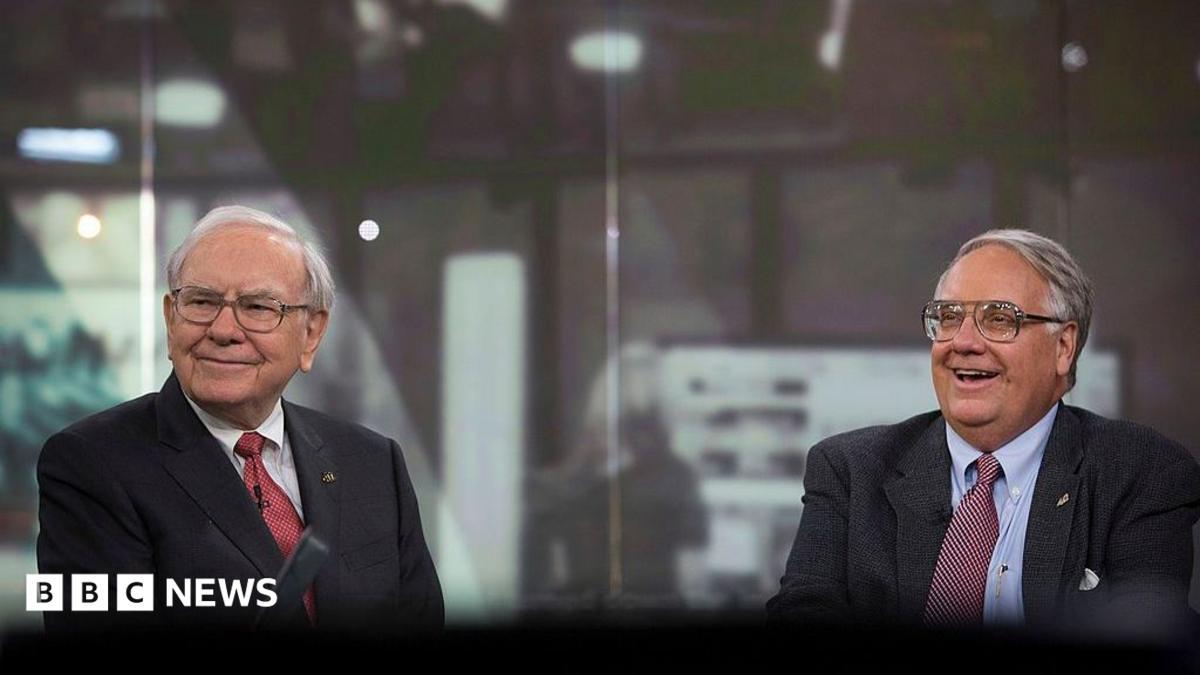
Warren Buffett has officially concluded his sixty-year reign at the helm of Berkshire Hathaway, finalizing a leadership succession that reverberates throughout international financial markets and cross-border commercial networks. Taking control of a declining Massachusetts textile manufacturing firm in 1965, Buffett systematically engineered one of the most diversified conglomerates in economic history, culminating in a market capitalization approaching one trillion dollars. Citing the inescapable reality that father time remains undefeated, the ninety-four-year-old investor transfers executive leadership to Vice Chairman Greg Abel, who has long directed Berkshire's non-insurance operations, while Ajit Jain retains oversight of the expansive insurance underwriting apparatus.
Berkshire Hathaway does not function merely as an asset manager; it represents a sovereign-grade corporate balance sheet. With an unprecedented cash hoard surpassing three hundred billion dollars, Berkshire's capital deployment maneuvers have historically counterbalanced broader market dislocations, functioning as a de facto private liquidity backstop during systemic banking disruptions and debt crises. The departure of corporate capitalism's most influential figure comes at an inflection point characterized by geoeconomic fragmentation, industrial policy rivalries between Washington and Beijing, and sweeping reconfiguration across sovereign credit landscapes.
Global Trade & Economic Ripples
Berkshire's operations occupy structural choke points across global commerce, making this transition intensely relevant to international supply chains and commodity flows. Its wholly owned subsidiary, BNSF Railway, commands one of the two dominant rail transit corridors in North America, transporting massive volumes of metallurgical coal, grains, agricultural inputs, and intermodal freight connecting Pacific West Coast ports to the American heartland. Any long-term strategic adjustments to capital expenditure at BNSF directly influence transatlantic and transpacific shipping economics, container dwell times, and freight parity.
Simultaneously, Berkshire Hathaway Energy operates extensive power generation assets, pipeline networks, and natural gas storage capacity across North America and Great Britain. In tandem with Berkshire's aggressive investments in major Japanese trading houses—including Mitsubishi Corporation, Mitsui & Co., Itochu, Marubeni, and Sumitomo—the conglomerate remains deeply entrenched in the procurement of liquefied natural gas, base metals, fertilizer feedstocks, and strategic mineral extraction. The transition occurs just as cross-border energy supply contracts face sustained stress from geopolitical friction in Eastern Europe and the Middle East, highlighting Berkshire's exposure to structural energy pricing volatility.
Related Intelligence: Mass Mobilization in Tehran Deepens Geopolitical Strains Across Middle East
International Reactions & Diplomatic Stances
Global financial capitals and institutional allocators responded with deep sobriety to the formalization of Buffett's departure. Trading desks across Tokyo, London, Zurich, and Singapore reported intense institutional focus on whether Berkshire would preserve its conservative, fortress-balance-sheet doctrine under Abel or shift toward dividend distributions and corporate divestitures. Japanese trading entities publicly reaffirmed their long-standing strategic alignment with Berkshire, emphasizing sustained bilateral cooperation in cross-border mineral procurement and renewable infrastructure projects.
Multilateral financial analysts and macroeconomic strategists in Frankfurt and New York observed that the transition marks the definitive sunset of an era defined by passive compounding and predictable globalized trade. Sovereign wealth funds across the Gulf Cooperation Council and Southeast Asia have expressed keen interest in how Berkshire's liquid reserves will be deployed, noting that Buffett's departure removes an irreplaceable metric of psychological stability from Western equity and fixed-income valuation models.
Strategic Outlook & Future Scenarios
In the immediate horizon, Greg Abel faces the formidable mandate of managing an industrial behemoth amid escalating tariff friction, maritime shipping vulnerability, and aggressive reshoring mandates promoted across G7 economies. The central strategic dilemma centers on Berkshire's colossal liquidity reserve. In an environment characterized by elevated interest rates and geopolitical uncertainty, deploying this capital will require navigating complex regulatory scrutiny, intensified antitrust enforcement across major jurisdictions, and escalating technological disruption.
Furthermore, institutional investors will watch closely for any pivot toward activist capital deployment or organizational decentralization. While Abel's background in heavy utilities and industrial logistics ensures continued operational competence across energy and transport, the broader investment community must now navigate a multilateral trade environment devoid of Buffett's stabilizing market interventions. As geopolitical power blocs consolidate, Berkshire's evolution will remain a primary bellwether for real-economy capital resilience across the industrialized world.
Join Our Official WhatsApp Channel
Receive live commodity alerts, policy changes, and commercial intelligence directly on WhatsApp.