
Aleema Khan Detained Under Public Order Ordinance Amid Escalating Political Uncertainty
Lahore authorities have placed Aleema Khan under 30-day preventive detention under public order laws, sparking political frictions that threaten commercial logistics, retail footfall, and market stability across Punjab.
The Core Development
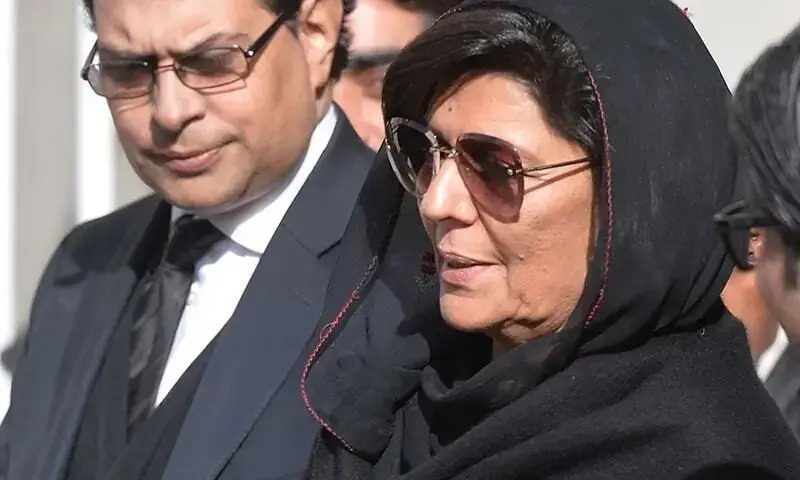
In a sharp escalation of administrative action against the opposition leadership, the district administration of Lahore has ordered the preventive detention of Aleema Khan, sister of incarcerated former prime minister and Pakistan Tehreek-e-Insaf (PTI) founder Imran Khan. The formal order, issued on September 20 by Lahore Deputy Commissioner Muhammad Ali Ijaz, invokes Section 3 of the Punjab Maintenance of Public Order (MPO) Ordinance, 1960, authorising state authorities to detain individuals deemed a risk to public order for an initial duration of 30 days.
The directive also encompasses the arrest of an associate, identified as Muhammad Ameer. Under the stipulations of the administrative order, both individuals are remanded to the custody of the Superintendent of Central Jail, Kot Lakhpat, Lahore. While the statutory framework of the MPO curtails immediate judicial review, the order notes that the detainees retain the legal liberty to submit a formal representation against the detention to the Punjab provincial government. The development was subsequently confirmed by PTI officials via public statements on social media platform X, prompting immediate political friction.
Commercial & Economic Implications
While ostensibly an administrative and legal development, the enforcement of MPO detentions against high-profile political figures carries immediate ramifications for regional commerce, supply chains, and market liquidity across Punjab. Lahore functions as the primary distribution hub connecting central agricultural belts and manufacturing clusters to northern consumer markets. Heightened political friction reliably translates into heightened urban security operations, including road blockades, police checkpoints, and arbitrary container placements on arterial thoroughfares such as the Ring Road and access corridors to the Grand Trunk Road.
For wholesale distribution networks—particularly concentrated in major trade clusters such as Shah Alam Market, Akbari Mandi, and Badami Bagh—abrupt security clampdowns directly restrict the movement of commercial cargo. Inter-city freight operators face operational delays, leading to secondary transport surcharges that inevitably inflate inventory carrying costs for retail distributors. Furthermore, persistent domestic political instability suppresses discretionary retail spending, dampening business confidence and aggravating the working capital constraints already burdening micro, small, and medium enterprises (MSMEs) operating under elevated energy tariffs and double-digit borrowing costs.
Related Intelligence: PTI Claims Aleema Khan Taken into Custody in Lahore
Stakeholder Perspectives & Market Reactions
Legal practitioners and constitutional scholars have expressed ongoing apprehension regarding the executive branch's persistent reliance on the colonial-era 1960 MPO Ordinance. Critics argue that using preventive detention against political figures bypasses standard judicial scrutiny, weakening institutional governance standards that are critical for long-term foreign direct investment and sovereign risk assessments.
Simultaneously, local trader associations in Punjab have voiced private frustration over recurring political flashpoints that routinely precipitate municipal paralysis. Commercial representatives note that market footfall in Lahore’s prime retail corridors drops precipitously whenever major opposition arrests take place, driven by consumer caution and anticipated civil demonstrations. In contrast, administrative officials defend the deployment of the MPO framework as an essential preventative measure designed to preserve public peace, safeguard infrastructure, and deter unauthorized public rallies that could halt economic activity across the provincial capital.
Forward Outlook & Key Watchpoints
The immediate trajectory will depend on the legal recourse initiated by the defense counsel for Aleema Khan. Legal teams are expected to approach the Lahore High Court through constitutional writ petitions under Article 199, challenging the legality of the Deputy Commissioner's detention order on grounds of procedural defect and absence of substantive material evidence.
In parallel, financial and commercial stakeholders must monitor several critical indicators over the coming days. Key watchpoints include potential protest calls from opposition cadres that could disrupt logistics hubs between Lahore, Rawalpindi, and Peshawar. Additionally, market participants should observe inter-bank currency sentiment and sovereign bond spreads, which remain highly sensitive to domestic governance stability amid ongoing macroeconomic stabilization efforts with international multilateral lenders.
Join Our Official WhatsApp Channel
Receive live commodity alerts, policy changes, and commercial intelligence directly on WhatsApp.