
UEFA and CONCACAF Challenge FIFA With Demand for Two Billion Dollar Payout
UEFA and CONCACAF have escalated governance tensions with FIFA, demanding a 2.1 billion dollar capital distribution from accumulated reserves to assist 211 national member associations worldwide.
Geopolitical & Core Developments
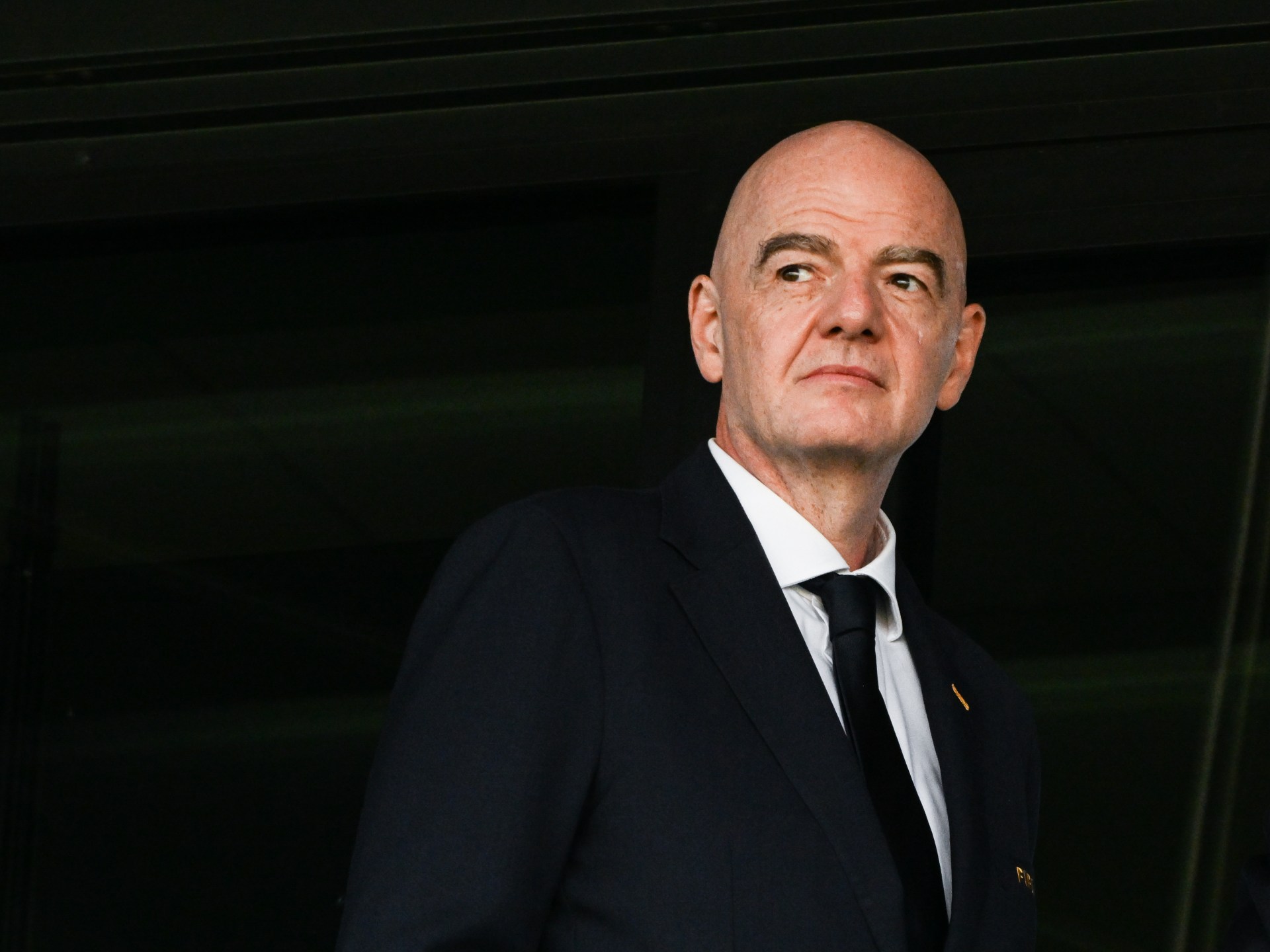
A major institutional fracture has emerged at the apex of international sports administration as UEFA and CONCACAF joined forces to challenge FIFA over the management of its massive sovereign-scale financial reserves. The confederation chiefs have formally called on FIFA President Gianni Infantino to authorize an extraordinary disbursement of 10 million dollars to each of the governing body's 211 member associations, representing a cumulative payout of approximately 2.11 billion dollars. This coordinated maneuver from Europe and North America directly targets Zurich's balance-sheet strategy, exposing severe underlying rivalries regarding fiscal centralization, administrative authority, and political leverage ahead of major global cycles.
The standoff reflects deepening skepticism toward FIFA's accumulation of unprecedented cash reserves, which surpassed several billion dollars on the back of expanded commercial, licensing, and broadcast agreements for flagship tournaments. Western federations contend that retaining excessive capital within Swiss accounts deprives domestic associations of critical liquidity required to sustain grassroots development, operational budgets, and domestic governance in an era marked by persistent operational inflation. Infantino's administration has traditionally defended large cash buffers as vital counter-cyclical stabilization funds to insulate international football against macroeconomic shocks. However, critics view the surplus as a political instrument utilized by Zurich to cultivate institutional patronage among smaller, financially dependent member associations.
Global Trade & Economic Ripples
While ostensibly an internal governance feud, the confrontation over FIFA's liquidity holds direct ramifications for the multi-billion-dollar global sports economy, municipal infrastructure investments, and international service sectors. The international sports industry functions as an economic engine driving multinational sponsorships, sports tourism, transnational media rights, and logistics contracts. Releasing 2.1 billion dollars directly into 211 sovereign jurisdictions would represent a meaningful injection of liquidity into local sport economies, particularly across emerging markets in Africa, Asia, and Latin America where domestic federations grapple with currency devaluations, fiscal deficits, and constrained capital budgets.
Furthermore, the dispute threatens commercial predictability across cross-border broadcast procurement and corporate underwriting. Host economies preparing for the 2026 FIFA World Cup across the United States, Canada, and Mexico rely on collaborative bilateral relations between CONCACAF and FIFA to streamline massive logistical, hospitality, and security operations. Institutional gridlock or regulatory litigation between the principal governing bodies introduces legal frictions that can complicate procurement timelines, cross-border corporate partnerships, and auxiliary infrastructure developments that depend on institutional stability between Zurich and continental administrations.
Related Intelligence: Asian Games 2026 Sparks Fiscal and Logistics Reckoning in Japan
International Reactions & Diplomatic Stances
The coordinated petition represents a notable alliance between European football administrators and their North American counterparts, signaling a unified front against Zurich's unilateral policy trajectory. European officials have long argued that Infantino's expansive calendar initiatives—including the expanded 32-team Club World Cup—jeopardize player welfare and dilute the commercial value of established domestic leagues. By framing the demand around equitable resource redistribution, UEFA and CONCACAF have effectively shifted the political narrative from elite preservation to distributive governance.
Conversely, delegates representing smaller federations throughout Africa and Oceania have displayed caution. Many emerging-market associations rely heavily on FIFA's structured development grants and view the current reserve structure as an indispensable safety net. Legal analysts and financial monitors under Swiss corporate jurisdiction note that while FIFA operates as an association under Article 60 of the Swiss Civil Code, its scale and liquidity render it akin to a transnational enterprise, subjecting its reserve allocation strategies to rigorous scrutiny by audit bodies and institutional stakeholders seeking transparency regarding long-term balance-sheet management.
Strategic Outlook & Future Scenarios
The confrontation is poised to define the agenda of upcoming FIFA governance summits and the subsequent FIFA Congress. In the short term, Infantino's executive team is unlikely to accede entirely to the 2.1 billion dollar demand, as depleting a substantial portion of liquid reserves would constrain Zurich's capacity to underwrite new international competitions or compete with expanding private and sovereign wealth deployments across global athletics. Instead, executive leadership will likely propose a compromised formula featuring expanded developmental tranches tied to rigid administrative milestones.
Should negotiations falter, UEFA and CONCACAF could escalate institutional resistance by withholding regulatory approvals, delaying bilateral scheduling harmonization, or re-evaluating joint commercial ventures. As global sports assets increasingly become instruments of sovereign projection and geopolitical positioning, the battle over FIFA's treasury will serve as a bellwether for the future balance of power between established Western sporting institutions and centralized international federations.
Join Our Official WhatsApp Channel
Receive live commodity alerts, policy changes, and commercial intelligence directly on WhatsApp.