
Punjab Dismisses School Lockdown Rumours Amid Escalating Air Quality Crisis
Punjab Education Minister Rana Sikandar Hayat has refuted reports regarding smart lockdowns in educational institutions, preserving urban commercial activity while provincial authorities explore targeted anti-smog containment measures.
The Core Development
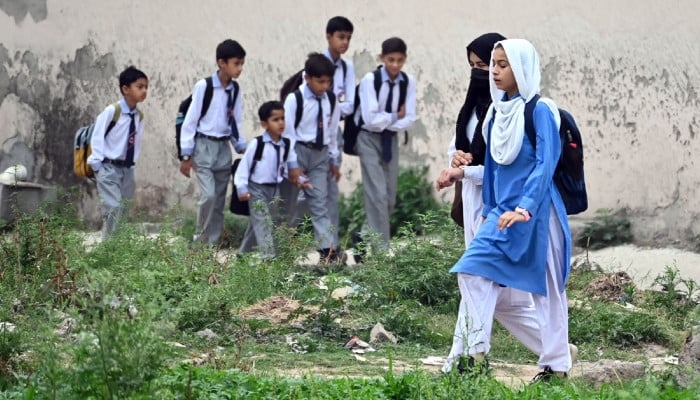
Punjab Minister for School Education Rana Sikandar Hayat has categorically dismissed prevailing market speculation and social media reports indicating an impending imposition of a "smart lockdown" across academic institutions in the province. The official clarification follows days of escalating public anxiety driven by rapidly deteriorating environmental metrics, with ambient particulate pollution across Lahore, Gujranwala, and Faisalabad periodically breaching hazardous tiers on the international Air Quality Index (AQI).
Addressing administrative inquiries, Hayat confirmed that the Punjab government, led by Chief Minister Maryam Nawaz Sharif, has evaluated operational contingencies with the provincial Environmental Protection Department (EPD) and the Cabinet Committee on Smog. The ministerial consensus concluded that blanket closures of primary, secondary, and tertiary educational entities are currently off the table. The provincial executive maintains that standard operational schedules will persist, subject to stringent institutional compliance with environmental guidelines, including outdoor assembly bans and mandatory masking protocols. Administrative focus remains centered on addressing structural pollution sources rather than imposing disruptive academic pauses.
Commercial & Economic Implications
The administrative decision to sustain standard operational calendars averts immediate liquidity contractions across multiple urban micro-economies in Punjab. In urban centers like Lahore, Multan, and Rawalpindi, educational institutions support extensive ancillary supply chains, ranging from private intra-city student transport networks and fuel retail to wholesale stationery distributors, canteens, and publication hubs. Institutional closures during previous winter smog cycles resulted in an estimated weekly revenue evaporation of billions of rupees across informal transport and retail vendors.
Furthermore, institutional stability preserves workforce continuity across primary industrial and corporate zones. Widespread school closures routinely force dual-income and working-class households to divert domestic resources toward childcare, precipitating productivity declines across banking, textile administration, and fast-moving consumer goods (FMCG) distribution. Keeping educational facilities open stabilizes baseline retail transactions in urban commercial cores, supporting daily cash velocity for small merchants who are already grappling with inflationary pressures, elevated energy utility tariffs, and margin compressions.
Related Intelligence: Pakistan Weighs Minimum Age Restrictions on Children Using Social Media
Stakeholder Perspectives & Market Reactions
The ministerial statement generated immediate relief across private education cartels and regional merchant bodies. The All Pakistan Private Schools Federation (APPSF) commended the clarity, highlighting that intermittent administrative shutdowns in preceding fiscal years inflicted structural learning deficits and acute fee recovery disruptions, directly threatening the solvency of low-cost private academies. Merchant chambers in Lahore, notably representatives from Urdu Bazaar and major district commercial markets, echoed this sentiment, emphasizing that secondary retail markets rely significantly on urban commercial footfall linked to standard school schedules.
Conversely, public health professionals and pediatric associations have raised cautionary alarms regarding sustained childhood exposure to elevated PM2.5 concentrations, which frequently cross 30 to 40 times the World Health Organization’s recommended limits during meteorological inversion events. Healthcare advocates argue that while preserving market transactions is economically vital, unchecked respiratory admissions in public hospitals create compensatory public spending pressures that erode regional fiscal reserves.
Forward Outlook & Key Watchpoints
The provincial administration now faces a delicate balancing act between public health preservation and economic continuity. Market participants should monitor the enforcement of targeted "green lockdowns" currently deployed in designated high-emission clusters, alongside provincial crackdowns on substandard vehicular emissions, industrial smoke stacks, and agricultural crop-residue incineration.
Key watchpoints over the coming fortnight include the provincial meteorological department's forecasts regarding regional wind patterns and winter inversion severity. Should transboundary atmospheric stagnation worsen AQI readings beyond manageable thresholds, the provincial cabinet may reconsider hybrid operational models, such as staggered timings or single-day weekly digital shifts, rather than outright sector-wide suspensions. For commercial stakeholders and supply chain operators, maintaining contingency plans for short-notice municipal mobility restrictions remains an operational necessity through December.
Join Our Official WhatsApp Channel
Receive live commodity alerts, policy changes, and commercial intelligence directly on WhatsApp.