
US States Deploy Counter-Monitors Against Federal Election Watchers Amid Sovereignty Clash
Key US states including Minnesota and California are actively deploying state personnel to shadow federal Justice Department election observers, signaling deep institutional distrust ahead of critical midterm votes.
The Core Development
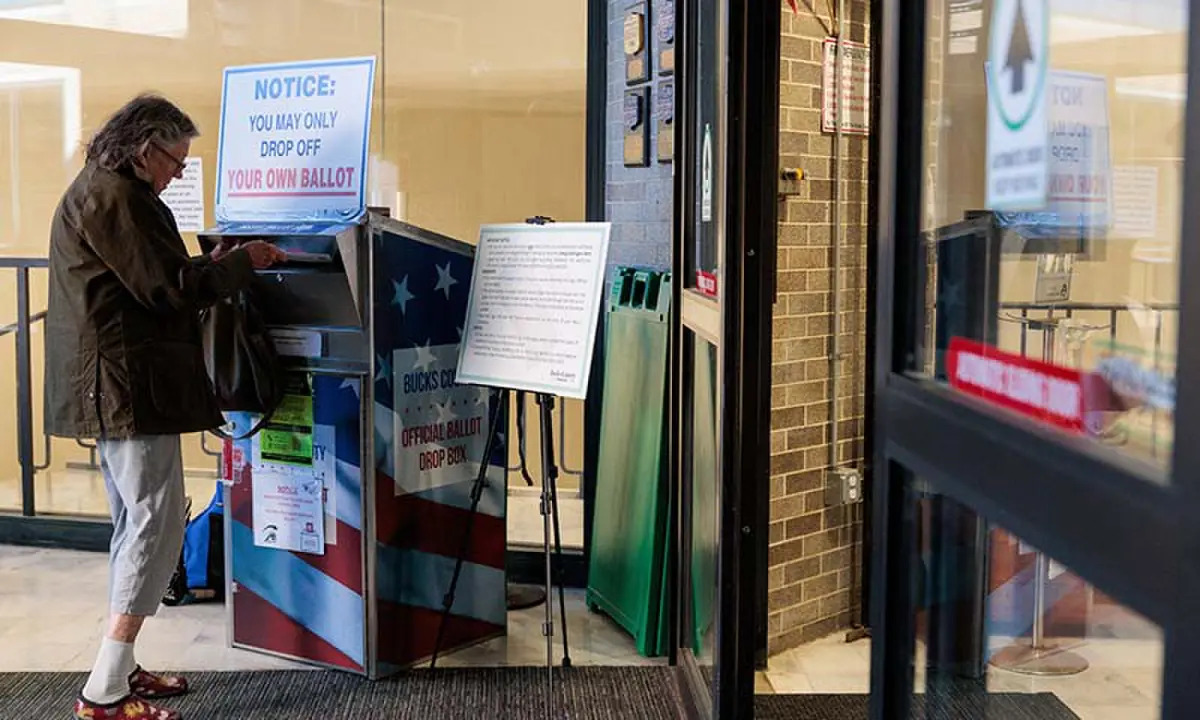
A notable escalation in jurisdictional friction has unfolded within the United States electoral landscape, as state authorities take unprecedented steps to observe federal observers. During primary voting in Minnesota, officials took the decision to deploy roughly 40 state employees, coordinated in pairs, tasked specifically with shadowing Department of Justice (DOJ) civil rights personnel who were sent to monitor polling operations across two major counties.
Democratic Secretary of State Steve Simon confirmed that the state intends to maintain this monitoring apparatus through subsequent midterm cycles, coordinating closely with the Minnesota Attorney General’s office. A comparable initiative has been initiated in California. Although state officials observed that federal observers behaved appropriately on site, the choice to field counter-surveillance personnel highlights profound institutional distrust between local election custodians and the federal executive apparatus over ballot integrity, access, and voter oversight standards.
Historically, the DOJ has deployed staff under the statutory authority of the Voting Rights Act of 1965 to ensure equitable access across jurisdictions with histories of disenfranchisement. However, recent legal curtailments of federal preclearance requirements, combined with heightened political rhetoric regarding election administration, have transformed routine oversight into a contested friction point between state sovereignty and federal authority.
Commercial & Economic Implications
While this administrative friction is situated thousands of miles away, governance volatility and institutional friction within the world's primary reserve-currency economy inevitably reverberate through global trade ecosystems, including Pakistan's commercial import and wholesale sectors.
First, deep institutional uncertainty surrounding US legislative composition and policy enforcement can trigger heightened volatility across international currency and debt markets. For Pakistani trading entities, such as Kalyar Traders, fluctuations in the US dollar exchange parity directly influence landed import costs for industrial raw materials, capital machinery, and essential commodities. Elevated political risk premiums inside the United States often drive defensive portfolio positioning globally, constraining bilateral capital liquidity and compounding trade credit financing costs for developing nations.
Second, policy shifts resulting from contested legislative control frequently cascade into realignments of international trade corridors, preferential tariff schedules, and multilateral aid allocations. Pakistani textile manufacturers, agricultural exporters, and wholesale distributors rely heavily on predictable commercial channels to North American buyers. Institutional distraction or protracted domestic contestation within major trade partners can slow down regulatory certifications, bilateral trade dialogues, and strategic export realignments.
Related Intelligence: Nigeria Detects Bundibugyo Ebola Strain as Trade Corridors Face Scrutiny
Stakeholder Perspectives & Market Reactions
Legal scholars and state election administrators argue that sub-national oversight is a constitutional prerogative designed to protect the integrity of decentralized voting architecture. Secretary Simon underscored that state oversight guarantees transparency without hindering federal statutory responsibilities, asserting that documentation prevents mischaracterization of local administrative standards.
Conversely, critics within federal policy circles caution that deploying state monitoring teams creates an unhelpful aura of confrontation, potentially confusing local election workers and feeding public skepticism regarding the integrity of independent institutions. Civil liberties advocates have voiced concern that administrative friction must not obscure the DOJ’s primary function: protecting vulnerable minority populations against targeted disenfranchisement.
Across international business networks, economic analysts view the development as a symptom of polarized institutional governance. Financial markets increasingly factor political and governance friction into long-range stability models, assessing whether legislative gridlock could impair fiscal policy execution or trade negotiations.
Forward Outlook & Key Watchpoints
The immediate watchpoint will be the operational deployment of state monitoring teams during forthcoming high-stakes congressional elections, where control over the federal legislative agenda is contested. Observers will track whether other states adopt similar reciprocal monitoring initiatives, formalizing a parallel oversight layer across key battleground jurisdictions.
Legal challenges concerning the exact jurisdictional boundaries of federal observers inside municipal polling stations remain a distinct possibility if friction intensifies. For cross-border commercial operators and international trade participants, continuous observation of US administrative cohesion remains essential to navigate ensuing macroeconomic shifts, sovereign debt conditions, and bilateral commercial policies with major trade partners.
Join Our Official WhatsApp Channel
Receive live commodity alerts, policy changes, and commercial intelligence directly on WhatsApp.