
US and Denmark Forge Landmark Arctic Military Pact Over Greenland
The United States and Denmark have finalized a defense agreement to construct two strategic military bases in Greenland, reinforcing Arctic security and reaffirming Danish sovereignty amidst escalating great power competition in the High North.
Geopolitical & Core Developments
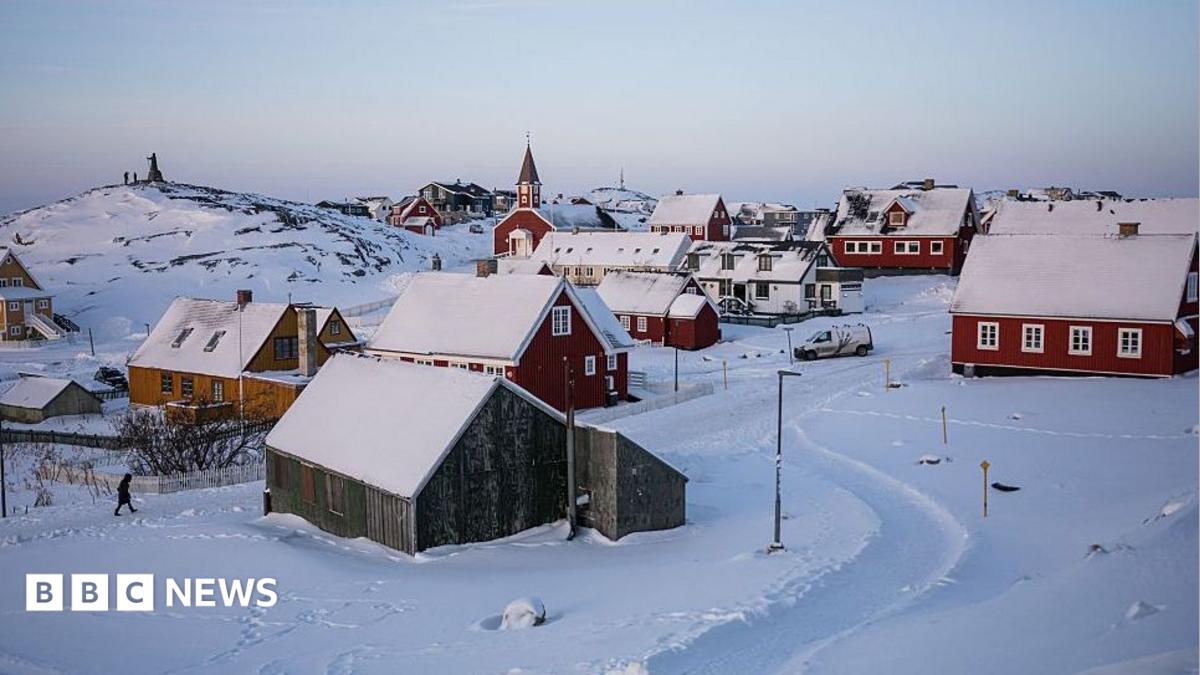
In a landmark geopolitical shift that underscores the escalating strategic competition in the High North, the United States and Denmark have formally signed a comprehensive defense agreement to construct two new military installations in Greenland. Finalized on the sidelines of the United Nations General Assembly, the pact represents a significant upgrade in transatlantic security cooperation. The accord establishes a framework for expanded US military presence on the world's largest island, a semi-autonomous Danish territory that has rapidly transformed from an isolated polar outpost into a critical frontier for global security.
The negotiations, conducted under strict diplomatic wraps over the past year, balance Washington's urgent imperative to counter rising Russian and Chinese military activities in the Arctic with Copenhagen's unwavering insistence on territorial integrity. Crucially, the text of the treaty explicitly reaffirms Denmark's sovereignty over Greenland, easing local political sensitivities in Nuuk while providing the Pentagon with the logistical infrastructure necessary to project power across the polar basin. The new bases will feature advanced radar installations, deep-water port access, and enhanced intelligence-gathering capabilities designed to monitor maritime traffic through the vital GIUK gap and surrounding polar waterways.
Global Trade & Economic Ripples
Beyond its immediate military dimensions, the US-Denmark defense pact carries profound implications for global commodity markets, international trade routes, and supply chain logistics. As climate change accelerates the recession of polar ice, the Arctic is transitioning from an impassable frozen barrier into a viable commercial maritime highway. The establishment of secure dual-use infrastructure in Greenland provides a stabilizing security umbrella for upcoming commercial ventures in rare earth elements, critical minerals, and trans-Arctic shipping corridors that promise to slash transit times between Asian manufacturing hubs and European ports by up to forty percent.
Energy markets are also responding to the shifting strategic calculus in the North Atlantic. Greenland sits atop vast, largely untapped reserves of oil, natural gas, and critical transition minerals essential for the global green energy transition, including lithium, cobalt, and graphite. The militarization and fortification of the region under a trusted NATO framework reduce sovereign risk for multinational mining conglomerates and energy majors hesitant to invest in politically volatile or contested zones. Consequently, maritime insurers and global shipping lines are re-evaluating route risk profiles, anticipating increased commercial vessel traffic through Arctic waters backed by enhanced search-and-rescue and naval surveillance capabilities.
Related Intelligence: Sudan Famine Crisis Threatens Regional Stability and Commodity Flows
International Reactions & Diplomatic Stances
Official reactions to the bilateral agreement have exposed deep fractures in the broader geopolitical architecture of the Arctic. Spokespersons for the United Nations hailed the diplomatic resolution as a testament to bilateral cooperation within international law, emphasizing the importance of stability in polar regions. However, reactions from rival powers were swift and adversarial. Moscow issued a strongly worded diplomatic protest, accusing Western powers of militarizing the Arctic and violating the spirit of circumpolar cooperation traditionally championed by the Arctic Council. Meanwhile, Beijing expressed 'grave concern' over what it termed unjustified strategic expansion, warning that increased NATO footprint in the high latitudes threatens regional peace and freedom of navigation.
Market analysts and geopolitical risk consultancies note that the deal effectively sidelines non-Arctic actors who have sought to project economic and scientific influence into the region. Western allies, including Canada, Norway, and the United Kingdom, have welcomed the pact as an indispensable counterweight to authoritarian encroachment in the polar north, viewing the enhanced US-Danish footprint as a vital anchor for collective deterrence.
Strategic Outlook & Future Scenarios
Looking ahead, the implementation of the Greenland defense accord will likely accelerate a broader arms race and infrastructure build-up across the circumpolar north. Over the next decade, trillions of dollars in public and private capital will flow into Arctic logistics, telecommunications, and defense networks. Upcoming high-level summits, including the upcoming Arctic Circle Assembly, are expected to serve as diplomatic battlegrounds where non-aligned nations challenge the growing securitization of polar governance.
For international commerce, the immediate future points toward tighter coordination between military commanders and commercial shipping consortia to manage dual-use infrastructure. While the risk of direct military confrontation in the Arctic remains low, the region is undeniably entering a new era of heightened strategic competition, where commercial viability is inextricably linked to hard security guarantees.
Join Our Official WhatsApp Channel
Receive live commodity alerts, policy changes, and commercial intelligence directly on WhatsApp.