
US Unveils AI Force and Czar to Accelerate Strategic Technological Dominance
The United States has announced the creation of an 'AI Force' and an artificial intelligence czar, adopting a deregulatory posture to secure global technological and commercial dominance.
Geopolitical & Core Developments
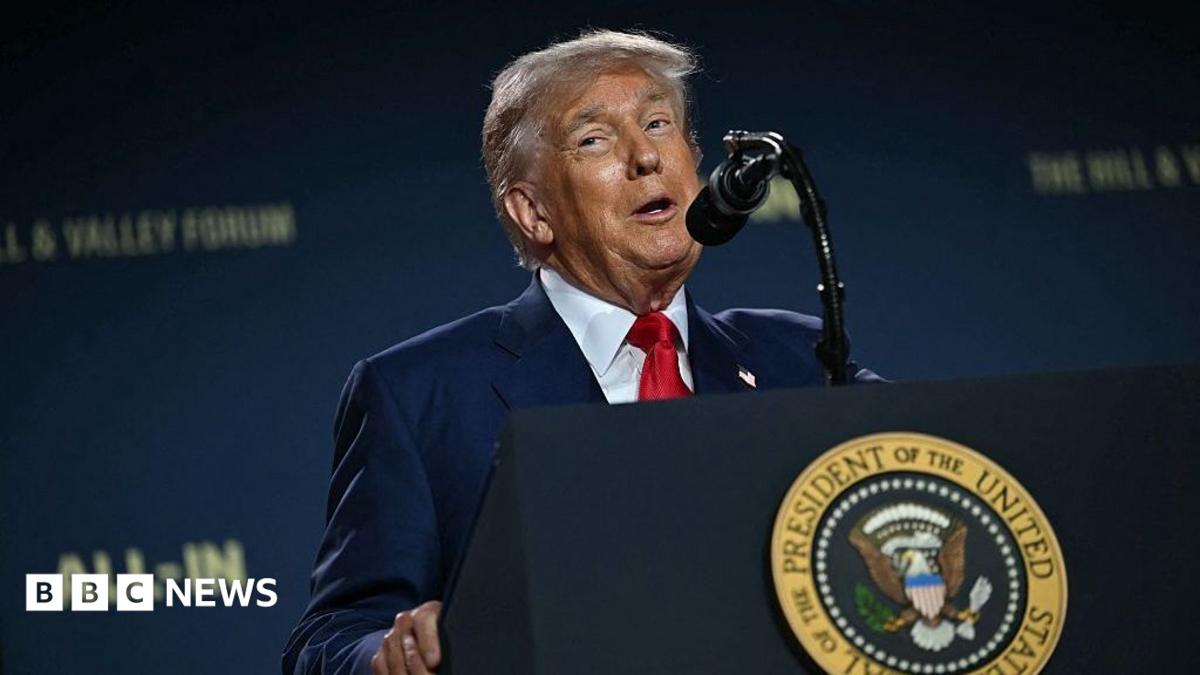
In a decisive move to consolidate technological supremacy, the United States administration has announced plans to establish a specialized 'AI Force' alongside the appointment of a national artificial intelligence czar. Speaking on the strategic trajectory of emergent technologies, President Donald Trump emphasized that Washington would not in any way hinder or stifle the growth of domestic innovation. The initiative marks a fundamental shift in federal industrial policy, explicitly positioning artificial intelligence as the foundational substrate of twenty-first-century national security, algorithmic defense, and geopolitical leverage.
By pledging to dismantle perceived regulatory constraints, the White House seeks to decisively outpace foreign competitors, chiefly China, which has channeled vast state subsidies into sovereign computing infrastructure and algorithmic research. The designated AI czar will be tasked with orchestrating inter-agency initiatives across the Department of Defense, intelligence bodies, and private technology conglomerates. This governance model aims to expedite the integration of commercial frontier models directly into strategic defense apparatuses, procurement pipelines, and federal operations, signaling an era of state-backed technological accelerationism.
Global Trade & Economic Ripples
The White House's deregulatory mandate and aggressive computational scale-up are set to generate significant consequences across international trade, commodity pricing, and industrial supply networks. The projected expansion of gigawatt-scale data center infrastructure is directly impacting global energy dynamics. Utility providers and energy commodity traders are recalibrating long-term baseload demand forecasts, spurring capital expenditure into liquefied natural gas, next-generation nuclear power generation, and extensive grid upgrades.
Simultaneously, the global semiconductor supply chain faces mounting structural concentration. Demand for critical commodities—including high-purity polysilicon, copper, gallium, and specialized cooling agents—remains acutely sensitive to geopolitical choke points. With Washington prioritizing domestic technological scaling while tightening export controls on high-end graphic processing units and advanced semiconductor manufacturing equipment, the global hardware ecosystem faces further fragmentation. Currency and financial markets are reflecting this reality, as international capital flows and sovereign wealth allocations increasingly pivot toward dollar-denominated tech infrastructure and associated energy assets.
Related Intelligence: Gaza Tech Infrastructure Collapse Threatens Digital Economy and Regional Workforce
International Reactions & Diplomatic Stances
The US policy trajectory has drawn divergent responses across world capitals. In Beijing, state officials and foreign ministry representatives framed the announcement as an overt militarization of commercial innovation, warning that unconstrained technological competition risks destabilizing strategic balances. Chinese policymakers reiterated their commitment to indigenous self-reliance, signaling expanded state backing for domestic semiconductor foundries and localized computing platforms to circumvent Western restrictions.
Conversely, European Union officials expressed unease over the divergence in regulatory philosophy. Having recently implemented the comprehensive EU AI Act, Brussels officials cautioned that discarding compliance mechanisms and safety frameworks creates significant cross-border risks, including intellectual property vulnerabilities and systemic operational hazards. Multilateral organizations, notably the United Nations and the OECD, observed that unilateral industrial acceleration significantly complicates ongoing diplomatic endeavors to construct binding global safety standards and digital governance pacts.
Strategic Outlook & Future Scenarios
Over the next twelve to twenty-four months, the formalization of the AI Force will test the limits of public-private integration. Market analysts anticipate an unprecedented expansion in defense-tech contracting, blurring the demarcation between commercial enterprise software and sovereign military infrastructure. This institutional alignment will likely intensify parliamentary and budgetary debates within Washington regarding appropriations and operational oversight.
Globally, the escalation of tech-driven industrial policy will serve as a primary flashpoint in international diplomacy. Retaliatory export quotas on critical minerals and rare earths by strategic rivals, alongside heightened enforcement of Western technology sanctions, are poised to disrupt conventional trade corridors. Multilateral summits, including forthcoming G7 and bilateral trade dialogues, will be compelled to address cross-border data sovereignty, energy allocation, and compute access. As technological alignment becomes an implicit condition of strategic alliances, global supply chains and commercial partnerships will undergo profound, permanent structural realignment.
Join Our Official WhatsApp Channel
Receive live commodity alerts, policy changes, and commercial intelligence directly on WhatsApp.