
Kohat Police Lines Breach Exposes Supply Chain and Security Vulnerabilities
An official FIR confirms militants deployed an explosives-laden vehicle to breach Kohat Police Lines, prompting immediate security crackdowns that threaten regional supply chains along the vital Indus Highway corridor.
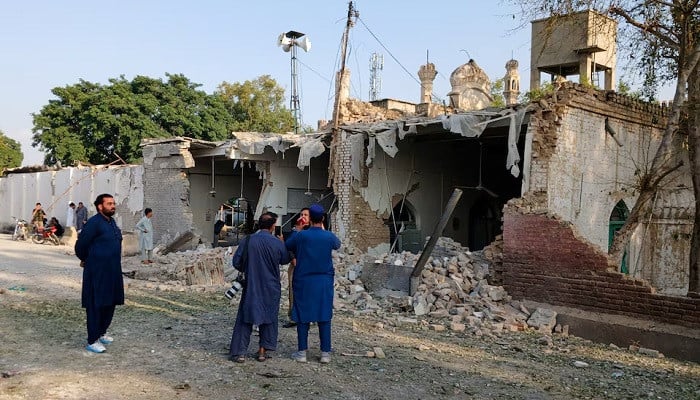
The Core Development
The Counter-Terrorism Department and district law enforcement in Khyber Pakhtunkhwa have formally registered a First Information Report detailing a sophisticated, multi-stage assault on the Kohat Police Lines. According to the investigative dossier, the assault commenced when a vehicle-borne improvised explosive device, laden with heavy military-grade explosives, was detonated directly against the installation's outer perimeter gate. The catastrophic blast functioned as an operational breach, tearing through structural barriers and creating a thick smokescreen. Under this immediate cover, multiple heavily armed militants opened sustained automatic gunfire and lobbed fragmentation grenades in an attempt to storm the internal administrative and residential barracks. Quick Response Units and station personnel mounted a swift retaliatory defense, engaging the assailants in an extended exchange that prevented deeper penetration into sensitive command assets. The detailed FIR underscores a troubling evolution in asymmetric tactics, highlighting coordinated operational planning designed to overwhelm fortified law enforcement headquarters in urban centers.
Commercial & Economic Implications
Beyond the immediate tactical and security dimensions, the violent breach at Kohat generates immediate operational headwinds for domestic trade routes. Kohat serves as an indispensable transit hub along the N-55 Indus Highway, providing a critical commercial conduit connecting Peshawar and northern manufacturing hubs to southern Khyber Pakhtunkhwa, including Karak, Bannu, and Dera Ismail Khan, as well as broader routes into Punjab. Following the assault, provincial security apparatuses enforced strict access controls, randomized vehicular searches, and extensive checkpoint cordons across arterial routes. Logistics operators report delivery disruptions spanning 24 to 48 hours for fast-moving consumer goods, pharmaceutical supplies, and agricultural shipments. Furthermore, Kohat's significant cement manufacturing sector faces localized transport snarls, raising turnaround times for heavy cargo. Freight syndicates are already pricing in security surcharges and detention risks, which threaten to escalate landed transportation costs and exacerbate inflationary pressures across vulnerable retail markets throughout the province.
Stakeholder Perspectives & Market Reactions
The coordinated attack has elicited deep concern from trade bodies and business federations across Khyber Pakhtunkhwa. Leadership from the regional Chambers of Commerce and Industry alongside wholesale merchant associations, including the Anjuman-e-Tajiran, expressed alarm over the compounding vulnerability of provincial commercial corridors. Business leaders stressed that persistent security volatility along key logistics arteries suppresses capital commitment, deters inter-city distribution networks, and increases insurance overheads for commercial transport fleets. Commercial bodies urged the government to implement protected freight corridors and expedite automated scanning systems at highway checkpoints to minimize transit friction. Simultaneously, security analysts noted that the coordinated deployment of a vehicular bomb paired with storming infantry demonstrates an urgent need for structural upgrades to peripheral law enforcement defenses. Provincial administrative officials reiterated their unwavering determination to restore stability, vowing to eradicate insurgent networks targeting critical state infrastructure.
Forward Outlook & Key Watchpoints
In the aftermath of the Kohat breach, the operational focus turns toward extensive counter-terror sweeps and infrastructure stabilization. Law enforcement agencies and intelligence wings are expanding targeted intelligence-based operations throughout the district and adjoining tribal regions to dismantle sleeper networks and logistics facilitators. Market participants and logistics planners must closely observe clearance velocity at key transit choke points, particularly around the Kohat Tunnel and southern bypasses, to assess whether enhanced security protocols solidify into structural supply chain bottlenecks. On a policy level, both federal and provincial authorities will face mounting scrutiny regarding the allocation of modernization funding for district police forces and rapid-deployment units. For commercial enterprises and regional distributors, establishing agile secondary supply routes and re-evaluating minimum safety stock levels will be imperative to navigate prolonged volatility in regional distribution networks.
Join Our Official WhatsApp Channel
Receive live commodity alerts, policy changes, and commercial intelligence directly on WhatsApp.