
UK Nationals Detained Over Security Breach at RAF Fairford
Five British nationals in their mid-20s have been detained under anti-terrorism laws following a security scare at the strategic RAF Fairford airbase in western England.
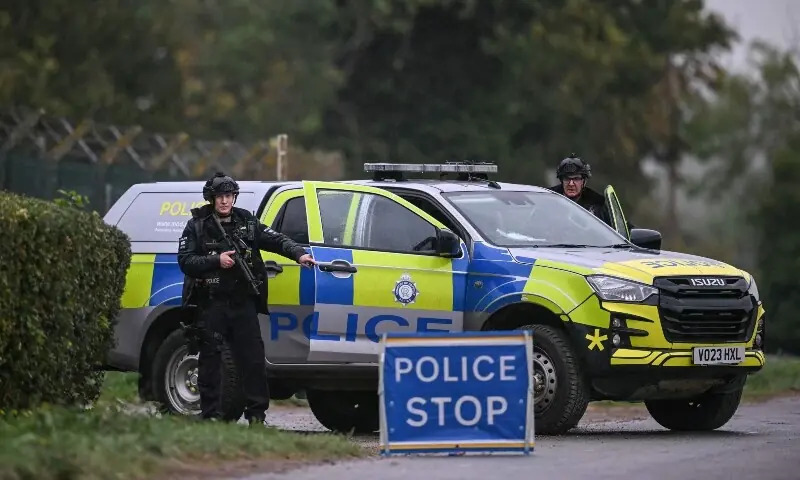
The Core Development
Five British nationals, all in their mid-20s, remain in custody following a major security operation at the Royal Air Force station at Fairford in Gloucestershire, western England. The suspects—comprising a 25-year-old, three 24-year-olds, and a 23-year-old, all based in London—were apprehended in the early hours of Sunday morning by counter-terrorism officers. The detentions followed a targeted intelligence tip-off regarding three large white vans approaching the perimeter of the military airfield, a high-value installation historically utilized by United States strategic forces.
According to British counter-terrorism police, the individuals are being held on suspicion of the commission, preparation, or instigation of terrorist acts under Section 41 of the UK Terrorism Act 2000. Law enforcement agencies launched formal interrogations on Monday, probing the precise nature of the planned breach and potential domestic or international networks. US President Donald Trump publicly addressed the incident, stating that the suspects intended to inflict substantial damage and noting that the group had been under joint surveillance by British and American intelligence agencies prior to the interception. Concurrently, local reports indicate that heightened vigilance by agricultural workers near the perimeter contributed to the rapid deployment of security forces.
Commercial & Economic Implications
While the immediate security incident unfolded on British soil, geopolitical developments involving military installations utilized by Western powers carry direct financial and commercial ramifications for emerging market economies, including Pakistan. Increased security postures at critical defense hubs frequently correlate with heightened geopolitical friction in the Middle East, directly influencing international crude oil benchmarks, marine insurance premiums, and freight shipping costs.
For Pakistan’s import-dependent economy, any escalation in security tensions surrounding strategic logistics corridors translates immediately to inflationary pressures. Volatility in global energy markets affects domestic petroleum pricing parity, driving up transportation overheads for wholesale distributors, retail traders, and manufacturing sectors. Furthermore, heightened risk perceptions in global financial markets can induce capital outflows from developing economies, exerting downward pressure on the Pakistani rupee and inflating import bills for vital industrial raw materials and consumer goods.
Related Intelligence: Hurricane Polo Threatens Mexico Pacific Coast and Global Supply Chains
Stakeholder Perspectives & Market Reactions
Business councils and trade associations in Pakistan are closely monitoring the interplay between international security events and global supply chain stability. Industry representatives emphasize that commercial predictability is paramount for bilateral trade and foreign direct investment. Legal experts and defense analysts point out that the involvement of homegrown British nationals in sophisticated plots highlights vulnerabilities in critical infrastructure protection, prompting governments worldwide to review surveillance frameworks.
Financial markets have responded with cautious vigilance, pricing in the persistent threat of asymmetric disruptions to global trade routes. Business leaders across South Asia continue to advocate for diversified supply chains and robust risk-mitigation strategies to buffer against sudden macroeconomic shocks triggered by geopolitical instability in Western security zones.
Forward Outlook & Key Watchpoints
As the UK Crown Prosecution Service reviews evidence gathered by counter-terrorism investigators, formal charges against the five suspects are anticipated within statutory detention limits. Legal proceedings will likely shed further light on the extent of external coordination or radicalization networks operating within urban centers.
Key watchpoints for international businesses and economic analysts include potential policy adjustments regarding perimeter security at joint-use military facilities, intelligence-sharing protocols between Washington and London, and any subsequent spillover effects on Middle Eastern diplomatic relations. Sustained monitoring of energy futures and currency stability remains essential for corporate stakeholders navigating volatile international markets.
Join Our Official WhatsApp Channel
Receive live commodity alerts, policy changes, and commercial intelligence directly on WhatsApp.