
Government Offers Multi-Party Security Talks to Shield Economic Stability
The federal government has offered to convene an all-party dialogue to unify counterterrorism policy, urging opposition factions to prioritize national security over political disputes.
The Core Development
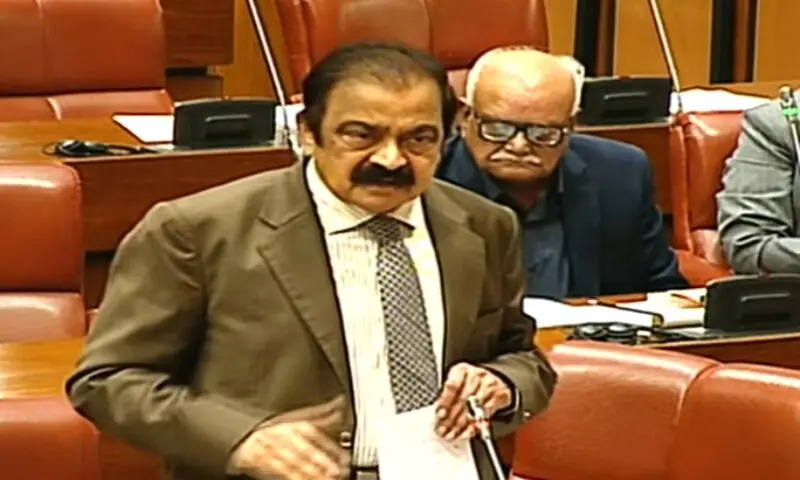
In a formal address to the Senate, Adviser to the Prime Minister on Political Affairs Rana Sanaullah announced that Prime Minister Shehbaz Sharif is ready to convene an all-party consultative mechanism to forge a binding national consensus on counterterrorism operations. The initiative comes amid a noticeable uptick in militant violence targeting infrastructural assets and law enforcement detachments across Khyber Pakhtunkhwa and Balochistan. Sanaullah emphasized that the executive branch remains willing to extend formal invitations across the aisle, provided opposition factions set aside unrelated parliamentary disputes and present a unified front.
The adviser specifically addressed the current friction within the legislative leadership, openly critiquing Leader of the Opposition in the National Assembly Mahmood Khan Achakzai for contested stances regarding legislative procedures and parliamentary authority. Sanaullah asserted that combating national security threats demands institutional cohesion that transcends partisan disagreements. The proposed national security roadmap seeks to grant operational clarity to planned security mobilizations, ensuring broad-based parliamentary legitimacy for state-led defensive operations across vulnerable corridors.
Commercial & Economic Implications
For Pakistan's commercial landscape, the persistence of regional militancy and operational uncertainty directly influences wholesale distribution networks and commodity pricing. Transport routes linking southern ports to northern consumption centers—as well as bilateral trade conduits moving through the western borders—routinely face logistical interruptions due to security protocols, targeted blockages, and heightened transit checkposts. When inter-provincial freight movement slows, supply chain volatility quickly translates into price increases for essential food commodities, raw industrial inputs, and imported intermediate goods.
Furthermore, sovereign risk premiums remain deeply sensitive to domestic instability. Retailers and wholesale merchants in urban hubs must absorb increased transit insurance costs and private freight security surcharges, which cascade down to end consumers and reinforce sticky headline inflation. Achieving a durable political and operational consensus on security policy is therefore vital to reassuring bilateral development partners, foreign direct investors, and domestic industrial conglomerates looking to commit capital to energy, transport, and manufacturing projects.
Stakeholder Perspectives & Market Reactions
Corporate chambers and trading syndicates have responded to the political overture with cautious optimism, noting that persistent policy divergence on security operations dampens business sentiment. Representatives from regional transport unions have repeatedly appealed for cohesive protection mechanisms along major trade arteries, citing frequent disruptions and mounting driver safety concerns. In their view, uniform parliamentary support for counterterrorism measures is indispensable to guaranteeing the secure movement of commercial haulage.
Opposition circles, however, remain divided on the government's proposal. While several regional leaders acknowledge the urgency of countering organized militancy, independent and opposition-aligned legislators express skepticism regarding executive intentions, demanding that counterterrorism mandates remain subject to strict civilian oversight and parliamentary accountability. Legal and constitutional experts observe that without genuine institutional concessions from both sides, an all-party framework risks becoming a procedural exercise rather than an actionable defense doctrine.
Forward Outlook & Key Watchpoints
Over the near term, political observers will watch whether the Prime Minister's Office issues formal written terms of engagement to opposition leaders or confines the gesture to floor statements. A viable consultative process requires setting clear, measurable agendas on civilian infrastructure protection, border trade security, and regional intelligence coordination.
Key parameters to monitor include legislative debates on specialized security budget allocations, updates to the National Action Plan, and the formalization of transport-corridor security protocols. If the federal coalition successfully integrates opposition stakeholders into an operational security blueprint, market sentiment is poised to stabilize, bolstering wholesale logistics, domestic capital expenditure, and broader macroeconomic recovery efforts.
Join Our Official WhatsApp Channel
Receive live commodity alerts, policy changes, and commercial intelligence directly on WhatsApp.