
Trump and Xi Signal Détente at State Summit Amid Persistent Global Tensions
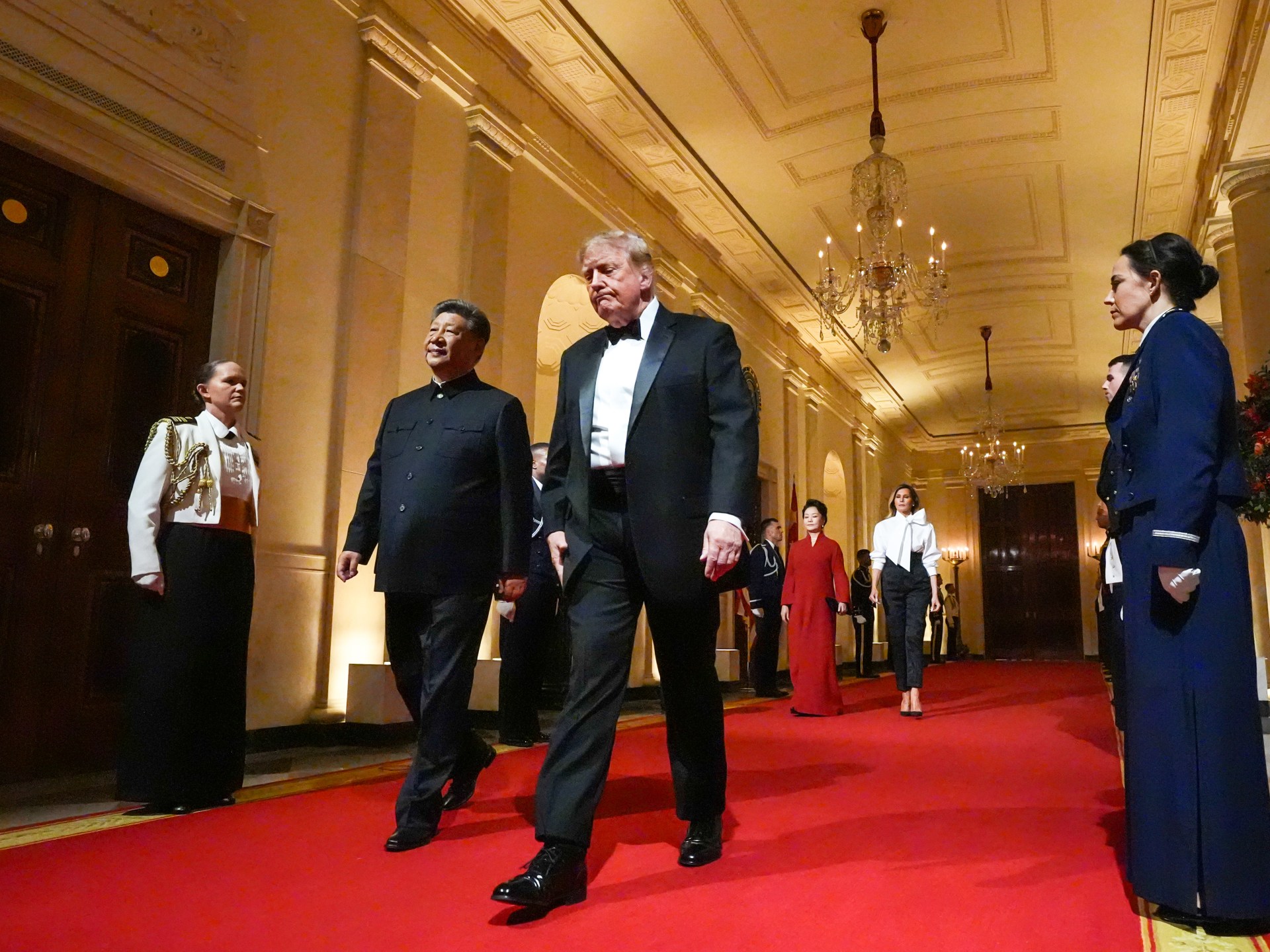
US President Donald Trump and Chinese President Xi Jinping struck a conciliatory tone at a state banquet, pledging enhanced dialogue despite deep-seated geopolitical divisions.
Geopolitical & Core Developments
In a diplomatic maneuver that has sent ripples across international capitals, United States President Donald Trump praised the enduring friendship between Washington and Beijing during a high-level state dinner hosted for Chinese President Xi Jinping. The summit, designed to recalibrate the world's most critical bilateral relationship, underscored a mutual desire for open communication channels even as structural friction persists. Beneath the ceremonial pageantry and diplomatic pleasantries, the two leaders engaged in rigorous behind-the-scenes negotiations concerning several intractable geopolitical flashpoints. Discussions directly addressed the contested status of Taiwan, diverging strategic postures regarding Iran and the Middle East, regulatory frameworks for artificial intelligence governance, and ongoing structural trade imbalances. While neither side yielded significantly on core national security doctrines, the conscious choice to emphasize cooperation over confrontation marks a notable pivot from the hostile rhetoric that has characterized recent years. Analysts note that maintaining diplomatic engagement remains paramount for both administrations to prevent accidental escalation in the South China Sea and other strategic theatres, establishing a pragmatic baseline for future bilateral interactions.
Global Trade & Economic Ripples
For international commodity markets, global supply chains, and multinational corporations, the warming diplomatic signals carry profound economic ramifications. The prospect of stabilized US-China relations immediately resonated across energy futures, base metals, and agricultural commodity pricing, which have long suffered under the weight of tariff uncertainties and trade war anxieties. Global shipping lanes, particularly trans-Pacific freight corridors, experienced a wave of cautious optimism as logistics operators anticipated fewer regulatory disruptions and a lower probability of sudden tariff escalations. Currency markets similarly factored in the reduced risk of immediate economic decoupling, lending stability to the US dollar and the Chinese yuan against a backdrop of volatile macroeconomic indicators. However, industrial stakeholders remain circumspect, recognizing that underlying trade restrictions, export controls on advanced semiconductor technologies, and protectionist industrial policies remain firmly intact. The commercial reality dictates that while diplomatic rhetoric has softened, the architecture of strategic economic competition between the two superpowers continues to evolve rather than dissolve.
Related Intelligence: Superpower Summit: Washington and Beijing Chart Fragile Diplomatic Course
International Reactions & Diplomatic Stances
Global institutions, allied governments, and market analysts have responded to the Trump-Xi summit with a mixture of cautious relief and persistent skepticism. Representatives from the United Nations welcomed the renewed high-level dialogue, emphasizing that peaceful coexistence between Washington and Beijing is indispensable for addressing global challenges such as climate change, debt distress in developing nations, and international financial stability. European Union officials expressed tacit approval of the diplomatic thaw, hoping it might alleviate secondary pressures on European trade and supply chains caught in the crossfire of great power competition. Conversely, key regional allies in the Indo-Pacific, including Japan and Australia, are closely scrutinizing the developments for any sign of a bilateral modus vivendi that might compromise regional security architectures or bilateral trade commitments. Financial market analysts from major Wall Street and City of London institutions have cautioned investors against over-indexing on short-term diplomatic bonhomie, advising that structural economic decoupling remains a long-term institutional trend despite temporary tactical pauses in hostilities.
Strategic Outlook & Future Scenarios
Looking toward the medium-term horizon, the trajectory of US-China relations will depend heavily on upcoming multilateral summits, legislative actions, and prospective sanction regimes. The tone established at the state dinner must now be translated into functional working-level agreements if it is to withstand upcoming domestic political pressures in both countries. Key escalation points to monitor include upcoming legislative cycles in Washington regarding foreign investment screening, Beijing's enforcement of critical mineral export controls, and potential military maneuvers in the Taiwan Strait. Furthermore, upcoming international forums will serve as litmus tests to determine whether the renewed dialogue yields substantive policy coordination or merely serves as a temporary diplomatic holding pattern. For global enterprises and commodity traders, navigating this complex geopolitical landscape requires continuous contingency planning, agile supply chain diversification, and vigilant monitoring of regulatory shifts in both capitals.
Join Our Official WhatsApp Channel
Receive live commodity alerts, policy changes, and commercial intelligence directly on WhatsApp.