
US-China Summit Concludes Amid Trade and Tech Focus
US and Chinese leadership concluded their Washington summit focusing on bilateral trade mechanisms and technological cooperation, offering critical insights for global markets.
The Core Development
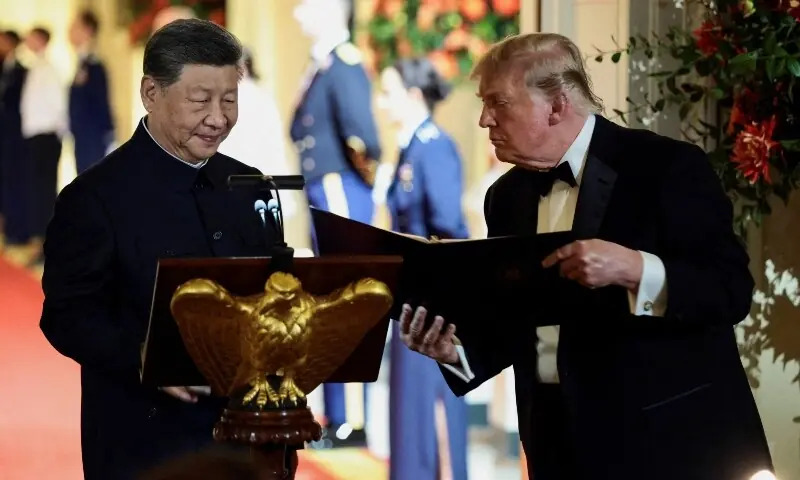
US President Donald Trump concluded a high-stakes diplomatic summit with Chinese President Xi Jinping by taking the Chinese leader on a guided tour of the US National Archives. The concluding event was designed to underscore historical ties and project long-term stability between the world's two largest economies. The preceding Thursday featured a lavish state summit at the White House that analysts characterized as heavy on diplomatic symbolism but relatively light on binding policy breakthroughs. Despite the absence of major structural agreements, President Trump highlighted incremental progress under an established bilateral trade mechanism. He pointed specifically to expanded market access secured for American farmers and ranchers, while both administrations formally identified artificial intelligence as a critical domain for future bilateral cooperation and safety standards.
Commercial & Economic Implications
For enterprise operators, wholesale distributors, and retail networks within Pakistan, the macroeconomic dynamics unfolding between Washington and Beijing carry profound indirect consequences. As the globe's two dominant economic titans negotiate terms governing trade flows, agricultural commodity distribution, and high-technology exports, international market volatility directly influences domestic import costs. Fluctuations in global agricultural yields and export quotas to China—particularly concerning grains, cotton, and tech hardware components—can trigger imported inflation within developing markets. Pakistani commercial entities dependent on stable international supply chains must monitor these bilateral engagements closely, as shifts in US-China trade policies frequently dictate global commodity pricing structures, freight rates, and foreign exchange reserves stability.
Related Intelligence: Trump and Xi Declare Tariff Truce Amid Washington Summit
Stakeholder Perspectives & Market Reactions
Business councils, trade federations, and financial market analysts have offered mixed reactions to the Washington summit. While international equity markets welcomed the avoidance of immediate escalatory tariffs, domestic trade bodies in emerging economies express caution regarding the lack of comprehensive multilateral trade frameworks. Industry representatives emphasize that while cooperation on artificial intelligence signals modernization, the ambiguity surrounding macroeconomic enforcement mechanisms leaves regional supply chains vulnerable to sudden geopolitical shifts. Financial advisors recommend that commercial importers maintain diversified sourcing strategies to hedge against potential price shocks stemming from shifting US-China trade balances.
Forward Outlook & Key Watchpoints
Looking ahead, market participants and policy planners must track the implementation timeline of the bilateral trade mechanism cited by Washington. Key indicators to watch include formal regulatory updates on agricultural export volumes, technological transfer restrictions, and any subsequent ministerial-level meetings between US and Chinese trade representatives. Enforcement mechanisms regarding artificial intelligence governance will also serve as a crucial bellwether for future international tech standards. For Pakistani enterprises, maintaining agility in inventory management and closely tracking foreign exchange movements will remain paramount as these geopolitical developments continue to shape global commercial realities.
Join Our Official WhatsApp Channel
Receive live commodity alerts, policy changes, and commercial intelligence directly on WhatsApp.