
Trump Poses Stark Choice Between Iran Annihilation and Trade Accord at UN
At the United Nations, Donald Trump framed US-Iran relations around a binary choice of military destruction or peace, deepening global market anxieties.
Geopolitical & Core Developments
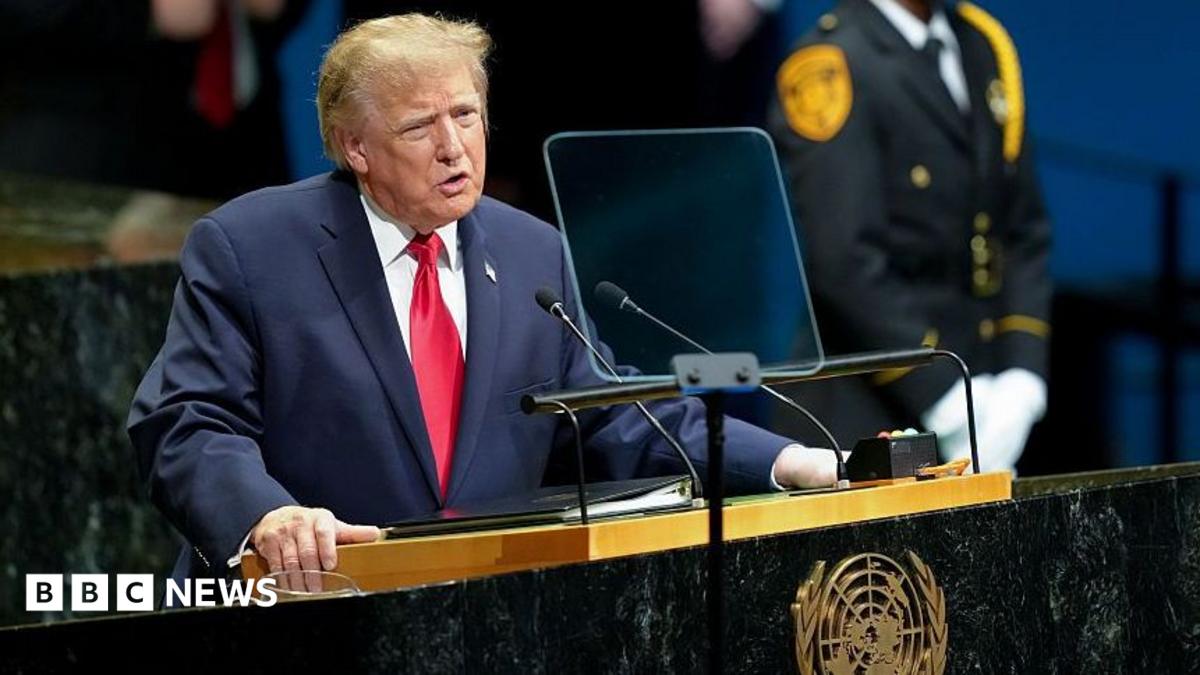
Addressing the international community at United Nations headquarters, former US President Donald Trump delivered a stark ultimatum regarding Washington's policy trajectory toward Tehran. Articulating what he described as a momentous strategic fork in the road, Trump stated he holds a pending 'big decision' on whether to pursue the complete military annihilation of Iran or secure a comprehensive diplomatic peace accord. The remarks immediately reverberated through diplomatic corridors, upending conventional multilateral engagement norms and setting a confrontational tone for the high-level assembly.
Trump's aggressive rhetoric directly contrasted with the sobering assessment delivered earlier by UN Secretary-General António Guterres, who warned that deepening geopolitical fractures are rendering the international system increasingly ungovernable. While Guterres urged renewed adherence to international law and collective security frameworks, Trump's unilateral framing underscored a return to transactional, high-pressure diplomacy. The juxtaposition highlighted a widening chasm between institutional multilateralism and major-power coercion, raising immediate questions regarding the future of regional deterrence frameworks and the enforcement of international non-proliferation standards.
Global Trade & Economic Ripples
International commodity markets reacted with immediate volatility to the UN pronouncements, reflecting profound commercial nervousness regarding potential disruptions to Persian Gulf energy supplies. Crude oil futures spiked during intraday trading as energy analysts recalibrated risk premiums associated with critical maritime bottlenecks, most notably the Strait of Hormuz. Any military escalation or naval confrontation in this vital transit corridor threatens to choke off nearly a fifth of global petroleum consumption, sending shockwaves through downstream petrochemical supply chains and refining margins.
Beyond energy complexes, the looming prospect of intensified sanctions or kinetic conflict has begun to alter pricing structures across industrial metals and agricultural commodities, as institutional investors hedge against broader geopolitical contagion. Global shipping conglomerates have initiated preliminary contingency planning for alternative routing around high-risk zones, driving up freight charter rates and marine insurance premiums. Concurrently, safe-haven currencies such as the US dollar and Swiss franc experienced upward pressure, while emerging market currencies linked to energy imports faced renewed depreciation risks.
Related Intelligence: US and Denmark Sign Historic Arctic Security Pact
International Reactions & Diplomatic Stances
Global capitals responded with a mixture of alarm and calculated diplomatic restraint following the UN address. European Union foreign policy representatives reiterated their commitment to preserving diplomatic channels and preventing any regional spillover that could destabilize Mediterranean and Middle Eastern trade corridors. Meanwhile, regional actors in the Persian Gulf intensified back-channel communications to de-escalate tensions, emphasizing that commercial stability and infrastructural security must remain paramount amid escalating rhetoric.
Market analysts and geopolitical risk consultancies issued client advisories urging caution, noting that the binary nature of Trump's ultimatum significantly narrows the diplomatic runway for constructive dialogue. Multilateral financial institutions expressed deep concern that heightened state-to-state hostility will impede global economic recovery, complicating central bank efforts to anchor inflation expectations against potential supply-side shocks originating in the Middle East.
Strategic Outlook & Future Scenarios
As the international community looks toward upcoming global economic summits and ministerial meetings, the trajectory of US-Iran relations remains the primary variable for macroeconomic forecasting. Two distinct pathways now dominate strategic models. The first envisions a renewed push toward a heavily conditioned economic and security pact, contingent upon strict containment of regional proxy networks and nuclear enrichment activities. The second scenario models a dangerous spiral of secondary sanctions, cyber warfare, and asymmetric maritime confrontations.
For global traders and multinational corporations, navigating this volatile environment requires robust risk management protocols, diversified supply chain sourcing, and continuous monitoring of regulatory shifts in Washington and European capitals. As geopolitical friction increasingly dictates commercial realities, strategic adaptability will separate resilient enterprises from those vulnerable to sudden shocks in the international arena.
Join Our Official WhatsApp Channel
Receive live commodity alerts, policy changes, and commercial intelligence directly on WhatsApp.