
Trump Halts Livestream Plans for Fort Hood Gunner Execution
U.S. President Donald Trump has reversed plans to broadcast the execution of Fort Hood shooter Nidal Hasan, concluding that a public display would be inappropriate.
Geopolitical & Core Developments
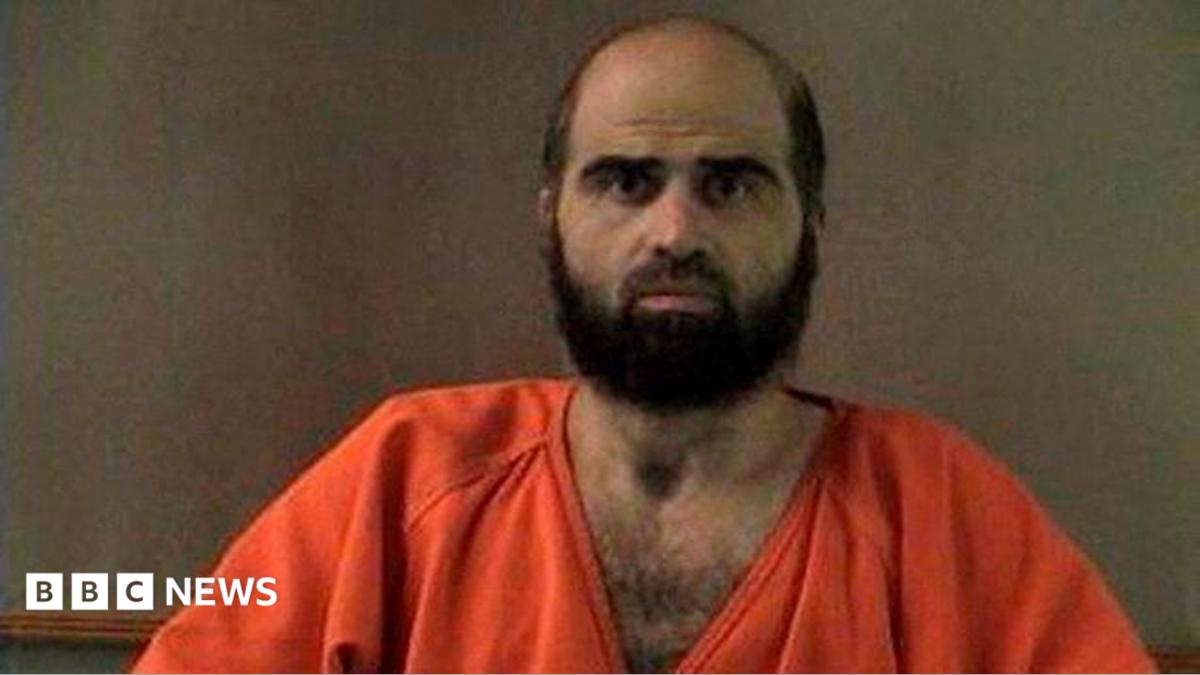
The United States presidency has formally stepped back from controversial deliberations regarding the public broadcasting of the execution of Nidal Hasan, the former Army psychiatrist convicted of the 2010 Fort Hood mass shooting. Hasan, who killed 13 people and injured more than 30 others during the rampage in Texas, faces capital punishment under the Uniform Code of Military Justice (UCMJ). His pending execution marks the first time the U.S. armed forces will execute a service member since Private John A. Bennett was hanged in 1961.
President Donald Trump confirmed that planned media distribution and potential livestreaming arrangements had been rescinded, citing broader public sensitivities and the assessment that observers would prefer the sentence be carried out out of public view. The prospective broadcast had stirred unprecedented constitutional and ethical debates within the Department of Defense, while intelligence officials quietly warned of severe operational blowback. Hasan's attack was historically framed as an act of domestic terrorism inspired by Islamist extremism, and foreign policy analysts noted that transforming his execution into a televised spectacle risked weaponizing the event for anti-Western propaganda and militant recruitment.
Global Trade & Economic Ripples
While capital judicial proceedings remain fundamentally domestic affairs, the operational fallout of high-profile state actions directly intersects with global commercial stability. Defense and intelligence planners raised concerns that a widely circulated execution video would prompt retaliatory asymmetric actions against American diplomatic, commercial, and energy infrastructure overseas, particularly across the Middle East and North Africa (MENA) region.
Multinational enterprises maintaining personnel and logistics operations throughout Gulf Cooperation Council (GCC) states monitor such political developments closely. Elevated threat levels often translate directly into spikes in political risk insurance, heightened maritime security surcharges along critical choke points such as the Strait of Hormuz and the Bab el-Mandeb, and increased operating expenses for Western infrastructure firms. By withholding a public broadcast, the administration mitigated an immediate trigger for localized civil unrest and kinetic threats that could disrupt regional logistics and commodity transits.
Related Intelligence: China and North Korea Open Crucial Yalu River Border Crossing
International Reactions & Diplomatic Stances
International reaction to the administration's pivot has reflected a mixture of relief and persistent legal critique. European Union representatives and human rights monitors, which consistently oppose capital punishment under all circumstances, cautioned Washington against setting a precedent that violated international standards governing the dignity of legal procedures. Diplomatic sources in Brussels reaffirmed their absolute opposition to the death penalty, warning that public broadcasting would have breached international human rights treaties prohibiting degrading punishment.
Across regional partners in the Arab world, government officials maintained formal silence, though security attachés expressed relief off the record. Foreign security apparatuses feared that visual documentation of the execution could inflame domestic factions or destabilize sensitive security cooperation agreements with U.S. forces stationed abroad. Within the United States, military legal scholars and veteran organizations had widely condemned the livestream proposal, noting that the military justice system is grounded in institutional discipline rather than public theater.
Strategic Outlook & Future Scenarios
The execution of Nidal Hasan is slated to proceed at the United States Disciplinary Barracks at Fort Leavenworth, Kansas, adhering strictly to established military execution protocols, which designate a firing squad as an authorized method under federal execution revisions. Looking forward, the White House decision highlights the precarious balancing act facing modern administrations between domestic political signaling and systemic geopolitical risk management.
Security agencies remain on elevated alert for retaliatory posturing or lone-wolf sympathy strikes leading up to and immediately following the execution date. On the multilateral front, the event will likely reignite broader diplomatic discussions regarding capital punishment enforcement across NATO allies, many of whom ban extradition to countries implementing the death penalty. While the cancellation of the broadcast suppresses an immediate global flashpoint, the institutional execution itself will test the resilience of U.S. security architecture and legal precedence in an increasingly polarized international environment.
Join Our Official WhatsApp Channel
Receive live commodity alerts, policy changes, and commercial intelligence directly on WhatsApp.