
Trump Administration Petitions Supreme Court Over Contested Texas Border Wall Construction
The Trump administration has formally petitioned the US Supreme Court to lift an injunction blocking border wall construction along the Texas-Mexico frontier, intensifying legal and diplomatic debates over border infrastructure.
Geopolitical & Core Developments
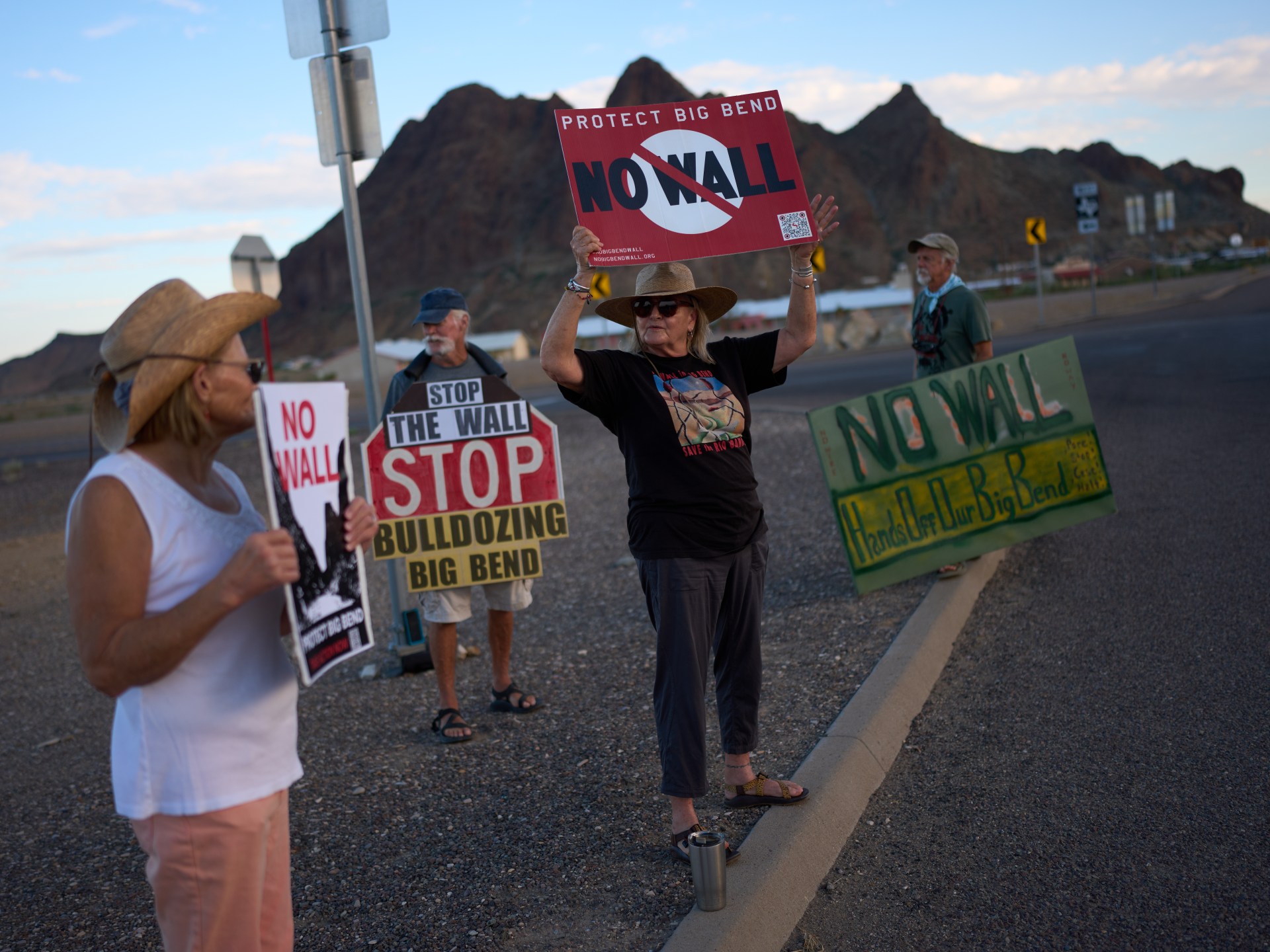
The Trump administration has intensified its domestic and international border enforcement push by formally requesting emergency intervention from the United States Supreme Court to authorize construction of physical barriers along the Texas-Mexico frontier. The legal maneuver directly challenges a lower federal court ruling that froze construction activities across critical ecological and strategic corridors in West Texas, including segments adjacent to the Big Bend region.
The dispute centers on the executive branch's reallocation of billions of dollars in Department of Defense counter-narcotics and military construction appropriations to finance border barrier projects. A federal district judge blocked the transfer of funds, determining that the executive circumvented constitutional legislative authority governing federal expenditures. The Department of Justice, petitioning the nation's highest court, contends that ongoing delays impair national security operations and weaken sovereign border management amidst persistent migration pressures. The legal clash represents a defining milestone in the contest between executive prerogative and statutory oversight, carrying immediate consequences for cross-border governance between Washington and Mexico City.
Global Trade & Economic Ripples
While the contested barrier primarily targets unauthorized entry, the escalating militarization and infrastructure divergence along the southern US frontier generate pronounced macroeconomic and logistics friction. Bilateral trade between the United States and Mexico exceeds $800 billion annually under the United States-Mexico-Canada Agreement (USMCA). Uncertainty surrounding cross-border jurisdictional authorities, commercial land access, and regional transit corridors poses structural headwinds for supply chain operations.
Industrial hubs in northern Mexico and border distribution networks in Texas rely heavily on fluid overland transportation. Legal standoffs and heavy infrastructure deployment risk diverting security personnel away from dedicated commercial inspection plazas, exacerbating transit bottlenecks at major ports of entry such as Laredo and El Paso. Freight demurrage, extended customs clearance intervals, and increased compliance expenditures directly affect integrated manufacturing operations, particularly in automotive components, electronics, and agricultural commodities. Furthermore, regulatory instability along transit corridors dampens nearshoring momentum, prompting multinational logistics operators to recalibrate their infrastructure investments.
Related Intelligence: US Alleges Canadian Election Interference Amid Deepening Bilateral Trade Rift
International Reactions & Diplomatic Stances
In Mexico City, federal authorities and diplomatic channels have reiterated concerns regarding unilateral infrastructure measures along the shared frontier. The Mexican Secretariat of Foreign Affairs maintains that sustainable border security requires multilateral development strategies rather than expansive physical fortifications, while highlighting bilateral treaty obligations governing international waterways along the Rio Grande.
Environmental organizations and indigenous communities spanning both sides of the border have joined legal challenges, arguing that uninhibited barrier construction violates international environmental compacts and disrupts transboundary ecosystems. Meanwhile, trade organizations and binational business councils have urged both federal governments to decouple commercial transit infrastructure from contentious domestic political disputes, emphasizing that predictable border crossings are essential for macroeconomic resilience in North America.
Strategic Outlook & Future Scenarios
The forthcoming determination by the Supreme Court will establish a vital constitutional precedent regarding presidential authority over cross-border infrastructure funding during non-congressionally declared emergencies. A ruling favoring the executive branch would enable rapid mobilization of construction contractors along sensitive frontier zones, likely escalating legal petitions before regional and international tribunals.
Conversely, a confirmation of the injunction would restrict executive discretionary spending, forcing federal authorities to seek negotiated legislative compromises or reallocate enforcement priorities toward surveillance technology rather than concrete barriers. Over the medium term, cross-border diplomatic negotiations will remain closely tied to these domestic legal battles, directly influencing bilateral enforcement pacts, regional labor movement dynamics, and the broader implementation of North American trade accords.
Join Our Official WhatsApp Channel
Receive live commodity alerts, policy changes, and commercial intelligence directly on WhatsApp.