
Surging Youth Protests in India Pose New Challenges for Modi Administration
Escalating Gen Z demonstrations across India mark the steepest rise in civil dissent in a decade, challenging Prime Minister Narendra Modi's economic mandate despite parliamentary stability.
The Core Development
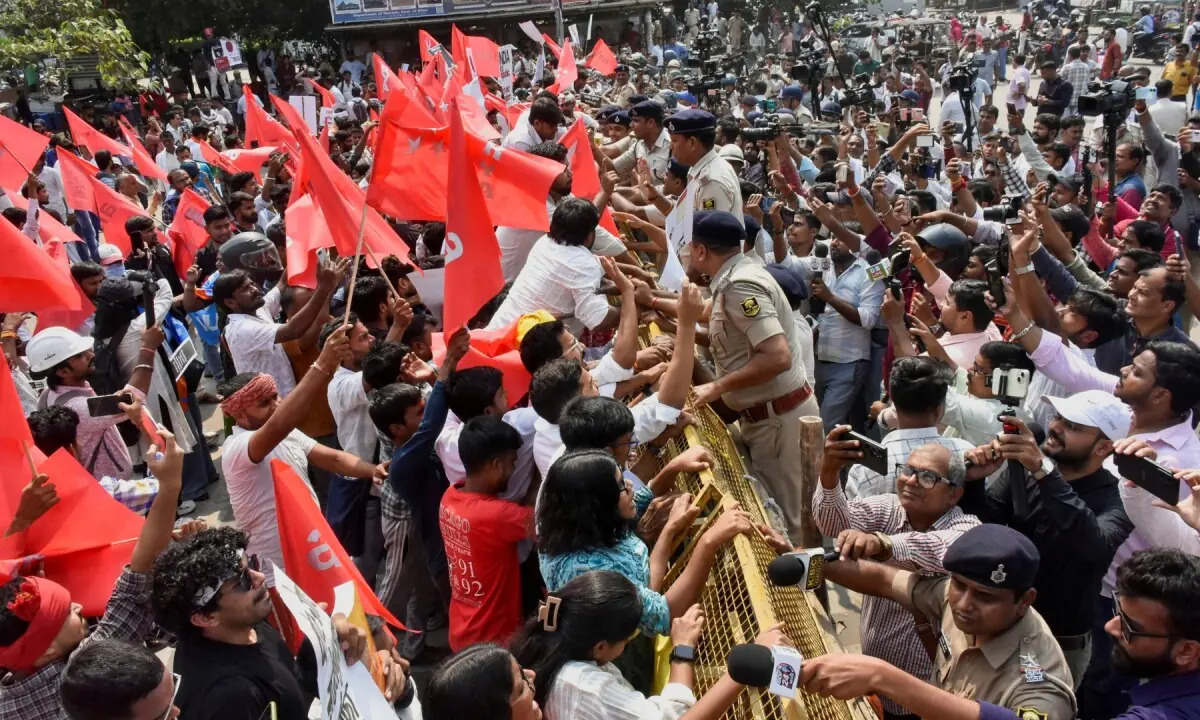
Recent confrontations across major urban centers in India have underscored a notable surge in youth-led civil dissent. Despite heavy deployment of paramilitary and state security forces, thousands of student activists and young workers breached municipal barricades last week, facing off against law enforcement units deployed to contain demonstrations. The mobilizations, accompanied by anti-government slogans and widespread sit-ins, signal escalating friction between the administration of Prime Minister Narendra Modi and younger demographics.
Data compiled by the Armed Conflict Location and Event Data (ACLED) Project indicates that street protests in India during the current calendar year are trending toward their highest volume in over a decade. Independent observers note that this wave is distinguished by the active leadership of Generation Z demonstrators, who are voicing systemic discontent over persistent graduate unemployment, localized governance failures, and tightening state controls on civil liberties. Although Prime Minister Modi secured a renewed coalition mandate in the recent general election—leaving his federal administration structurally secure until 2029—the demographic reality of nearly 250 million registered voters under the age of 30 represents a shifting political dynamic that New Delhi cannot easily marginalize.
Commercial & Economic Implications
For regional markets and cross-border commercial observers, prolonged civil unrest in South Asia's largest economy carries measurable macroeconomic consequences. Industrial corridors in northern and western India face episodic logistics disruptions, freight transit bottlenecks, and heightened security checkpoints that impair inland cargo movement. In instances where state authorities implement localized internet suspensions or transport curfews to suppress public gatherings, retail supply chains and digital payment ecosystems suffer immediate transaction declines.
From a regional perspective, including Pakistan's broader commercial and commodity ecosystem, domestic political instability in India influences regional risk premiums. Trade analysts observe that while formal bilateral commerce between Islamabad and New Delhi remains sharply constrained, third-country transshipment hubs—predominantly operating through the United Arab Emirates and Singapore—remain sensitive to supply chain volatility originating in Indian export clusters. Furthermore, sustained domestic unrest often compels central administrations to adopt protective fiscal measures, subsidies, or export curbs on staple agricultural commodities to placate domestic consumers, which in turn influences international commodity price benchmarks across South Asian wholesale markets.
Related Intelligence: Rising Western Deportations of Russian Dissidents Trigger Global Human Rights Fallout
Stakeholder Perspectives & Market Reactions
Corporate bodies, industrial federations, and urban business chambers have expressed cautious concern over repeated commercial disruptions. Retail associations in major metropolitan zones report interim footfall drops of 15 to 20 percent during organized strike days, pressing municipal authorities to balance public security protocols with the maintenance of unhindered commercial activity. Conversely, legal practitioners and human rights organizations have criticized preventive detentions and the rapid deployment of anti-riot squads, arguing that heavy-handed tactics exacerbate civil dissatisfaction.
Financial markets have maintained an attentive stance. While major equity indices have absorbed domestic friction without severe sell-offs, sovereign risk analysts note that institutional foreign investors monitor social cohesion as a key factor in long-term manufacturing re-shoring plans. Youth trade syndicates and non-aligned student bodies assert that official economic growth metrics fail to translate into adequate formal employment, driving widespread economic disenfranchisement among young graduates entering the workforce.
Forward Outlook & Key Watchpoints
Moving forward, the primary operational focus centers on whether youth dissent coalesce into a sustained national platform or remains fragmented across sectoral and regional lines. Market participants and regional enterprise desks will track upcoming state-level legislative elections, where youth voter turnout could shift regional policy execution and infrastructure spending priorities.
Key indicators to observe include federal employment schemes, potential fiscal recalibrations in state budgets to fund youth-targeted incentives, and the frequency of municipal disruption orders. While the central government retains adequate institutional leverage to manage localized street protests, prolonged unrest risks dampening consumer sentiment and diverting policy focus away from critical structural and industrial reforms.
Join Our Official WhatsApp Channel
Receive live commodity alerts, policy changes, and commercial intelligence directly on WhatsApp.