
Security Forces Neutralize Five Terrorists, Secure Hostages Along Kalat Highway
Security forces eliminated five militants and rescued 23 hostages along Balochistan's Kalat highway, recovering hijacked commercial transport vehicles and restoring vital freight access linking Karachi with regional wholesale hubs.
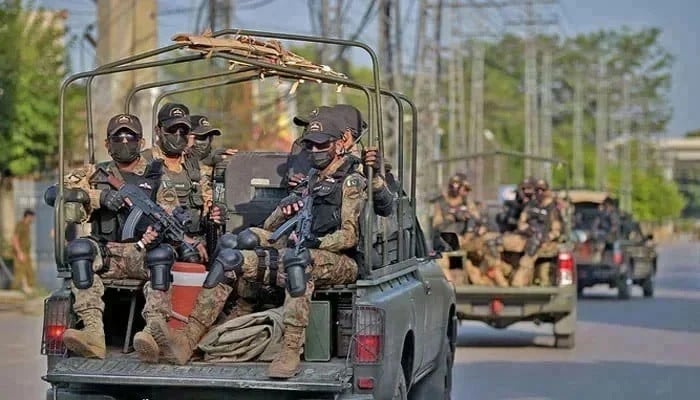
The Core Development
In a decisive counter-terrorism engagement in Balochistan's Kalat district, Pakistani security forces successfully eliminated five armed militants and secured the release of 23 civilian hostages from a concealed hideout, according to an official operational release by the Inter-Services Public Relations (ISPR). The tactical intervention was initiated following real-time intelligence indicating that an insurgent detachment had forcibly obstructed transit along the primary national corridor, establishing an unauthorized checkpoint to abduct commuters and impound commercial transport assets.
During the clearance sweep, tactical units recovered six heavy freight trucks, three commercial intercity buses, and two private passenger vehicles that had been detained by the hostile cell. Security personnel engaged the militants in an intensive firefight, neutralizing five combatants while securing the absolute extraction of all 23 hostages without civilian casualties. A substantial cache of automatic firearms, heavy ammunition, and communication equipment was confiscated from the scene, neutralizing an attempt to systematically choke traffic across the arterial route.
Commercial & Economic Implications
For enterprise distributors, bulk suppliers, and retail trade networks across Pakistan, the Kalat stretch of the N-25 National Highway serves as an indispensable economic lifeline. Connecting the Port of Karachi to Quetta, onward distribution networks, and the border terminal at Chaman into Afghanistan, this transit artery facilitates hundreds of millions of rupees in daily freight movements, essential raw materials, and cross-border commercial transit.
Direct insurgent ambushes on this transit spine inflict acute friction across domestic supply chains. The unlawful detention of commercial trucks disrupts delivery schedules for consumer packaged goods, industrial chemicals, and perishable produce. In response to roadside incursions, long-haul logistics syndicates often temporarily suspend dispatches, generating immediate transport backlogs at departure depots. The resulting delays inflate fleet demurrage charges, increase warehouse storage overheads, and provoke spot-market supply deficits across interior Balochistan. Wholesale prices for dry goods and fresh produce in Quetta and peripheral markets typically surge following transit freezes, transferring direct inflationary pressure onto local consumers.
Related Intelligence: Gaza Tech Infrastructure Collapse Threatens Digital Economy and Regional Workforce
Stakeholder Perspectives & Market Reactions
Commercial logistics bodies and trade associations have voiced profound relief at the rapid military response while renewing calls for institutionalized security along high-risk transport arteries. Transporter associations noted that frequent security alerts along remote reaches of the highway network exacerbate commercial vulnerabilities, prompting fleet operators to apply freight premiums ranging between 15 and 25 percent to offset heightened physical risks and elevated commercial insurance rates.
Officials from regional chambers of commerce highlighted that predictable road freight security is a fundamental prerequisite for commercial stability and regional trade flow. Analysts tracking supply chain economics observe that insurgent elements increasingly seek out soft economic targets, such as civilian freight convoys and passenger transport, aiming to impose disproportionate financial distress on provincial distribution channels and disrupt inter-provincial commerce.
Forward Outlook & Key Watchpoints
In the aftermath of the Kalat operation, regional law enforcement and paramilitary formations are anticipated to scale up motorized highway patrols, drone surveillance, and fortified checkpoints across vulnerable nodes of the N-25 corridor. Market participants and logistics planners will focus on three key operational indicators over the near term.
First, haulage operators will monitor whether authorities institute mandatory protected convoy schedules for nighttime commercial traffic, which would stabilize transit predictability albeit with minor scheduling adjustments. Second, trade intermediaries must account for localized turnaround delays as security forces implement comprehensive cargo inspections along checkpoints between Karachi and Quetta. Finally, sustaining long-term transit continuity along this corridor remains critical to stabilizing logistics costs, preserving trade velocity, and preventing structural supply-side price hikes across western Pakistan.
Join Our Official WhatsApp Channel
Receive live commodity alerts, policy changes, and commercial intelligence directly on WhatsApp.