
Russian Strikes on Kyiv Bridges Trigger Renewed Supply Chain Anxieties
Repeated Russian airstrikes on key Kyiv bridges escalate Ukraine's conflict, threatening internal logistics corridors and unsettling global commodity markets.
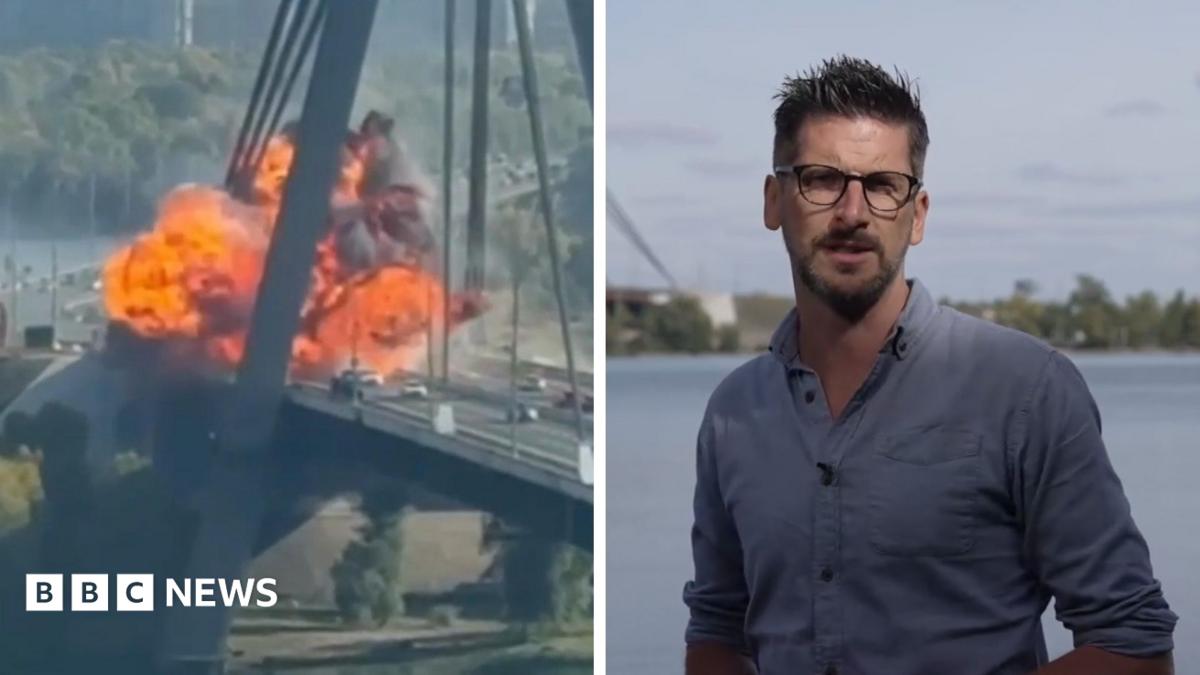
Geopolitical & Core Developments
The escalation of hostilities in Ukraine reached a critical juncture following consecutive days of targeted missile strikes against vital transportation infrastructure in the capital, Kyiv. BBC Ukraine correspondents reporting from the vicinity of the Northern Bridge confirmed repeated high-precision impacts that have severely compromised structural integrity over the Dnipro River. This tactical shift toward critical urban logistics represents a calculated effort by Russian forces to paralyze command-and-control networks, disrupt internal troop movements, and demoralize the civilian population.
The strikes form part of a broader, intensified aerial campaign across several Ukrainian oblasts, employing cruise missiles and Iranian-designed loitering munitions. State actors in Moscow have defended the targeting framework as part of a campaign to degrade military-industrial capacity, while Kyiv has condemned the attacks as a blatant violation of international humanitarian law aimed exclusively at terrorizing civilians. The destruction of arterial crossings forces a reevaluation of defense postures, as Ukrainian military command scrambles to secure alternative pontoon solutions and bypass routes to maintain logistical continuity between the eastern and western sectors of the country.
Global Trade & Economic Ripples
Beyond the immediate humanitarian toll, the systematic targeting of Ukraine's domestic transport arteries reverberates deeply through global commercial channels. Ukraine remains a cornerstone supplier of vital agricultural commodities—including wheat, corn, and sunflower oil—to European, Middle Eastern, and African markets. Any disruption to the nation's internal rail and road bridges directly impedes the movement of grain from inland silos to Black Sea ports and overland export terminals.
Insurance underwriters have swiftly adjusted risk assessments for vessels operating within proximity of the broader Black Sea basin, driving up maritime freight rates and marine war-risk premiums. Furthermore, the persistent threat to Ukrainian energy infrastructure introduces renewed volatility into European natural gas and electricity pricing benchmarks. Global commodity traders are closely monitoring these developments, fearing that prolonged degradation of transportation networks will choke off export volumes, exacerbating food security pressures and inflationary spirals across developing economies heavily reliant on Black Sea trade corridors.
Related Intelligence: Bosnian Separatism Threatens Regional Stability and Trade Routes
International Reactions & Diplomatic Stances
International condemnation was swift, with the United Nations reiterating its call for an immediate cessation of attacks against civilian infrastructure. Western allies, including the G7 nations, condemned the renewed barrage as an act of desperation by Moscow in the face of stalled ground offensives. In Washington, European capitals, and Brussels, diplomats are hastily convening emergency consultations to expedite previously pledged air defense systems, including advanced battery units and electronic warfare equipment designed to shield critical bridges and power grids.
Market analysts and financial institutions have factored these geopolitical shocks into their medium-term forecasts, warning that prolonged infrastructure degradation will necessitate larger international financial packages for Kyiv's state budget. The International Monetary Fund and World Bank are reportedly reviewing disbursement conditions to ensure macroeconomic stability in Ukraine remains intact despite the physical battering of its national capital.
Strategic Outlook & Future Scenarios
As winter approaches, the trajectory of the conflict points toward an intensified war of attrition centered on critical infrastructure. The capability of Ukrainian air defenses to intercept incoming projectiles will dictate whether transport arteries can be rapidly repaired or whether the capital faces permanent logistical bottlenecks. Upcoming diplomatic summits, including the upcoming United Nations General Assembly high-level debates and regional security conferences, are expected to feature intense lobbying by Kyiv for enhanced long-range strike capabilities and tighter enforcement of Western sanctions on dual-use technology imports into Russia.
For global supply chain managers and commodity investors, the operational environment remains fraught with extreme uncertainty. The persistence of kinetic activity near primary urban transit nodes signals that geopolitical risk premiums will remain permanently elevated, permanently altering trade routes and reinforcing the fragmentation of global commerce.
Join Our Official WhatsApp Channel
Receive live commodity alerts, policy changes, and commercial intelligence directly on WhatsApp.