
Real Madrid Demands La Liga President Resign Following Nazi Comparison
Real Madrid has demanded the immediate resignation of La Liga chief Javier Tebas after he compared the club's television network to Nazi Germany's propaganda minister, escalating a bitter institutional crisis.
Geopolitical & Core Developments
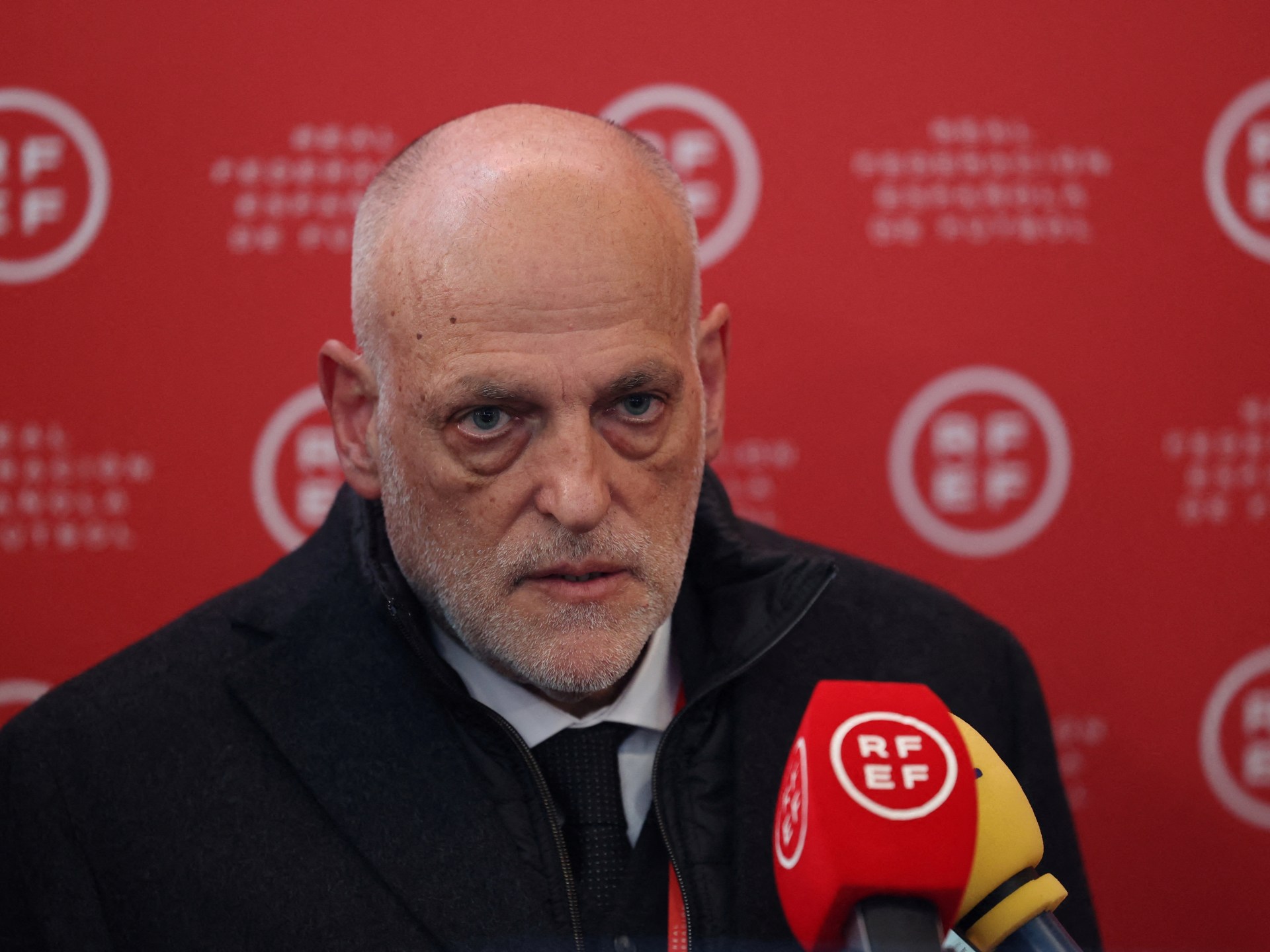
A severe institutional crisis has erupted across European sports governance after Real Madrid CF demanded the immediate resignation of La Liga President Javier Tebas. The dispute escalated rapidly following remarks made by Tebas at a public media summit, where he likened the editorial strategy of Real Madrid TV to the methods employed by Joseph Goebbels, the minister of propaganda in Nazi Germany.
The Spanish football powerhouse responded with an uncompromising institutional communiqué, condemning Tebas's statements as unacceptable, defamatory, and entirely inappropriate for the head of an elite international league. Club executives stated that drawing parallels between contemporary sports journalism and the totalitarian machinery of the Third Reich crosses established legal and ethical boundaries. The confrontation represents the culmination of years of friction between Real Madrid president Florentino Perez and Tebas, characterized by long-running battles regarding domestic governance, broadcast distributions, and the contested European Super League project.
Global Trade & Economic Ripples
While rooted in sports administration, the turmoil carries tangible implications for international sports media investments, commercial sponsorships, and European entertainment asset valuations. La Liga serves as one of Spain's most significant cultural exports, contributing over 1.4 percent to national gross domestic product and generating billions of euros in overseas broadcasting rights across the Middle East, North America, and Asia-Pacific markets.
Institutional instability at the helm of La Liga risks destabilizing negotiations with sovereign wealth funds, private equity consortia, and multinational telecommunication providers. Private equity firm CVC Capital Partners, which injected approximately 2 billion euros into La Liga under the 'LaLiga Impulso' agreement—a deal vehemently contested in court by Real Madrid and FC Barcelona—faces heightened reputational friction. Escalating acrimony between the league's marquee club and its governing body threatens the monetization of audiovisual rights at a time when global media conglomerates are recalibrating expenditures amid tightening capital markets.
Related Intelligence: Zelensky Courts European Backing Amid Strained Washington Ties and Aid Uncertainty
International Reactions & Diplomatic Stances
Public discourse across European sports bodies and civil rights organizations was swift. Several human rights advocates and historical societies voiced concern over the casual invocation of Holocaust-era Nazi figures in commercial disputes, describing the rhetoric as a trivialization of historic atrocities. Legal analysts in Madrid noted that the remarks expose the league's leadership to potential civil litigation for reputational damages.
Sports business analysts pointed out that Tebas has historically relied on aggressive public communications to counter Real Madrid's institutional leverage. However, market observers emphasized that this particular comparison has isolated the La Liga executive from key corporate stakeholders. Neither Spain's High Council for Sports (CSD) nor UEFA has issued a punitive measure, though domestic sports officials have privately urged both parties to avoid further rhetoric that could compromise Spain's joint hosting arrangements for the 2030 FIFA World Cup.
Strategic Outlook & Future Scenarios
The trajectory of this crisis points toward heightened legal polarization and governance challenges within Spanish and European football administration. Tebas, who has served as La Liga president since 2013 and secured re-election in late 2023, maintains strong support among mid-tier and smaller Spanish clubs that rely heavily on centralized revenue sharing. Consequently, an outright resignation remains improbable without direct intervention from Spain's sports administrative tribunals.
Nonetheless, the fallout is poised to accelerate Real Madrid's strategic pivot away from centralized domestic authority toward pan-European alternative competitions. The friction strengthens Real Madrid's determination to advance alternative competition frameworks that bypass domestic leagues. Over the coming quarters, institutional investors and international broadcasters will closely monitor whether the public hostility impairs forthcoming international media auctions and sponsorship valuations, testing the commercial resilience of European sports governance.
Join Our Official WhatsApp Channel
Receive live commodity alerts, policy changes, and commercial intelligence directly on WhatsApp.