
Punjab Revises Public School Timings Across Province Effective Mid-October
The Punjab School Education Department has issued updated operating hours for all public schools across the province, triggering widespread logistical and commercial adjustments starting October 16.
The Core Development
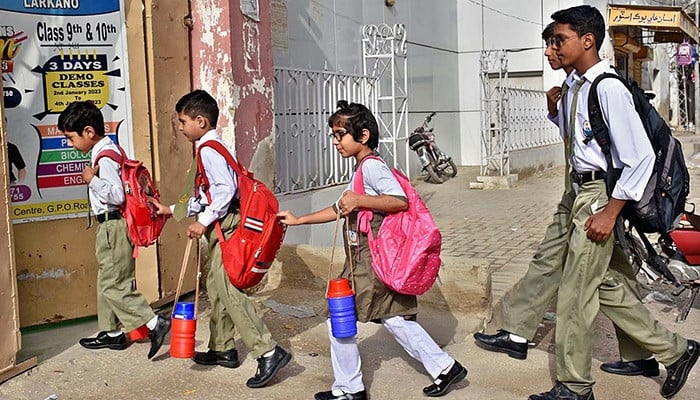
The Punjab School Education Department has officially notified revised operational hours for all public academic institutions operating across the province, establishing a unified schedule that takes formal effect from October 16. The directive applies to primary, elementary, high, and higher secondary schools across all 36 districts of Punjab, including major metropolitan areas such as Lahore, Rawalpindi, Faisalabad, Multan, and Gujranwala.
According to the administrative notification, the shift in operating hours reflects seasonal adjustments designed to optimize daylight utilization, mitigate seasonal transition challenges, and maintain instructional continuity. The revised timings delineate staggered shifts for single-shift and double-shift institutions to alleviate operational bottlenecks. Single-shift institutions will open their gates earlier in the morning and dismiss students in the early afternoon, while double-shift establishments have been assigned strictly recalibrated windows to prevent overlaps between morning and evening cohorts. Administrative leadership across district education authorities has been instructed to ensure rigorous compliance, with provincial monitoring teams tasked with carrying out unannounced inspections.
Commercial & Economic Implications
The recalibration of school schedules across Punjab generates a direct economic ripple effect on ancillary consumer markets, intra-city transit logistics, and urban retail patterns. School operational shifts fundamentally govern peak morning traffic volumes in high-density urban corridors. The sudden realignment of arrival and departure intervals shifts traffic flow dynamics, directly impacting commuter density, commercial fleet movements, and distribution routes for wholesale freight.
For commercial transport operators—comprising private van networks, contracted rickshaw drivers, and fuel supply chains—the revised hours require an immediate re-engineering of route scheduling and operational cost structures. Morning retail hubs, fast-moving consumer goods (FMCG) vendors catering to school cafeterias, and early-morning bakeries must advance production cycles by thirty to forty-five minutes to capture peak family transit spending. Furthermore, fuel consumption patterns during morning rush hours directly influence retail petroleum station inventory management along primary educational arteries across Lahore, Faisalabad, and Rawalpindi. The disruption to existing family routines also shifts peak buying hours for neighborhood grocery stores and small-scale retailers servicing domestic households.
Related Intelligence: Mass Public Sector Strike Across Ireland Paralyzes Core Services
Stakeholder Perspectives & Market Reactions
Private transport associations and public transport operators have responded cautiously to the directive, pointing to compressed transition windows to adjust route agreements with parents and fleet drivers. Transport syndicates in Lahore have noted that compressed schedules could intensify bottleneck congestion around prominent institutional clusters unless traffic enforcement agencies synchronize traffic light cycles with the revised school gates.
Parental organizations have broadly welcomed standard seasonal timing adjustments, emphasizing that predictable winter-transition schedules alleviate health risks associated with early-morning seasonal shifts and poor autumn-winter air quality. However, urban working parents have expressed concern regarding the mismatch between public school dismissal hours and standard corporate office operating windows, which complicates childcare logistics and working-hour productivity. Trade and commerce bodies, particularly urban merchant associations, have urged municipal authorities to deploy dedicated traffic wardens to prevent school-bound congestion from paralyzing access to wholesale markets and traditional commercial centers during critical early trading hours.
Forward Outlook & Key Watchpoints
The implementation phase starting October 16 serves as an immediate test of municipal traffic management and provincial administrative oversight. Market watchers and policy analysts will closely track whether private school networks choose to voluntarily harmonize their schedules with public sector benchmarks, as divergent private-public timetables historically lead to prolonged multi-peak traffic congestion across major urban junctions.
In the medium term, environmental factors—particularly the anticipated escalation of winter smog across central and northern Punjab—may prompt further emergency revisions by the environmental protection and education departments. Analysts recommend that logistics managers, supply chain operators, and commercial distributors monitor municipal traffic notifications closely over the coming weeks to mitigate transport bottlenecks during core morning delivery windows.
Join Our Official WhatsApp Channel
Receive live commodity alerts, policy changes, and commercial intelligence directly on WhatsApp.