
Mass Public Sector Strike Across Ireland Paralyzes Core Services
A massive nationwide public sector strike has brought core government, transit, and healthcare operations across the Republic of Ireland to an abrupt standstill amid escalating disputes over compensation.
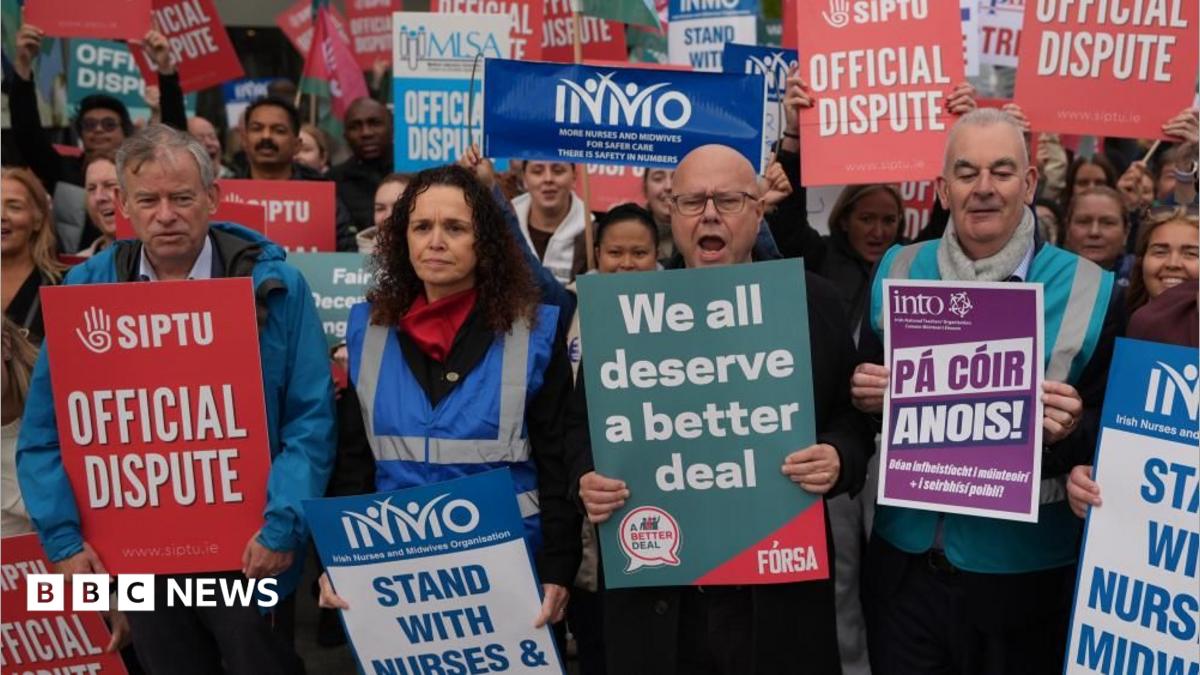
Geopolitical & Core Developments
A coordinated nationwide strike comprising hundreds of thousands of public sector employees has severely disrupted civil infrastructure across the Republic of Ireland. The industrial action marks the culmination of protracted, fractured negotiations between domestic trade union confederations and government representatives regarding wage adjustments in an era of persistent post-inflation cost-of-living pressures. Operations across state hospitals, primary and secondary educational institutions, local government offices, and essential public transit corridors ground to a virtual halt as workers manned pickets across major metropolitan centers including Dublin, Cork, Limerick, and Galway.
The standoff between union leaders and the Department of Public Expenditure and Reform centers on demands for structural salary revisions that match cumulative inflationary erosions over the past several fiscal quarters. While the government has consistently cited fiscal prudence and the requirement to maintain balanced budgetary commitments under European fiscal compact guidelines, labor unions maintain that public sector purchasing power has contracted to an unsustainable degree. The scale of the mobilization presents the most severe domestic administrative crisis facing the coalition government in recent years, testing the stability of state apparatuses and threatening public confidence in civil governance.
[Global Trade](/news/yemen-war-scenarios-houthi-red-sea-trade-impact) & Economic Ripples
While largely domestic in administrative scope, the paralysis of state functions carries immediate operational ramifications for international trade channels and multinational enterprise operations based in Ireland. Dublin serves as a critical transatlantic logistical, technological, and pharmaceutical gateway for the European Union. The stoppage of municipal administrative personnel, customs administrative support, and regional inspection personnel at maritime hubs such as Dublin Port and the Port of Cork has led to localized clearance bottlenecks for outbound freight and roll-on/roll-off shipping services connecting Ireland to the United Kingdom and continental Europe.
Furthermore, the operational freeze impinges upon the seamless regulatory approvals required by the substantial multinational corporate footprint anchored in the country. Delays in administrative permits, commercial filings, and public infrastructure support have introduced temporary friction into global pharmaceutical supply chains and advanced manufacturing networks. Currency markets exhibited minor sensitivity, with euro valuations reflecting marginal domestic sentiment fluctuations, while credit rating agencies monitor the potential for long-term state budgetary revisions to satisfy wage demands.
Related Intelligence: Yemen War at Crossroads as Escalation Threatens Global Trade Corridors
International Reactions & Diplomatic Stances
European labor confederations and cross-border trade organizations have closely monitored the development, offering formal statements of solidarity with the striking Irish workforces. The European Trade Union Confederation emphasized that systemic wage degradation across Europe's public workforce threatens the basic delivery of universal social services and economic resilience. Regional market observers note that the Irish dispute mirrors similar labor friction across other EU member states, where public finances are strained under elevated debt financing costs and strict fiscal rules.
Conversely, enterprise lobbies and international credit analysts have urged an expeditious, mediated resolution to mitigate structural damage to Ireland's foreign direct investment ecosystem. Business groups emphasize that Ireland's global economic advantage relies heavily on institutional predictability, efficient bureaucratic processes, and harmonious tripartite social partnerships. Market analysts warn that protracted labor unrest could prompt multinational conglomerates to reassess operational continuity plans for European shared services and regional distribution nodes.
Strategic Outlook & Future Scenarios
The trajectory of the dispute remains contingent on whether the Workplace Relations Commission can broker an emergency conciliation package capable of reconciling public purse constraints with union thresholds. Should the government refuse to escalate budgetary allocations, union leadership has signaled the likelihood of rolling, indefinite strike actions targeting specific administrative choke points, including revenue services, port clearances, and state energy administrative units.
In the medium term, prolonged disruption may compel the Irish government to deploy contingency reserve funds or recalibrate planned fiscal surpluses to forestall further economic paralysis. However, any concessions granted to the public sector will inevitably generate spillover demands across private manufacturing and logistics sectors, compounding domestic wage-price spirals and exerting upward pressure on operational costs across Ireland's export-oriented economy.
Join Our Official WhatsApp Channel
Receive live commodity alerts, policy changes, and commercial intelligence directly on WhatsApp.