
Punjab Assembly Committee Probes Nominal Rent for Prime Lahore Gymkhana Land
A Punjab Assembly special committee is reviewing decades of administrative failures after Lahore Gymkhana's leadership admitted its Rs5,000 annual lease for 100 acres of prime state land is wholly inadequate.
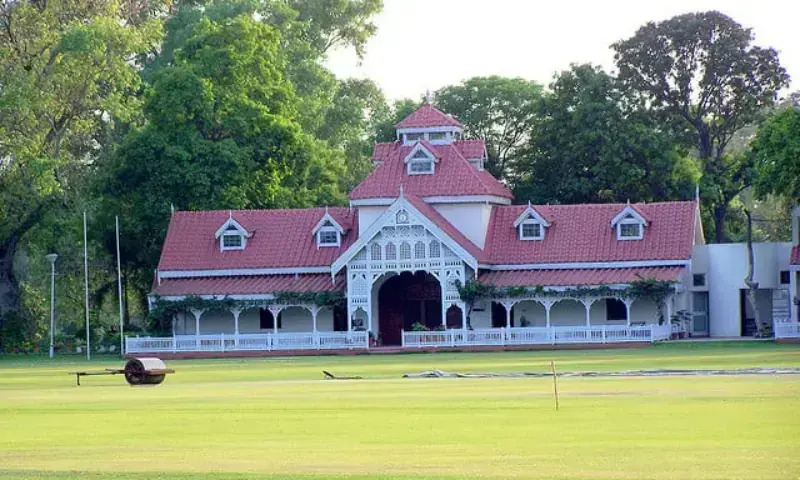
The Core Development
A special committee of the Punjab Assembly, chaired by Member of Provincial Assembly (MPA) Samiullah Khan, has initiated formal proceedings examining decades-long administrative oversights that permitted elite institutions to occupy high-value public real estate at nominal fees. The scrutiny intensified after Lahore Gymkhana Club Chairman Salman Siddique testified before the legislative panel, conceding that the club's existing lease payment of Rs5,000 per annum for over 100 acres of prime land in Lahore is unjustifiable.
Appearing alongside senior club executives, Siddique acknowledged that the historic lease rate bore no correlation to the scale of the acreage or the current financial strength of the institution. Contrasting the club's affluent present standing with its historical balance sheet from the 1990s, the management expressed surprise at the continuity of the token rate and indicated that a realistic minimum payment should be at least Rs10 million per year. The club confirmed its willingness to open financial records and cooperate with the assembly's review into the contractual framework governing the state-owned parcel.
Commercial & Economic Implications
The Lahore Gymkhana inquiry highlights a wider structural inefficiency across Pakistan's public asset management ecosystem. Provincial administrations manage thousands of acres of prime urban land under colonial-era leases or outdated rental structures. These arrangements deprive the provincial exchequer of billions of rupees in recurring non-tax revenue at a time when Punjab faces severe fiscal consolidation demands, debt obligations, and resource deficits for development expenditure.
For the commercial sector and real estate markets, nominal leases on elite institutional spaces distort commercial property valuations. Prime commercial land across Lahore's Upper Mall and Gulberg corridors commands billions of rupees per acre in open market transactions. When public resources are tied up in heavily subsidised recreational leases, commercial density is constrained, which raises secondary rental rates for retail businesses, logistics providers, and corporate offices. Recalibrating municipal and provincial real estate portfolios to market-linked benchmarks is essential to expand non-tax municipal revenues without increasing sales taxes or levies on formal retail traders and wholesale distributors.
Related Intelligence: Starbucks Tightens China Store Policy Amid Escalating Retail Rivalry
Stakeholder Perspectives & Market Reactions
Committee members noted that the admission by Lahore Gymkhana's own management underscored the culpability of successive state departments, including the Board of Revenue and the Punjab Communications and Works Department, for failing to renegotiate legacy contracts. Legal analysts point out that state land leases rarely contain adequate inflation-indexing mechanisms, enabling institutional tenants to benefit from long-term capital appreciation while paying fractions of standard municipal rates.
Business advocacy groups and trade bodies in Punjab have expressed frustration over the disparity between commercial taxation frameworks. Small and medium enterprises, industrial manufacturers, and retail shops face regular property revaluations, trade licensing hikes, and commercial tariff adjustments. Representatives from urban development institutes argue that rationalising institutional lease terms is a matter of basic fiscal equity, stressing that state-owned real estate leased to self-sustaining social and sports clubs must generate competitive returns that directly fund municipal services and public infrastructure.
Forward Outlook & Key Watchpoints
The Punjab Assembly special committee has instructed relevant government departments to provide complete historical lease agreements, valuation assessments, and correspondence detailing why contract revisions stalled over past decades. The inquiry will likely establish a legal and fiscal precedent for other elite clubs, recreational facilities, and semi-private institutions occupying crown land in Rawalpindi, Faisalabad, and Multan.
Key watchpoints include whether the Punjab Government will enact an overarching state-land lease policy establishing automatic periodic rent revisions tied to official district collector rates or consumer inflation benchmarks. Additionally, market participants are monitoring whether retrospective recovery mechanisms will be pursued or if future lease renewals will mandate formal commercial renegotiation across all public assets.
Join Our Official WhatsApp Channel
Receive live commodity alerts, policy changes, and commercial intelligence directly on WhatsApp.