
LHC Summons Top Punjab Officials Over Prolonged Detention of Imran Khan Sisters
The Lahore High Court has summoned the Punjab home secretary and Kot Lakhpat jail superintendent regarding the continued detention of Imran Khan's three sisters beyond their mandated 30-day period under public order laws.
The Core Development
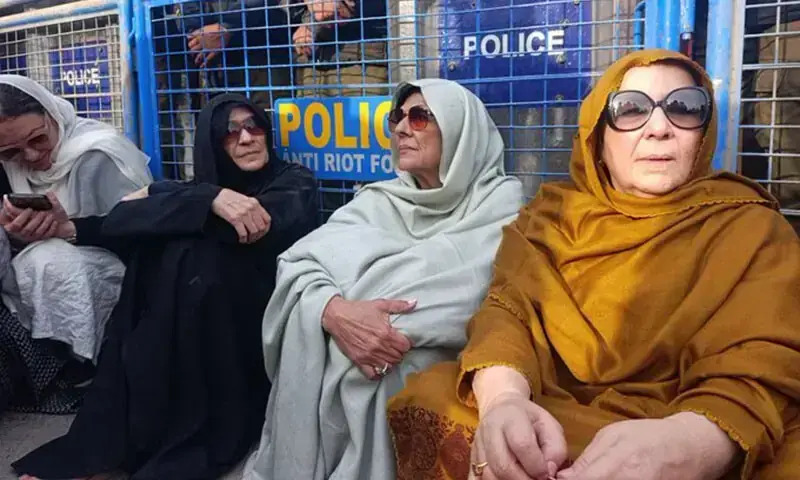
The Lahore High Court (LHC) on Thursday issued formal summons to the Punjab Home Secretary and the Superintendent of Kot Lakhpat Jail, requiring their direct appearance in connection with a petition challenging the continued detention of three sisters of former Prime Minister Imran Khan. The legal challenge stems from the prolonged confinement of Aleema Khan, Noreen Niazi, and Uzma Khan, who were initially taken into administrative custody in September under the provisions of the Punjab Maintenance of Public Order (MPO) Ordinance, 1960.
The initial preventive detention orders were issued for a duration of 30 days amidst intensified political agitation, as the opposition Pakistan Tehreek-e-Insaf (PTI) mobilized supporters for demonstrations directed toward Islamabad. A fresh habeas and release petition filed by Aleema Khan’s son, Shahrez Khan, contended that despite the formal expiration of the statutory 30-day detention period, the provincial executive branch and prison authorities failed to release the detainees from Lahore’s Kot Lakhpat facility. The petition argues that continuing to hold citizens without a renewed, judicially sanctioned order or fresh legal justification constitutes a direct violation of constitutional protections ensuring due process and personal liberty.
Commercial & Economic Implications
While ostensibly a legal and human rights contest, the recurring cycle of preventative detentions, political friction, and litigation generates immediate friction across regional wholesale and retail ecosystems. The persistent political polarization centered in Punjab and the federal capital has led to frequent administrative countermeasures, including the imposition of Section 144, sudden highway checkpoints, and localized transport curbs.
For major distribution hubs such as Lahore, Gujranwala, and Faisalabad, continuous political volatility hampers freight transit times, driving up logistics costs for consumer goods and agricultural produce. Transport operators frequently build risk premiums into inter-provincial shipping rates when legal and political crises escalate to court standoffs and call-outs for street protests. Furthermore, urban commercial districts experience suppressed consumer footfall and erratic operating hours whenever heightened police deployments occur around sensitive government installations and judicial complexes. The resulting climate of regulatory uncertainty impairs inventory planning and delays short-term commercial credit deployment among domestic traders.
Related Intelligence: Starbucks Tightens China Store Policy Amid Escalating Retail Rivalry
Stakeholder Perspectives & Market Reactions
Legal practitioners and constitutional scholars have increasingly voiced alarm over the administrative reliance on the MPO Ordinance to execute preventative arrests. Jurists argue that utilizing executive detention instruments to neutralize political leadership weakens statutory accountability and burdens high courts with repetitive habeas litigation, shifting judicial bandwidth away from commercial dispute resolution and tax adjudication.
Conversely, provincial law enforcement officials maintain that targeted preventative detentions are essential statutory mechanisms to avert public disorder, prevent economic paralysis from unannounced sit-ins, and ensure the safety of urban transport corridors. Business community representatives, including wholesale merchant associations in central Punjab, have consistently urged restraint from both the administrative apparatus and political parties. Trade bodies underscore that frequent legal confrontations spill over into street-level disruptions, dampening retail sentiment at a critical juncture when local markets are grappling with broader macroeconomic stabilization challenges.
Forward Outlook & Key Watchpoints
The forthcoming proceedings before the Lahore High Court will focus on whether the Punjab Home Department possessed valid statutory authority to extend the detention or if procedural non-compliance occurred at the prison administration level. Legal analysts anticipate the court will demand explicit documentation justifying the legal status of the detainees following the lapse of the primary 30-day window.
Key parameters to monitor in the coming days include whether the provincial administration issues retroactive detention notifications or initiates fresh legal proceedings under alternative criminal statutes. In parallel, market watchers and transport networks will assess whether the judicial determinations trigger further protest mobilization or, conversely, de-escalate political friction along Punjab's core commercial transit routes.
Join Our Official WhatsApp Channel
Receive live commodity alerts, policy changes, and commercial intelligence directly on WhatsApp.