
PTI Rejects Government Reconciliation Without Imran Khan Participation
Pakistan Tehreek-e-Insaf declares political reconciliation impossible without incarcerated founder Imran Khan, following the complete breakdown of dialogue talks with the federal government.
The Core Development
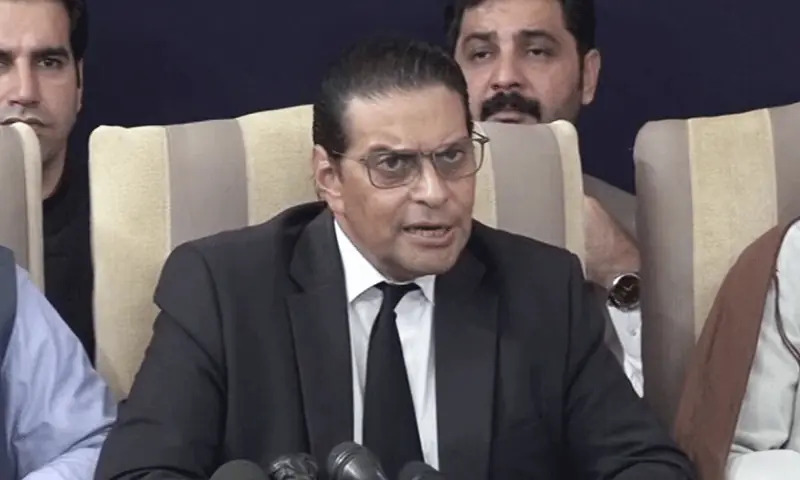
Political tensions in Pakistan escalated significantly following the official breakdown of reconciliation talks between the ruling coalition and the Pakistan Tehreek-e-Insaf (PTI). During a high-stakes press conference held at the Khyber Pakhtunkhwa House in Islamabad on Monday, PTI Secretary General Salman Akram Raja laid bare the opposition's stance, declaring that any future dialogue is entirely contingent upon the inclusion of incarcerated party founder Imran Khan.
The talks, which collapsed over the weekend, hit an insurmountable roadblock when government negotiators reportedly refused to facilitate direct consultations with the former prime minister, who remains imprisoned at Adiala Jail. Raja emphasized that Khan possesses the singular political leverage and capability required to bridge the widening gulf between the state apparatus and the broader citizenry. According to the PTI leadership, party representatives were denied access to seek crucial guidance from their founder, rendering the negotiation process a futile exercise. Furthermore, the opposition accused the ruling administration of negotiating in bad faith and failing to adopt a comprehensive, collective approach toward resolving the country's multifaceted structural crises.
Commercial & Economic Implications
For Kalyar Traders and the wider business community across Pakistan, persistent political volatility directly translates into severe commercial uncertainty. Financial markets, retail trade networks, and wholesale distribution channels are highly sensitive to prolonged deadlocks between the executive branch and major opposition forces. Investor confidence, which is vital for foreign direct investment and domestic capital formation, continues to be dampened by ongoing street agitation and legislative paralysis.
Economists and market analysts warn that a protracted political stalemate risks derailing critical fiscal reforms mandated by international financial institutions, potentially exerting upward pressure on inflation, exchange rate volatility, and borrowing costs. Supply chains and consumer pricing mechanisms are already strained under the weight of high energy tariffs and taxation measures; political turbulence exacerbates these vulnerabilities by discouraging commercial expansion and dampening retail turnover across urban and rural markets alike.
Related Intelligence: Islamabad Court Orders Imran Khan Production in Judicial Complex Attack Case
Stakeholder Perspectives & Market Reactions
Trade bodies, chambers of commerce, and legal experts have expressed profound dismay over the latest collapse in political communication. Representatives from major business associations noted that the commercial sector requires a predictable policy environment and institutional stability to plan medium- and long-term investments. Legal analysts point out that bypassing key political stakeholders in legislative and constitutional discussions undermines the democratic consensus necessary for sustainable economic governance.
Public sentiment, reflected through various consumer and labor forums, indicates growing fatigue with relentless political confrontation at the expense of bread-and-butter economic issues. While government spokespersons maintain that the ruling coalition remains open to unconditional dialogue within constitutional bounds, they insist that legal proceedings against political leaders must follow due judicial process independently of political negotiations.
Forward Outlook & Key Watchpoints
As the political landscape hardens, market observers and stakeholders are closely monitoring several critical indicators over the coming weeks. Key watchpoints include potential announcements of intensified street protests by the opposition, legislative maneuvers in Parliament, and any signals from the judiciary or establishment regarding prisoner access and political mediation.
Should the deadlock persist without a viable framework for compromise, business leaders fear an escalation of disruptions that could impact inter-provincial trade corridors and consumer demand heading into the next fiscal quarter. The ultimate trajectory of Pakistan's economic recovery remains inextricably linked to whether political actors can forge a minimum working consensus to prioritize national stability over partisan friction.
Join Our Official WhatsApp Channel
Receive live commodity alerts, policy changes, and commercial intelligence directly on WhatsApp.