
Islamabad Court Orders Imran Khan Production in Judicial Complex Attack Case
An Islamabad court has ordered the production of jailed PTI founder Imran Khan in connection with the Judicial Complex attack case, escalating legal confrontations.
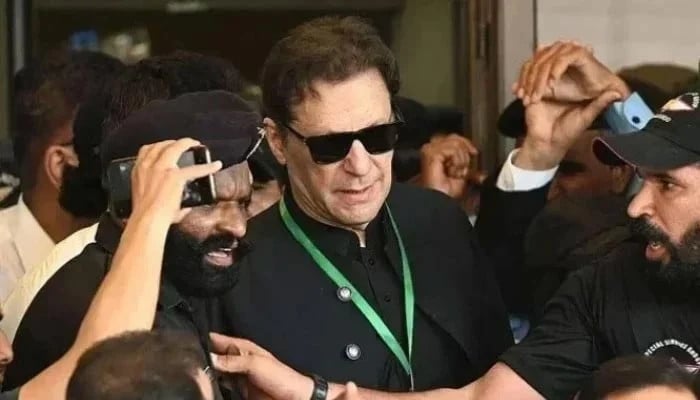
The Core Development
An anti-terrorism court in Islamabad has issued strict directives for the production of Pakistan Tehreek-e-Insaf (PTI) founder Imran Khan in the high-profile Judicial Complex attack case. The legal proceedings, centered around allegations of vandalism, rioting, and interference with state machinery during previous court appearances, have entered a critical phase. Law enforcement agencies, in coordination with prison authorities, are formulating comprehensive security blueprints to manage the high-security transfer amidst a charged political atmosphere. The timeline of the case traces back to clashes between party supporters and security personnel, which prosecutors argue constitute a systematic obstruction of justice.
Judicial authorities have emphasized the necessity of ensuring the defendant's physical presence to frame charges and advance the trial. However, logistical hurdles and security assessments remain formidable challenges for the capital's administration. The prosecution has compiled extensive video evidence, police reports, and eyewitness testimonies to substantiate the charges, while defense counsels are preparing robust legal challenges regarding the maintainability of the FIR and jurisdictional constraints.
Commercial & Economic Implications
While primarily a legal and political development, sustained political turbulence of this magnitude exerts significant indirect pressure on Pakistan's commercial landscape. Retail trade, wholesale distribution networks, and urban markets in major economic hubs like Islamabad, Rawalpindi, and Lahore frequently experience disruptions during major court appearances and associated political demonstrations. Road closures, heightened security checkpoints, and container placements severely hamper intra-city logistics and supply chain efficiency, resulting in localized revenue losses for small and medium enterprises (SMEs).
Furthermore, investor sentiment remains acutely sensitive to political friction. Persistent uncertainty surrounding the rule of law and political stability undermines consumer confidence and delays corporate investment decisions. Inflationary pressures, already exacerbated by structural economic reforms, find temporary compounding effects when commercial activity is stalled by urban blockades. Wholesale markets report cautious inventory management as traders hedge against sudden disruptions caused by political volatility.
Related Intelligence: PTI Rules Out Reconciliation Without Imran Khan as Political Standoff Deepens
Stakeholder Perspectives & Market Reactions
Business councils and trade associations, including representatives from chambers of commerce, have voiced growing apprehension regarding the economic toll of uninterrupted political agitation. Industry leaders maintain that sustained legal battles involving key political figures distract from critical economic policymaking and structural reforms required under international financial programs. Business bodies have repeatedly called for political reconciliation to insulate commercial activities from judicial and street-level confrontations.
Legal experts remain divided on the procedural dimensions of the production orders. Constitutional lawyers point to the complex interplay between security risks and the fundamental right to a fair trial, noting that managing high-profile detainees requires a delicate balance between state writ and due process. Meanwhile, public response remains sharply polarized, reflecting broader societal divisions that continue to influence consumer sentiment and market dynamics.
Forward Outlook & Key Watchpoints
As the court date approaches, all eyes remain fixed on the logistical execution of the production order and the immediate security response in the capital. Key watchpoints include potential traffic restrictions around the Judicial Complex, the posture of political workers, and the formal rulings delivered during the upcoming hearing. Economists and market analysts will closely monitor whether the proceedings trigger widespread street protests capable of disrupting commercial corridors. Ultimately, the resolution of these foundational legal cases will serve as a critical barometer for Pakistan's institutional stability and predictability in the medium term.
Join Our Official WhatsApp Channel
Receive live commodity alerts, policy changes, and commercial intelligence directly on WhatsApp.