
Khyber Pakhtunkhwa Government Faces Scrutiny Amid Performance Warnings and Economic Pressures
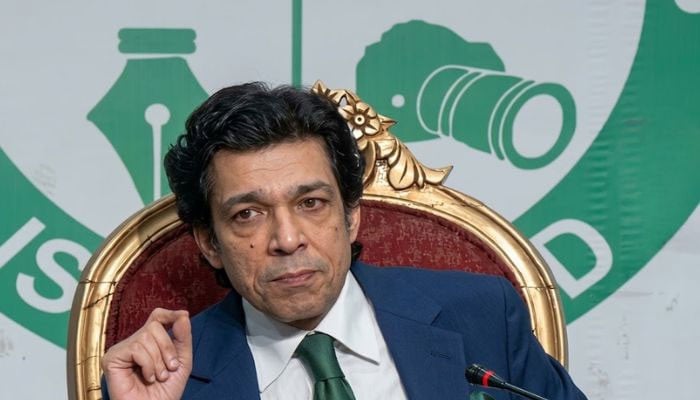
Senator Faisal Vawda warned that the Khyber Pakhtunkhwa government could be replaced if it fails to deliver on governance and administrative performance benchmarks.
The Core Development
Independent Senator Faisal Vawda issued a decisive political assessment regarding the administrative trajectory of Khyber Pakhtunkhwa, warning that the incumbent provincial setup will be replaced if it fails to achieve required governance and delivery benchmarks. Speaking during an appearance on a national broadcast in Islamabad, Vawda emphasized that constitutional mechanisms and federal oversight remain active counterweights against administrative paralysis. The remarks arrive amid heightened political friction between the Pakistan Tehreek-e-Insaf (PTI)-led provincial administration in Peshawar and the federal coalition in Islamabad.
Vawda asserted that governance failures, public service delivery breakdowns, or sustained confrontation with state institutions would not be tolerated indefinitely. He pointed out that while elected mandates are respected, the practical continuity of any administration depends on measurable outcomes rather than political rhetoric. The timeline of his remarks aligns with escalating administrative strains across the province, where financial commitments, infrastructure projects, and law enforcement mandates face significant structural bottlenecks under the current provincial leadership.
Commercial & Economic Implications
The warning introduces fresh political risk to an already fragile economic landscape in northwestern Pakistan. Khyber Pakhtunkhwa serves as the primary commercial conduit for Pakistan-Afghanistan bilateral trade and broader Central Asian transit routes via the Torkham border terminal. Administrative uncertainty within Peshawar directly disrupts regional trade logistics, clearing operations, and security protocols necessary to sustain cross-border commerce.
For wholesale distributors and retail markets operating across Peshawar, Mardan, and Swat, persistent governance friction impairs revenue collection, municipal service delivery, and market formalization. Inconsistent policy execution risks slowing public sector development program (PSDP) disbursements, which traditionally inject liquidity into local construction, transport, and consumer sectors. Furthermore, commercial lenders and private sector investors typically price in higher risk premiums when regional governance faces potential displacement, stalling long-term capital formation in provincial industrial zones like Rashakai.
Related Intelligence: French Education Protests Escalate as Political Friction Mounts Ahead of Elections
Stakeholder Perspectives & Market Reactions
Market participants and business associations across Khyber Pakhtunkhwa have voiced apprehension over prolonged political brinkmanship. Regional chambers of commerce, including the Sarhad Chamber of Commerce and Industry (SCCI), have repeatedly urged political entities to insulate commercial policy from partisan rivalries. Wholesale grain, fuel, and FMCG distributors operating throughout the province note that erratic regulatory environments exacerbate domestic inflation and transport costs.
Legal scholars and constitutional analysts emphasize that replacing a provincial executive structure requires stringent constitutional justifications, such as the imposition of Governor’s Rule under Article 234 or sustained floor tests within the provincial assembly. Meanwhile, representatives from the provincial government have pushed back against external pressure, categorizing such warnings as political coercion intended to undermine a democratically elected mandate. Conversely, opposition figures in Khyber Pakhtunkhwa argue that the current administration has neglected basic civic governance, health sector reforms, and fiscal consolidation.
Forward Outlook & Key Watchpoints
The upcoming quarters will serve as a critical testing ground for the provincial setup's durability. Key watchpoints include the provincial government's ability to maintain fiscal discipline while meeting federal revenue harmonization targets set under Pakistan's broader International Monetary Fund (IMF) stabilization framework.
Should administrative inertia persist, institutional mechanisms could accelerate executive intervention, altering the legislative balance in Peshawar. Stakeholders must closely track provincial cabinet performance reviews, the smooth passage of developmental budgets, and bilateral border security metrics over the next 60 to 90 days. Continued volatility risks dampening regional economic revival, reinforcing the necessity for institutional stability across northwestern Pakistan.
Join Our Official WhatsApp Channel
Receive live commodity alerts, policy changes, and commercial intelligence directly on WhatsApp.