
PM Shehbaz Demands Free Navigation Through Global Trade Arteries at UNGA
Addressing the UNGA, Prime Minister Shehbaz Sharif stressed keeping the Strait of Hormuz and Bab al-Mandab open while condemning Houthi attacks on Saudi Arabia.
The Core Development
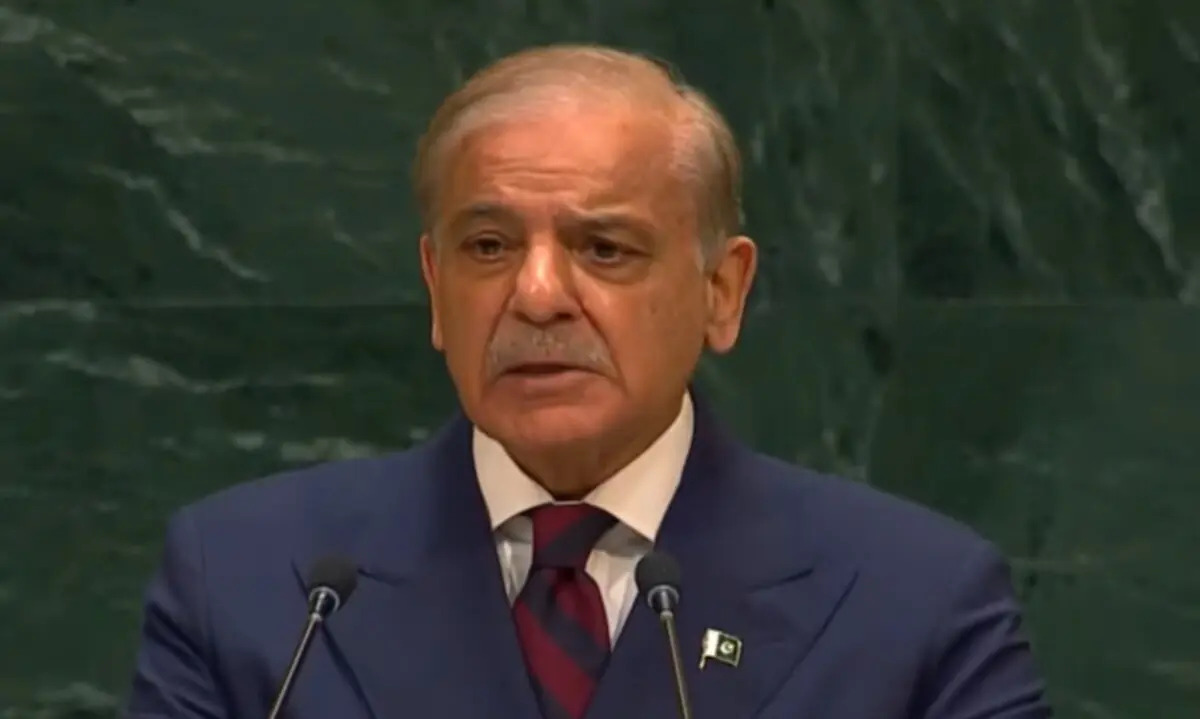
Addressing the 81st session of the United Nations General Assembly in New York, Prime Minister Shehbaz Sharif delivered a stern and comprehensive address focusing on global trade security and regional stability. The premier drew international attention to the indispensable nature of key maritime corridors, specifically identifying the Strait of Hormuz and the Bab al-Mandab strait as the vital "arteries of the global economy."
Opening his address with a reflection on the pursuit of peace, the prime minister invoked the founding principles of Pakistan's father, Quaid-i-Azam Muhammad Ali Jinnah. However, the core of his diplomatic message quickly pivoted to modern geopolitical realities and security threats affecting international commerce. Crucially, Prime Minister Shehbaz explicitly condemned recent Houthi militant attacks directed against Saudi Arabia, framing these security breaches not merely as regional skirmishes, but as direct threats to global stability, international energy security, and maritime freedom.
Commercial & Economic Implications
For an import-reliant developing economy like Pakistan, the security of Middle Eastern maritime choke points carries profound domestic repercussions. The Strait of Hormuz and Bab al-Mandab serve as primary conduits for the petroleum imports, refined products, and industrial inputs that sustain Pakistan's industrial base and domestic transport networks.
Any disruption or security escalation in these waters immediately translates into volatile global crude oil pricing, soaring freight insurance premiums, and extended shipping delays. For Pakistani retail markets, wholesale distributors, and manufacturers, these external shocks exacerbate domestic inflationary pressures, inflate energy tariffs, and raise the cost of imported raw materials. A stable maritime environment in these zones is therefore non-negotiable for stabilizing Pakistan's trade deficit, protecting foreign exchange reserves, and reining in consumer price inflation.
Related Intelligence: Prime Minister Shehbaz Addresses UNGA on Regional Stability and Economic Growth
Stakeholder Perspectives & Market Reactions
Business leaders, energy analysts, and trade associations across Pakistan have closely monitored the prime minister's UNGA statements, welcoming the explicit diplomatic posture on maritime security. Industry bodies note that Pakistan's commercial vitality is inextricably linked to the peace and security of the broader Middle East, home to millions of Pakistani expatriates and the primary source of the nation's energy supply.
Legal and policy experts have emphasized that Pakistan's official stance aligns with international maritime law, which guarantees freedom of navigation under the United Nations Convention on the Law of the Sea. Commercial stakeholders have urged policymakers to continue advocating robust multilateral diplomatic frameworks to secure these trade lanes, warning that unilateral military escalations or unresolved regional conflicts will continue to victimize developing economies through imported inflation.
Forward Outlook & Key Watchpoints
As diplomatic engagements continue at the United Nations, attention will shift toward how international security coalitions respond to ongoing threats in the Red Sea and the Persian Gulf. For Pakistan, key watchpoints include future trends in global Brent crude prices, international freight rate indices, and potential diplomatic initiatives involving regional stakeholders to safeguard commercial shipping.
Policymakers in Islamabad must maintain proactive contingency planning to absorb potential energy supply shocks. Strengthening strategic petroleum reserves, diversifying import sources, and fostering resilient bilateral trade corridors will remain critical policy imperatives as the international community navigates persistent security vulnerabilities along these vital global trade arteries.
Join Our Official WhatsApp Channel
Receive live commodity alerts, policy changes, and commercial intelligence directly on WhatsApp.