
Peshawar High Court Reviews Petitions Challenging KP Governor Rule
The Peshawar High Court has commenced proceedings on seven petitions challenging the imposition of governor's rule in Khyber Pakhtunkhwa, heightening economic and political uncertainty across regional trade corridors.
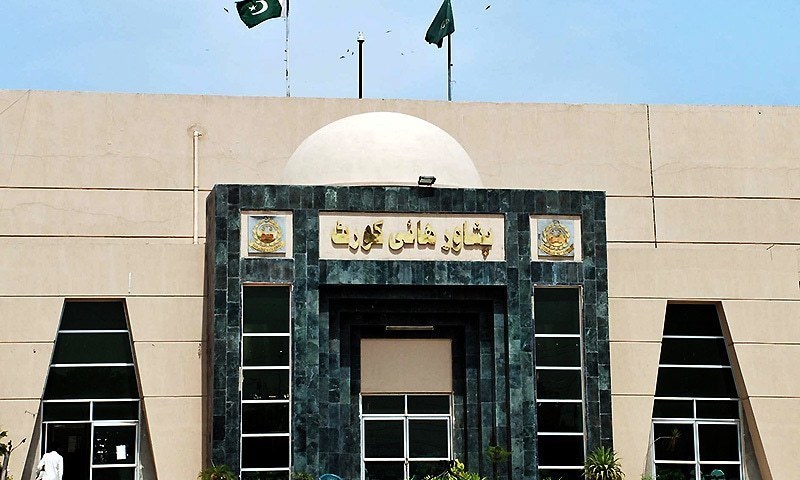
The Core Development
The Peshawar High Court (PHC) has formally taken up seven constitutional petitions challenging the federal government's enforcement of emergency provisions and governor's rule in Khyber Pakhtunkhwa (KP). The proceedings, presided over by a two-member bench comprising Senior Puisne Judge Justice Ijaz Anwar and Justice Mohammad Faheem Wali, focus on the legality of the presidential proclamation issued on October 11 under Articles 232 and 234 of the Constitution of Pakistan.
Central to the litigation is a plea moved by Pakistan Tehreek-e-Insaf (PTI) Chairman Barrister Gohar Ali Khan, who has requested leave to submit an amended petition. This amendment seeks to formally contest not only the initial executive decree but also the subsequently ratified resolutions passed by a joint sitting of Parliament, as well as standalone approvals granted by the National Assembly and Senate. The petitioners argue that the invocation of direct federal control bypasses provincial autonomy, subverts the democratic mandate, and lacks the stringent constitutional thresholds required to dismantle an elected provincial administration.
Commercial & Economic Implications
The constitutional showdown injects sharp administrative friction into Khyber Pakhtunkhwa’s commercial landscape. Political impasses of this magnitude historically disrupt local government operations, delay provincial development budgets, and stall critical capital expenditure projects. In KP, where wholesale trade and logistics serve as essential lifelines connecting national manufacturing hubs in Punjab and Sindh to western border terminals, governance instability threatens supply chain continuity.
Wholesale distributors, grain merchants, and retail networks face immediate secondary effects. Credit terms among commercial counterparties have tightened as financial institutions reassess counterparty risk amid administrative fragmentation. Furthermore, policy unpredictability risks deterring private transport cartels and logistics operators servicing transit hubs, directly impacting the movement of essential commodities, construction materials, and fast-moving consumer goods (FMCG). The resulting distribution friction threatens to fuel local market premiums, exacerbating food price inflation and retail margin compression across secondary and tertiary markets in the province.
Related Intelligence: Peshawar High Court Hears Challenges Against KP Emergency and Governor Rule
Stakeholder Perspectives & Market Reactions
Regional trade bodies and merchant alliances have voiced serious reservations regarding the governance vacuum created by constitutional contests. Executive members of the Sarhad Chamber of Commerce and Industry (SCCI) and wholesale trade associations have repeatedly noted that administrative paralysis deters foreign direct investment and discourages domestic capital formation. Traders emphasize that arbitrary policy transitions under interim or federal governors disrupt tax settlement frameworks, municipal licensing, and border trade clearances at Torkham and Ghulam Khan.
Legal scholars remain divided on judicial jurisdiction. While constitutional experts representing the petitioners contend that parliamentary endorsements cannot validate an unconstitutional executive order, legal counsel for the federal government maintains that the legislative ratifications under Article 234 insulate the action from extensive judicial review. Meanwhile, institutional investors and commercial bank branch networks in Peshawar and adjacent industrial estates report subdued transaction volumes, reflecting pervasive risk aversion.
Forward Outlook & Key Watchpoints
The trajectory of regional commerce over the next operational quarter will largely hinge on whether the Peshawar High Court grants injunctive relief or maintains the status quo pending final adjudication. Should the bench issue interim orders restraining federal directives or invalidating parliamentary endorsements, constitutional friction between the executive and the judiciary will escalate significantly, likely precipitating an immediate appeal before the Supreme Court of Pakistan.
Market participants must closely monitor municipal administrative functionality, provincial procurement releases, and trade corridor security protocols. Key watchpoints include the court's stance on the amended petition, the federal government's legal defense strategy, and the continuity of revenue collection mechanisms across Khyber Pakhtunkhwa. Until jurisdictional clarity is achieved, enterprise balance sheets, supply lines, and trade credit lines will remain under heightened operational scrutiny.
Join Our Official WhatsApp Channel
Receive live commodity alerts, policy changes, and commercial intelligence directly on WhatsApp.