
Peshawar Educational Institutions Reopen Following Disruption Clarification by Administration
Educational institutions across Peshawar will resume full academic activities on Tuesday following a one-day shutdown, with district authorities rejecting unauthorized notices and stabilizing citywide logistics.
The Core Development
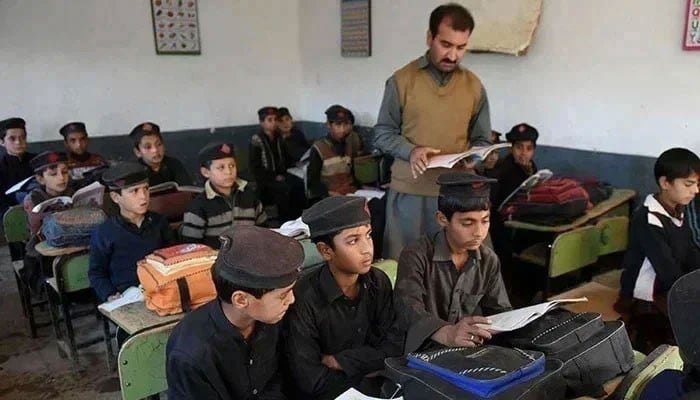
All public and private educational institutions across Peshawar are scheduled to resume regular academic operations on Tuesday, marking the end of a brief, single-day interruption. The administrative directive was formally issued by the office of the Deputy Commissioner of Peshawar, neutralizing unverified alerts and forged notifications that had circulated widely across social media channels regarding prolonged closures.
District authorities underscored that the operational suspension observed on Monday was strictly temporary, structured around specific administrative requirements rather than an open-ended disruption. In an official clarification, the Deputy Commissioner affirmed that regulatory mechanisms remain intact and that any claims suggesting extended institutional shutdowns are baseless. The administrative machinery in Khyber Pakhtunkhwa's provincial capital instructed school administrators, faculty, and administrative staff to ensure standard operational compliance, regular attendance, and unhindered academic delivery across all urban and peri-urban sectors, including University Town, Hayatabad, and the inner-city cantonment limits.
Commercial & Economic Implications
While institutional calendars are typically viewed through an academic lens, operational disruptions within major provincial metropolises exert measurable ripple effects across local economies. Educational hubs function as significant drivers of secondary commerce, supporting structured supply chains ranging from light public transit and private school van networks to retail stationery, uniforms, and organized food vending.
In Peshawar, where informal and small-scale commercial operators depend on regular weekday foot traffic, institutional interruptions immediately depress localized retail liquidity. School transport operators—frequently reliant on contracted monthly and daily fare models—face logistical bottlenecks when ad-hoc administrative notices emerge. Similarly, roadside vendors, independent bookbinders, stationery wholesalers, and ancillary canteen suppliers experience abrupt turnover pauses. When institutional clarity is restored, aggregate urban consumption patterns normalize, supporting daily revenue velocity across urban trading corridors that interface directly with the educational ecosystem.
Related Intelligence: KP Apex Committee Mandates Intensified Operations to Safeguard Regional Security
Stakeholder Perspectives & Market Reactions
Peshawar's business community and educational stakeholders have largely welcomed the timely administrative clarification, citing the high cost of ambiguity. Private school associations noted that abrupt administrative declarations create parent confusion, disrupt examination preparation, and place unnecessary administrative friction on institutional planning.
Transport unions and urban micro-entrepreneurs echoed these concerns, emphasizing that misinformation regarding localized shutdowns creates artificial deceleration in inner-city market corridors. Representatives from wholesale trading bodies pointed out that unpredictability in school operational schedules often translates into erratic vehicular traffic patterns and delayed delivery schedules for consumer packaged goods targeting school-adjacent kiosks. Legal and civic experts emphasized the imperative for district authorities to deploy centralized digital channels, mitigating public anxiety induced by fabricated regulatory circulars that periodically destabilize commercial planning.
Forward Outlook & Key Watchpoints
The immediate normalization of academic schedules re-establishes structural predictability across Peshawar's urban transit and commercial nodes. In the coming days, municipal authorities are expected to heighten digital monitoring to deter the circulation of forged administrative mandates that undermine civic order.
Key watchpoints for institutional stakeholders and commercial observers include the district government's responsiveness to evolving regional security or weather-related administrative decisions, as well as the implementation of more robust notification validation frameworks. For local vendors and transport networks, the resumption signals immediate stabilization in daily operational cash flows, reflecting the integral role of public infrastructure operations in maintaining provincial economic stability.
Join Our Official WhatsApp Channel
Receive live commodity alerts, policy changes, and commercial intelligence directly on WhatsApp.