
Centre Imposes Governor's Rule in Khyber Pakhtunkhwa Amid Security Escalation
The federal government has imposed governor's rule and emergency measures across 12 KP districts, drawing fierce criticism from opposition leaders and raising commercial stability concerns.
The Core Development
In an extraordinary late-weekend constitutional move, the federal government officially invoked emergency powers and placed Khyber Pakhtunkhwa under governor's rule, selectively designating twelve sensitive districts under heightened administrative control. The decision was formally ratified during an emergency federal cabinet session presided over by Prime Minister Shehbaz Sharif. The Centre defended the administrative intervention by citing an alleged deliberate disengagement by the provincial administration from counter-terrorism obligations and deteriorating law and order.
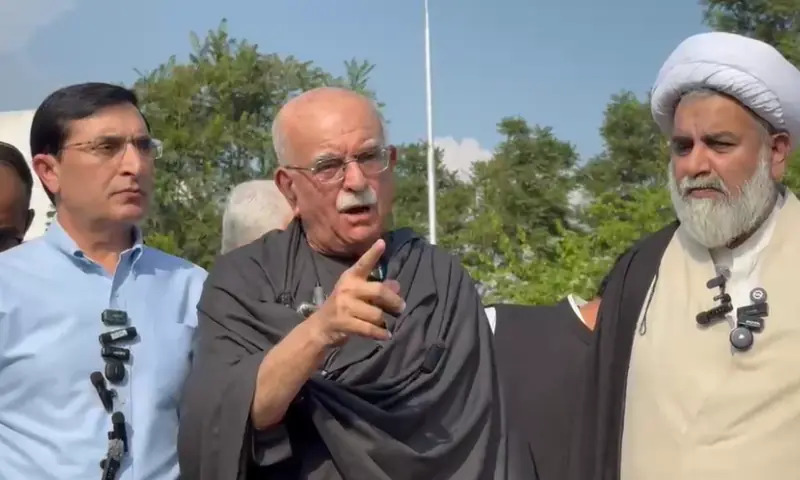
Prime Minister Sharif addressed the cabinet, pointing to escalating casualties among civilians, local police contingents, and security personnel across both Khyber Pakhtunkhwa and Balochistan as an unsustainable threat to national stability. Following the announcement, National Assembly Opposition Leader Mehmood Khan Achakzai strongly condemned the decision outside Parliament House in Islamabad. Drawing direct historical and political parallels to recurring administrative clampdowns in Balochistan, Achakzai warned that circumventing elected provincial mandates would exacerbate regional grievances rather than quell armed violence.
Commercial & Economic Implications
For enterprise operators, wholesale distributors, and commodity markets across Pakistan, the imposition of governor's rule in KP presents immediate commercial frictions. Khyber Pakhtunkhwa serves as the primary overland logistics conduit connecting Punjab's industrial heartland to northern transit markets and bilateral border terminals at Torkham and Ghulam Khan. Heightened security cordons across twelve designated districts are already disrupting freight timelines, triggering delays in wholesale agricultural and fast-moving consumer goods (FMCG) distribution.
Interstate logistics operators have responded to heightened checkpoint scrutiny by pricing in risk premiums, raising per-trip freight tariffs along major arteries including the Grand Trunk Road and Indus Highway. In local retail corridors, market participants anticipate inventory holding costs to climb by several percentage points over the coming weeks. If administrative frictions linger, border transshipment volumes toward Central Asian trade links risk substantial contraction, compounding foreign exchange constraints and depressing commercial throughput across regional dry ports.
Related Intelligence: Azerbaijan School Hijab Ban Sparks Civil Unrest and Regional Friction
Stakeholder Perspectives & Market Reactions
Reactions from merchant bodies and legal quarters have been swift and critical. The Federation of Pakistan Chambers of Commerce and Industry (FPCCI) and regional trader associations expressed deep concern over potential commercial freezes in provincial wholesale nodes such as Peshawar, Bannu, and Dera Ismail Khan. Commercial stakeholders caution that sudden administrative reshuffling routinely stalls municipal approvals, tax reconciliation, and infrastructure funding vital to the private sector.
Legal scholars and opposition parliamentarians have simultaneously raised constitutional objections, indicating that invoking governor's rule on security pretexts sets a perilous precedent for provincial autonomy guaranteed under the Eighteenth Amendment. Meanwhile, security analysts argue that decisive federal oversight was urgently required to consolidate intelligence operations and protect critical installations, including energy and mineral extraction projects operating along western belts.
Forward Outlook & Key Watchpoints
The immediate trajectory will hinge on judicial challenges and parliamentary maneuvers over the coming fortnight. Legal representatives for the ousted provincial apparatus are expected to petition the Supreme Court of Pakistan to review the proportionality and constitutionality of the federal emergency proclamation. A split judicial ruling could rapidly prolong the political impasse.
Simultaneously, commercial operators will monitor whether federal authorities enforce curfew-like measures or restrict inter-district commercial mobility in high-risk zones. Crucial benchmarks to watch include border terminal freight volumes at Torkham, regional inflation prints across essential commodity baskets in Peshawar markets, and whether the federal executive seeks to extend or consolidate governor's rule through subsequent legislative sanction.
Join Our Official WhatsApp Channel
Receive live commodity alerts, policy changes, and commercial intelligence directly on WhatsApp.