
Parliament Endorses Emergency and Governors Rule in Khyber Pakhtunkhwa
Parliament has formally ratified the imposition of emergency and governor's rule in Khyber Pakhtunkhwa, escalating political frictions and amplifying supply chain vulnerabilities across regional trade corridors.
The Core Development
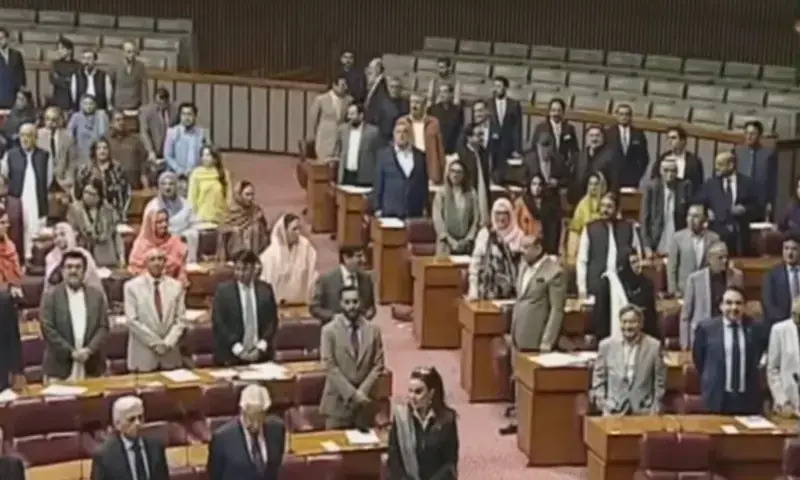
A joint sitting of Pakistan's Parliament on Thursday granted formal legislative approval to the federal government's contentious decision to impose emergency and governor's rule across Khyber Pakhtunkhwa (KP). The session, convened specifically to deliberate and vote on separate resolutions endorsing the executive decrees, passed the measures despite vocal dissent, walkouts, and aggressive protests staged by the opposition benches.
The federal cabinet had initially initiated the extraordinary constitutional measure on October 11, securing presidential sign-off following escalating friction between Islamabad and Peshawar. Federal officials, including the Minister for Information, publicly defended the intervention by citing what they termed a deliberate disengagement by the Pakistan Tehreek-e-Insaf (PTI)-led provincial administration from counter-terrorism directives, combined with a deteriorating security footprint across border districts. The parliamentary ratification concludes weeks of intensifying institutional brinkmanship, formally placing the administrative, budgetary, and law enforcement machinery of the province under federal oversight via the provincial governor.
Commercial & Economic Implications
The constitutional dislocation carries acute consequences for retail commerce, wholesale distribution networks, and industrial throughput across northern Pakistan. Khyber Pakhtunkhwa serves as the primary strategic corridor for Afghan transit trade and commercial flows into Central Asian republics. The abrupt restructuring of provincial administrative channels introduces immediate friction to logistical clearings, transport security arrangements, and cross-provincial checkpoints.
Wholesale commodity dealers and FMCG distributors operating out of hub markets in Peshawar, Nowshera, and Swabi face disrupted delivery schedules and escalating operational risk premiums. In the retail sector, sustained political instability invariably leads to precautionary cash hoarding by consumers, dampened discretionary purchasing, and localized inventory shortages. Furthermore, with the federal authorities assuming direct fiscal management, major provincial public development projects, infrastructure spending, and regional procurement contracts face bureaucratic freezes, directly impinging upon local employment, construction sector liquidity, and regional economic velocity.
Related Intelligence: Lahore Anti-Terrorism Court Extends Remand of PTI Leader Hammad Azhar
Stakeholder Perspectives & Market Reactions
Opposition parliamentarians vehemently denounced the joint session's proceedings, declaring the ratification a flagrant circumvention of democratic norms, provincial autonomy, and the 18th Constitutional Amendment. Legal scholars and bar associations have signaled impending judicial petitions before the Supreme Court, questioning the threshold of evidence presented to justify the invocation of emergency clauses against an elected assembly.
Conversely, coalition lawmakers maintained that constitutional safeguards allow central intervention when provincial institutions fail to counter security threats that undermine state integrity. Within the commercial arena, chambers of commerce across Peshawar and Rawalpindi have expressed guarded anxiety. Trade bodies emphasize that protracted administrative confusion and civil demonstrations will inevitably deter capital inflows, elevate commercial insurance rates on freight, and delay critical clearance operations at the Torkham border crossing, exacerbating the cost of doing business.
Forward Outlook & Key Watchpoints
The immediate trajectory will hinge heavily on judicial review and civil stability over the next fortnight. Should the opposition challenge the parliamentary resolution in the apex court, constitutional benches will be tasked with determining the operational limits of governor's rule under Articles 232 and 234. Market participants must monitor key administrative milestones, particularly the recalibration of provincial fiscal disbursements and the deployment of federal law enforcement agencies along major transit routes.
For enterprise operators, logistics providers, and wholesale merchants, the primary watchpoints will be potential strike calls, localized roadblocks, and any disruption to energy infrastructure and toll transit points. If stability is not rapidly restored through an inclusive political dialogue, KP's commercial vitality will endure prolonged attrition, heightening regional economic disparities and compounding broader national macroeconomic strain.
Join Our Official WhatsApp Channel
Receive live commodity alerts, policy changes, and commercial intelligence directly on WhatsApp.