
Federal Government Defends Governor Rule in Khyber Pakhtunkhwa Amid Security Crisis
Interior Minister Mohsin Naqvi has defended the imposition of emergency and Governor's rule in Khyber Pakhtunkhwa, citing critical administrative breakdowns and security threats amid heightened regional economic uncertainty.
The Core Development
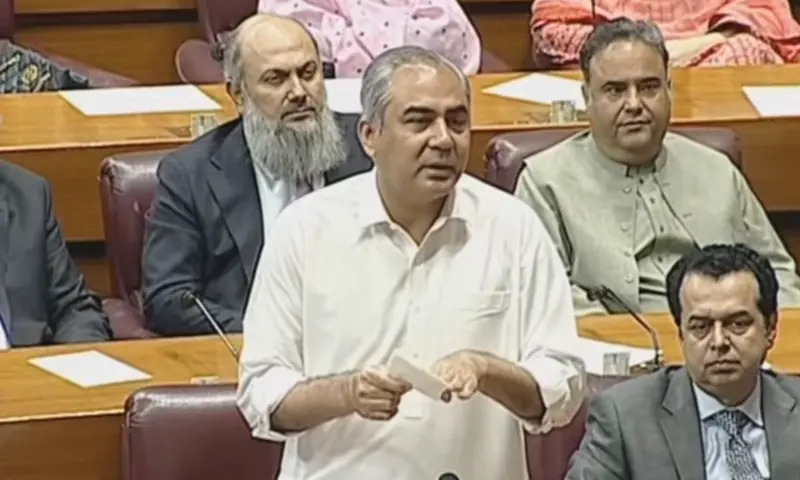
In a tense joint session of Parliament, Federal Interior Minister Mohsin Naqvi presented an unyielding defense of the federal government's decision to enforce emergency provisions and impose Governor's rule across Khyber Pakhtunkhwa (KP). Addressing lawmakers during ongoing debates on statutory resolutions aimed at ratifying the executive decree, Naqvi stated that Islamabad was left with no viable constitutional alternative. The federal intervention, initially invoked under presidential approval, displaced the provincial administration led by the Pakistan Tehreek-e-Insaf (PTI).
According to federal authorities, the decisive executive action followed weeks of escalating friction, during which Islamabad accused the provincial administration of persistent disengagement from national counter-terrorism coordination. Naqvi emphasized that security operations, intelligence sharing, and regional law enforcement frameworks had degraded to a point that directly threatened sovereign stability. The Interior Minister urged the opposition benches to face the factual realities surrounding the failed negotiations between federal envoys and KP representatives, maintaining that operational security took precedence over protracted political consensus.
Commercial & Economic Implications
The constitutional disruption in Khyber Pakhtunkhwa carries acute ramifications for domestic commerce, cross-border supply chains, and market stability. KP functions as a pivotal transit corridor connecting major industrial manufacturing hubs in Punjab and Sindh with northwestern wholesale distribution networks and transit trade routes leading into Afghanistan and Central Asia. The imposition of Governor's rule, paired with heightened civil security operations, threatens to slow logistics, elevate freight transit insurance premiums, and introduce extensive checkpoints along major arteries, including the M-1 Motorway and national highways.
For wholesale commodity traders and retail networks, administrative gridlock introduces short-term inventory volatility. Disruptions in regional cargo movement inevitably pressure local commodity prices, accelerating localized food inflation in urban KP centers like Peshawar, Mardan, and Swat. Furthermore, delays in public-sector procurement programs, municipal infrastructure spending, and development fund releases are anticipated as bureaucratic workflows pivot under direct federal oversight, affecting construction material suppliers and industrial vendors reliant on provincial allocations.
Related Intelligence: Parliament Debates Emergency and Governor Rule Measures Across Khyber Pakhtunkhwa
Stakeholder Perspectives & Market Reactions
The business and commercial fraternity has responded to the development with pronounced caution. Regional trade bodies, including the Sarhad Chamber of Commerce and Industry and local wholesale merchant associations, have expressed concern that sustained political polarization will discourage private capital investment and compress daily retail turnover. Market participants emphasize that commercial vitality requires institutional predictability, urging both federal and provincial stakeholders to prevent law-and-order friction from paralyzing commercial zones.
Conversely, opposition lawmakers have strongly challenged the executive intervention, characterizing the implementation of Governor's rule as an unconstitutional disenfranchisement of the provincial mandate. Legal experts remain divided, with constitutional petitions likely to challenge the validity of the parliamentary resolutions in the higher judiciary. Meanwhile, federal spokespersons maintain that direct administrative control is an indispensable, temporary stabilization measure required to restore institutional discipline, counter illicit networks, and safeguard public infrastructure.
Forward Outlook & Key Watchpoints
The immediate focus shifts to the legislative endorsement process within the bicameral legislature, where the ruling coalition must secure formal procedural approval for the emergency proclamation. Following legislative action, market analysts will monitor how effectively the federally appointed administrative apparatus restores internal security and municipal functioning across KP.
Key watchpoints for enterprise stakeholders include the stability of border customs clearing stations such as Torkham, potential commercial transport strikes called by provincial labor unions, and judicial deliberations regarding the dissolution of provincial executive powers. If federal oversight swiftly reinstates security without inducing prolonged street protests, wholesale channels may stabilize by the next quarter; however, prolonged judicial battles and political friction threaten to entrench supply-side risks throughout northern trading networks.
Join Our Official WhatsApp Channel
Receive live commodity alerts, policy changes, and commercial intelligence directly on WhatsApp.