
Paris High School Protests Escalate Amid Trade Union Backing
France faces escalating civil unrest as trade unions join high school students protesting severe educational infrastructure deficits and staffing shortages in Paris.
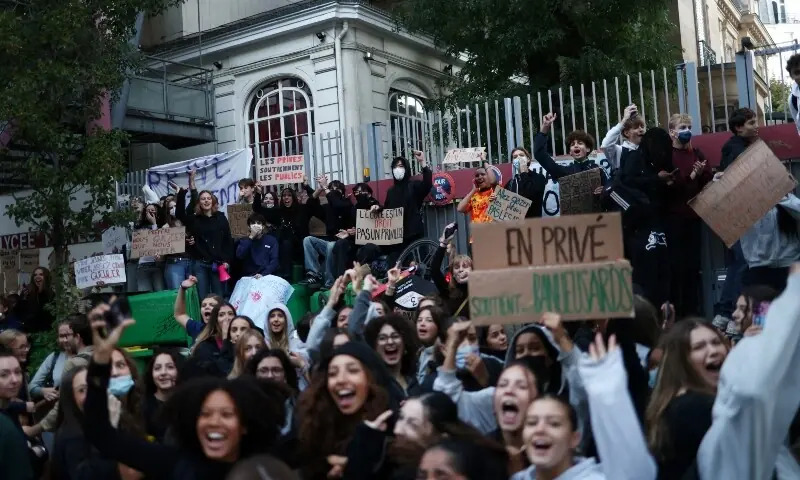
The Core Development
Tens of thousands of demonstrators are expected to converge on the streets of Paris as France’s powerful trade unions formally align with high school students. This coalition marks a critical escalation in a wave of protests that has gripped the nation since late September. For weeks, students aged 15 to 17 have blockaded the entrances to hundreds of high schools across the country. Their grievances center on systemic neglect, including chronic shortages of teaching staff, severely overloaded timetables, and dilapidated classrooms. Furthermore, students report that school buildings are entirely unequipped to cope with rising temperatures, creating unbearable learning environments. While a significant portion of the demonstrations has remained peaceful, tensions have increasingly boiled over. Protestors have lit dustbin fires and destroyed public property such as bus shelters, prompting heavy-handed responses from riot police who have deployed batons, tear gas, and riot-control rounds to disperse the crowds.
Commercial & Economic Implications
For international observers and trade analysts at Kalyar Traders in Pakistan, the disruptions in Paris carry notable indirect economic signals regarding European market stability and public expenditure priorities. Civil unrest of this magnitude inevitably causes localized commercial paralysis, disrupting retail trade, public transport networks, and supply chains within the Île-de-France region. When capital cities experience sustained protests, urban productivity declines, hitting small retail businesses, hospitality ventures, and wholesale distribution channels operating in commercial districts. Furthermore, the underlying demands of the protestors—calling for substantial fiscal investment in public infrastructure, education, and climate adaptation for public buildings—highlight the immense budgetary pressures facing European governments. As Paris redirects public funds to appease labor unions and educational sectors, broader fiscal deficits could influence Eurozone monetary policies, impacting import-export dynamics, currency valuations, and commodity pricing relevant to Pakistani markets trading with European partners.
Related Intelligence: Cristiano Ronaldo Camp Row Tests Portuguese Squad Stability and Commercial Value
Stakeholder Perspectives & Market Reactions
Stakeholder reactions remain intensely polarized as the confrontation between the state and labor groups deepens. Student unions argue that decades of institutional underfunding have compromised the future of French youth, rendering learning spaces hazardous and academically deficient. Conversely, government officials and education ministry representatives condemn the localized violence and property destruction, maintaining that reforms are underway but require fiscal discipline. Meanwhile, powerful trade unions see the student crisis as a broader referendum on public sector funding, leveraging their organizational muscle to amplify demands for enhanced social spending. Legal experts and civil rights groups have raised concerns over the proportionality of police crowd-control measures, scrutinizing the deployment of tear gas and riot-control munitions against minors, which threatens to further inflame public sentiment.
Forward Outlook & Key Watchpoints
Looking ahead, the immediate trajectory of the Paris protests depends heavily on the government's willingness to negotiate concrete infrastructure timelines and staffing commitments with union leaders. Key watchpoints include upcoming negotiations between labor federations and the Ministry of Education, as well as the potential spread of sympathetic strikes across other public sectors, including transport and healthcare. If policymakers fail to deliver credible concessions, the unrest risks paralyzing urban centers further, potentially triggering broader political instability that could impact broader European consumer confidence, investor sentiment, and trade policy execution heading into the next fiscal quarter.
Join Our Official WhatsApp Channel
Receive live commodity alerts, policy changes, and commercial intelligence directly on WhatsApp.