
Pakistan, Turkiye, Qatar, Indonesia Sign Landmark Defence Cooperation Accord
Pakistan has entered a multilateral defence accord with Turkiye, Qatar, and Indonesia to enhance joint manufacturing and technology sharing. The pact aims to strengthen strategic autonomy and optimize industrial defence supply chains.
The Core Development
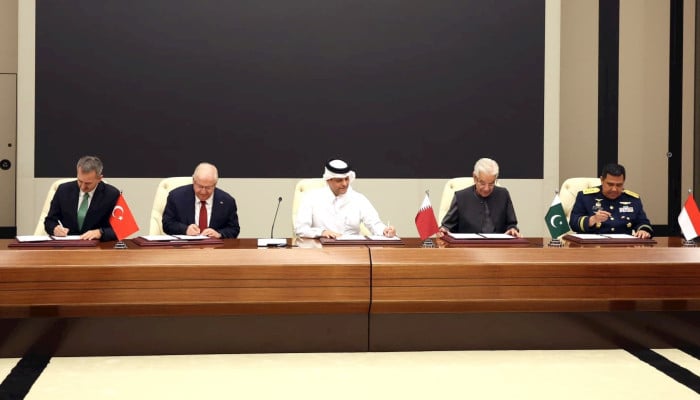
In a landmark diplomatic and military convergence, Pakistan, Turkiye, Qatar, and Indonesia have formally signed a comprehensive multilateral defence cooperation accord. The pact, concluded during high-level intergovernmental deliberations, establishes an integrated framework designed to deepen joint technological research, facilitate mutual procurement, and establish robust co-production lines for military hardware. Key delegations led by senior defence ministry officials and procurement executives finalized the terms, which align the strategic manufacturing capacities of South Asia, the Middle East, and Southeast Asia.
The agreement targets specific operational priorities, including unmanned aerial systems, maritime security platforms, electronic warfare capabilities, and ammunition production. By creating formal conduits for technology transfer, the participating states aim to diminish dependence on traditional Western and East Asian supply chains. For Pakistan, the accord represents an institutionalization of long-standing bilateral defence ties with Turkiye and Qatar, while formally expanding strategic collaboration into Southeast Asia through Indonesia's growing aerospace and naval industrial complex.
Commercial & Economic Implications
While inherently military in nature, the quadripartite agreement carries substantial macroeconomic and commercial ramifications for Pakistan's domestic industrial base. Historically, defence imports have imposed a persistent drain on the country's foreign exchange reserves. Under this joint framework, direct offset requirements and localized component fabrication are anticipated to channel capital into downstream domestic engineering, precision metallurgy, and specialized software development sectors.
For wholesale industrial suppliers and engineering manufacturers in hubs such as Gujranwala, Karachi, and Sialkot, secondary procurement contracts could generate sustained demand for specialized inputs. Furthermore, the integration of supply chains across the four nations offers an avenue to scale domestic production runs, thereby reducing per-unit manufacturing costs for state-owned enterprises like Pakistan Aeronautical Complex (PAC) and Pakistan Ordnance Factories (POF). The partnership also creates fiscal space by allowing deferred payment structures, barter arrangements, and joint funding vehicles backed by Qatari sovereign capital.
Related Intelligence: Middle Powers Forge Strategic Defense Axis Across Middle East and Asia
Stakeholder Perspectives & Market Reactions
Domestic market participants and trade bodies have reacted with measured optimism, noting that advanced industrial cross-licensing could stimulate Pakistan's technology and manufacturing ecosystems. Industrial analysts underscore that collaboration with Turkiye's advanced defence technology firms, such as Baykar and Aselsan, combined with Indonesian state aerospace enterprise PT Dirgantara Indonesia, offers domestic engineers invaluable access to advanced systems integration expertise.
Financial commentators point out that the financial underwriting capacity of Qatar provides critical liquidity to projects that might otherwise stall under Pakistan's fiscal consolidation constraints. Legal and international trade experts emphasize that formalizing these agreements under multilateral treaties shields the projects from arbitrary unilateral sanctions and unilateral export control impediments. Official communiqués issued post-signing affirmed that the quadrilateral pact is not aimed at any regional bloc, but is strictly designed to secure the collective sovereignty, territorial integrity, and technological resilience of the four nations.
Forward Outlook & Key Watchpoints
The implementation phase will proceed through specialized technical committees scheduled to convene over the next two quarters. These joint working groups are tasked with identifying priority manufacturing facilities, harmonizing regulatory and intellectual property standards, and establishing a shared procurement schedule running through 2030.
Key watchpoints for investors and market watchers include the allocation of capital expenditures within Pakistan's upcoming federal budgets, specific industrial offset allocations granted to private-sector precision engineering firms, and the operationalization of joint financing facilities. Over the medium term, the success of this accord will be judged by its ability to translate state-level diplomatic accords into tangible industrial output, localized employment generation, and measurable relief on Pakistan's external balance of payments.
Join Our Official WhatsApp Channel
Receive live commodity alerts, policy changes, and commercial intelligence directly on WhatsApp.