
Pakistan, Saudi Arabia, and Turkiye Plan Joint Military Chiefs Meeting
Foreign ministers of Pakistan, Saudi Arabia, and Turkiye discussed convening a joint military chiefs' meeting to operationalize the Makkah Defence Alliance during the UN General Assembly session in New York.
The Core Development
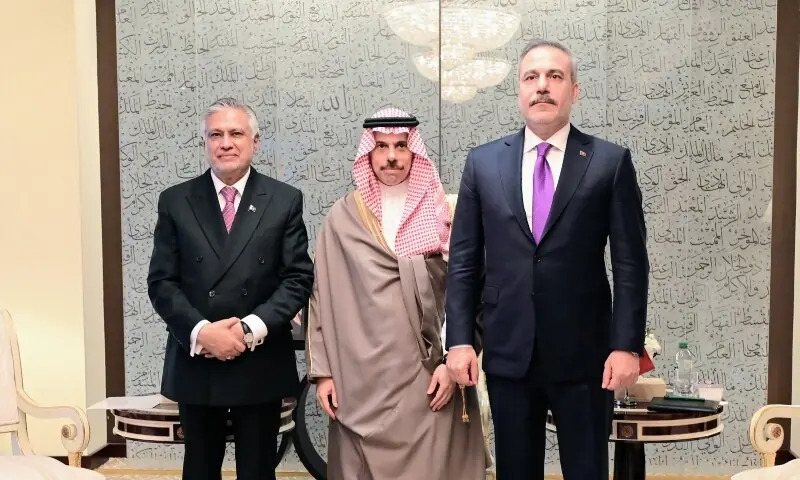
In a significant diplomatic and strategic maneuver on the global stage, the foreign ministers of Pakistan, Turkiye, and Saudi Arabia convened on Friday to formalize defense coordination frameworks. Held on the sidelines of the 81st session of the United Nations General Assembly in New York, the high-level talks centered on operationalizing the tripartite Makkah Defence Alliance. Pakistan's Deputy Prime Minister and Foreign Minister Ishaq Dar, Saudi Foreign Minister Prince Faisal bin Farhan bin Abdullah, and Turkish Foreign Minister Hakan Fidan deliberated on immediate steps to convene a dedicated meeting of the three nations' chiefs of staff.
The tripartite agreement, formally signed on August 7, establishes a binding security architecture stipulating that any military aggression against one member state constitutes an attack against all signatories. This collective security pact represents a profound realignment of geopolitical and military assets across South Asia and the Middle East, directly linking the defense capabilities of Pakistan and Turkiye to the territorial integrity and sovereign security of the Kingdom of Saudi Arabia. The upcoming chiefs of staff meeting is expected to draft operational protocols, intelligence-sharing mechanisms, and rapid response deployment frameworks.
Commercial & Economic Implications
While ostensibly a military and diplomatic agreement, the Makkah Defence Alliance carries profound commercial and economic ramifications for Pakistan and the broader region. Regional stability is a fundamental prerequisite for secure international trade routes, energy corridors, and wholesale distribution networks. By cementing strategic deterrence with Riyadh and Ankara, Pakistan safeguards vital bilateral economic corridors, worker remittances, and petroleum supply agreements that form the bedrock of its macroeconomic stability.
For Pakistani retail trade, wholesale markets, and energy consumers, heightened geopolitical security translates directly into mitigated risks of imported inflation, particularly concerning crude oil pricing and sovereign credit ratings. Stable energy imports from Saudi Arabia, underpinned by robust diplomatic and defense ties, insulate domestic industrial production from volatile global market shocks. Furthermore, defense industrial cooperation between Islamabad, Ankara, and Riyadh opens lucrative avenues for Pakistani engineering firms, defense manufacturers, and technical service providers, potentially boosting foreign exchange reserves and bolstering large-scale industrial output.
Related Intelligence: Pakistan, Saudi Arabia, and Turkiye Advance Makkah Defence Pact Integration
Stakeholder Perspectives & Market Reactions
Financial markets, business councils, and trade associations in Pakistan have reacted with cautious optimism to the formalization of the defense pact. Business leaders emphasize that robust state-to-state security cooperation creates a predictable environment for foreign direct investment (FDI) from Gulf economies. Major industry bodies note that institutionalizing defense ties with Saudi Arabia and Turkiye reinforces investor confidence, signaling long-term macroeconomic stability and regional integration.
Official statements from the Foreign Office underscore that the alliance is defensive in nature, designed to deter aggression and promote regional equilibrium without threatening external actors. Legal and defense analysts point out that the pact elevates Pakistan's strategic positioning as a critical security guarantor in the Islamic world, potentially unlocking deeper bilateral trade concessions, preferential financing facilities, and expanded labor market opportunities for Pakistani professionals across the Gulf.
Forward Outlook & Key Watchpoints
As diplomatic momentum shifts toward the implementation phase, market observers and policy analysts will closely monitor the scheduled convening of the tripartite chiefs of staff. Key watchpoints include the specific timelines for finalizing joint military operational doctrines, the establishment of permanent coordination secretariats, and the integration of defense production supply chains.
Policy enforcement and institutional follow-through will determine whether the Makkah Defence Alliance evolves into a permanent economic and security bloc. Stakeholders across Pakistan's industrial and financial sectors will be tracking subsequent bilateral communiques for details on joint infrastructure financing, energy supply guarantees, and regulatory frameworks aimed at streamlining cross-border commerce among the three allied nations.
Join Our Official WhatsApp Channel
Receive live commodity alerts, policy changes, and commercial intelligence directly on WhatsApp.