
Pakistan, Saudi Arabia, and Turkiye Advance Makkah Defence Pact Integration
Pakistan, Saudi Arabia, and Turkiye are advancing the Makkah Defence Alliance by planning a joint chiefs of staff meeting to bolster regional security and mutual defense architecture.
The Core Development
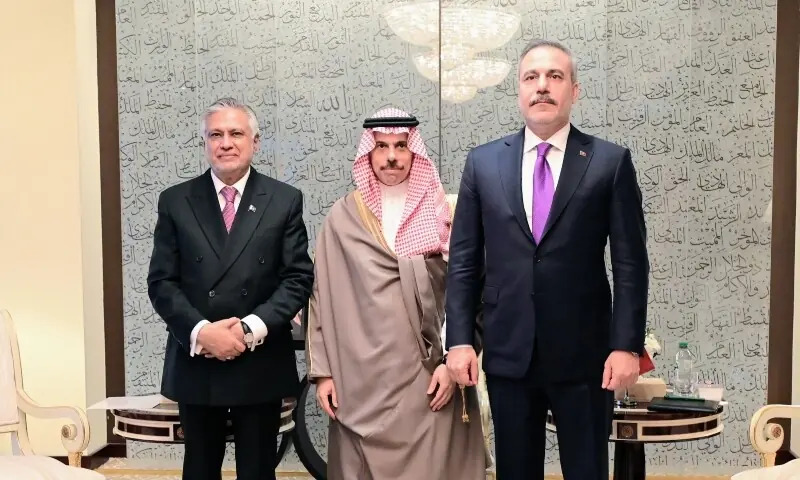
In a significant diplomatic and strategic maneuver on the sidelines of the 81st session of the United Nations General Assembly in New York, the foreign ministers of Pakistan, Turkiye, and Saudi Arabia convened high-level discussions regarding the operationalisation of the Makkah Defence Alliance. According to the Foreign Office (FO) of Pakistan, Deputy Prime Minister and Foreign Minister Ishaq Dar, Saudi Foreign Minister Prince Faisal bin Farhan bin Abdullah, and Turkish Foreign Minister Hakan Fidan met to finalise the framework for a forthcoming meeting of the three nations' chiefs of staff.
The tripartite agreement, formally signed on August 7, establishes a binding mutual security framework wherein an act of aggression against any single signatory nation is classified as a direct attack against all three member states. This architecture significantly alters the security matrix of the Middle East and South Asia by bridging three formidable military powers under a unified collective security umbrella. The proposed chiefs of staff summit is designed to translate this high-level political accord into actionable military coordination, joint command protocols, and structured logistical support to assist Riyadh.
Commercial & Economic Implications
While ostensibly a bilateral and multilateral security arrangement, the deepening military-industrial integration between Islamabad, Ankara, and Riyadh carries profound commercial and economic ramifications for Pakistan and the broader region. Enhanced defense cooperation frequently paves the way for joint ventures in defense manufacturing, technology transfer, and procurement, which can stimulate domestic engineering and manufacturing sectors within Pakistan. Furthermore, macroeconomic stability in Pakistan remains deeply intertwined with financial flows, oil supplies, and trade partnerships with Saudi Arabia. A fortified strategic alliance guarantees long-term economic predictability, securing critical oil import facilities and reinforcing investor confidence across national markets. Supply chains linked to defense logistics, heavy engineering, and raw material procurement stand to benefit from increased bilateral and trilateral trade agreements stemming from deeper diplomatic trust.
Related Intelligence: Ethiopian Tigray Unrest Sparks Regional Security and Trade Concerns
Stakeholder Perspectives & Market Reactions
Financial markets, business councils, and industrial bodies in Pakistan have closely monitored the progression of the Makkah Defence Alliance. Major trade associations and chambers of commerce view the pact as a catalyst for enhanced bilateral commerce, anticipating that closer state-level ties will translate into expanded market access for Pakistani agricultural products, textiles, and skilled labor in Saudi Arabia and Turkiye. Defense analysts and policy think tanks have lauded the initiative as a pragmatic step toward self-reliance and regional deterrence, noting that institutionalising military cooperation deters regional instability and protects critical trade corridors. Official statements from the Foreign Office emphasise that the alliance is built on mutual respect and shared strategic interests, aimed at fostering regional peace rather than projecting offensive power.
Forward Outlook & Key Watchpoints
As the tripartite agreement moves from diplomatic aspiration to operational reality, several critical milestones and key watchpoints will dictate its trajectory over the coming months. The immediate priority remains the scheduling and agenda-setting for the inaugural chiefs of staff meeting, where military leadership will draft standard operating procedures for joint defense assistance. Economists and policy watchers will track subsequent bilateral trade deals, investment announcements in Pakistan's strategic sectors, and potential defense production agreements. The success of this alliance will be measured by its ability to insulate member economies from external shocks while establishing a robust, credible deterrent against emerging regional security threats.
Join Our Official WhatsApp Channel
Receive live commodity alerts, policy changes, and commercial intelligence directly on WhatsApp.