
Pakistan and Qatar Deepen Internal Security Cooperation to Protect Strategic Interests
Pakistan and Qatar have agreed to expand bilateral internal security cooperation, institutionalizing intelligence sharing, counter-narcotics frameworks, and law enforcement training to fortify broader economic partnerships.
The Core Development
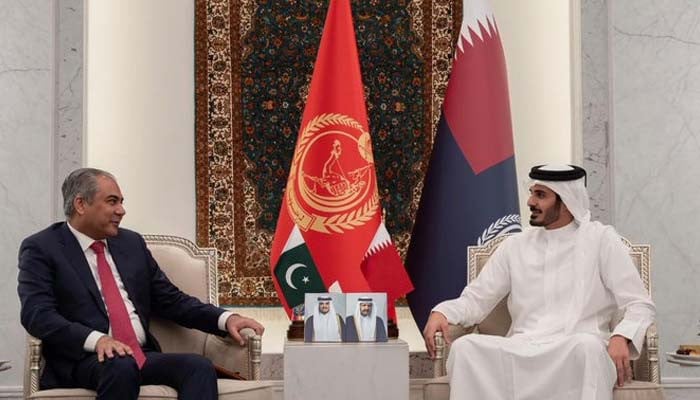
In a strategic move to reinforce bilateral stability, Pakistan and Qatar have formalized an agreement to significantly deepen internal security cooperation. During high-level diplomatic and ministerial deliberations between delegations from Islamabad and Doha, both states established an expanded framework designed to tackle transnational organized crime, illicit financial flows, illicit narcotics smuggling, and border management vulnerabilities.
The discussions brought together senior security officials, interior ministry representatives, and intelligence delegates from both countries. Key agenda items centered on streamlining institutional collaboration, intelligence sharing protocols, capacity-building workshops, and technical training exchanges for law enforcement personnel. Official statements emphasized that modern internal security risks require coordinated, multi-jurisdictional enforcement, particularly as cross-border trade and labor movements expand between South Asia and the Arabian Peninsula. Both parties committed to institutionalizing regular security dialogues and establishing operational joint working groups to monitor actionable intelligence.
Commercial & Economic Implications
While ostensibly rooted in policing and state security, the deepening of Pakistan-Qatar internal security ties carries profound ramifications for Pakistan's macroeconomy, wholesale markets, and international commercial standing. Qatar serves as a primary energy lifeline for Pakistan, supplying liquefied natural gas (LNG) under long-term sovereign agreements that underpin industrial energy supply, fertilizer production, and domestic power generation. Enhanced maritime and domestic security guarantees directly lower political risk premiums, safeguarding vital supply chains from physical and asymmetric disruption.
Furthermore, Qatar hosts over 200,000 Pakistani expatriates whose remittances generate critical foreign exchange reserves for the State Bank of Pakistan. A transparent, coordinated security apparatus simplifies cross-border labor compliance, curtails illegal migration routes, and mitigates illicit hawala/hundi channels, redirecting capital into formal banking corridors. For local retail and wholesale distribution networks in Pakistan, structural stability in remittance inflows and steady imported energy supplies are central determinants in checking headline inflation and stabilizing operating overheads for transport and logistics.
Related Intelligence: Southeast Asia Haze Crisis Threatens Regional Trade and Supply Chains
Stakeholder Perspectives & Market Reactions
Financial analysts and industrial trade associations have welcomed the bilateral framework as a necessary precursor to sovereign Qatari investment in Pakistan. The Qatar Investment Authority (QIA) has previously earmarked up to $3 billion for deployments across Pakistan’s energy, aviation, and hospitality sectors. Business leaders note that high-net-worth Gulf capital requires absolute assurances on physical security, anti-money laundering (AML) controls, and regulatory integrity.
Trade bodies such as the Federation of Pakistan Chambers of Commerce and Industry (FPCCI) have highlighted that robust internal security frameworks foster confidence among international shipping lines and institutional lenders. Legal and security analysts observe that tighter anti-smuggling collaboration will also support domestic revenue bodies, notably the Federal Board of Revenue (FBR), by curbing parallel trade and under-invoiced commercial transit that routinely distort local wholesale pricing.
Forward Outlook & Key Watchpoints
Moving forward, the implementation phase will determine the efficacy of the Pakistan-Qatar security pact. Over the next two quarters, bilateral steering committees are expected to draft standard operating procedures (SOPs) covering mutual legal assistance, extradition treaties, and automated screening protocols at designated ports and air terminals.
Key watchpoints include the operationalization of joint counter-narcotics task forces, technological integration of immigration databases, and subsequent high-level state visits to sign formal memorandums of understanding (MoUs). Observers will also track whether this strengthened institutional security umbrella translates into the expedited finalization of long-pending Qatari investments in state-owned infrastructure, deep-sea port terminals, and energy concessions.
Join Our Official WhatsApp Channel
Receive live commodity alerts, policy changes, and commercial intelligence directly on WhatsApp.