
Pakistan and Maldives Deepen Diplomatic and Bilateral Economic Ties in Islamabad
The President of the Maldives received a formal guard of honour in Islamabad, initiating high-level bilateral talks aimed at expanding direct trade channels, agro-food exports, and maritime economic cooperation.
The Core Development
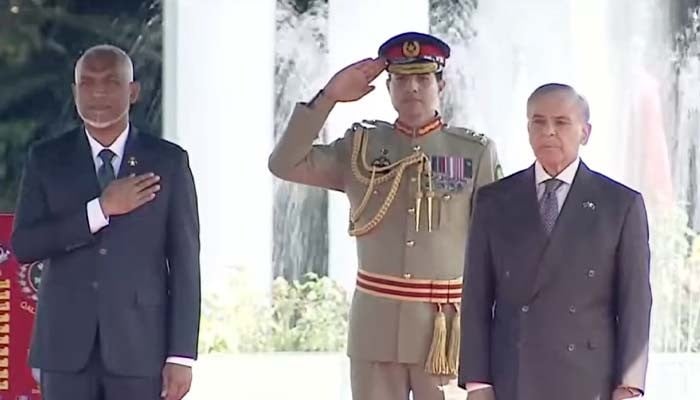
The President of the Republic of Maldives was formally accorded a guard of honour at the Prime Minister's House in Islamabad, marking the official commencement of an extensive bilateral diplomatic mission. Upon arrival, the visiting head of state was received by the Prime Minister of Pakistan, accompanied by senior federal cabinet ministers, chief diplomatic envoys, and high-ranking military officials. Following the national anthems of both nations and an inspection of the ceremonial guard, the leadership entered delegation-level discussions aimed at recalibrating economic, regional, and institutional partnerships.
The state visit centers on expanding existing trade arrangements, institutional capacity building, and strengthening South Asian maritime linkages. Diplomatic officials confirmed that the bilateral agenda encompasses actionable memorandums of understanding (MoUs) across multiple sectors, including educational exchanges, technical cooperation in public health, civil aviation links, and streamlined consular frameworks designed to ease commercial travel. Both leaders underscored the strategic value of peaceful regional cooperation and pledged to activate dormant joint ministerial commissions to monitor implementation timelines.
Commercial & Economic Implications
For Pakistan's commercial sector, particularly wholesale distribution and manufacturing, a revitalized bilateral framework with the Maldives opens high-margin export possibilities. The Maldives remains an import-reliant island economy, importing substantial volumes of fresh agro-produce, pharmaceuticals, value-added textiles, and construction materials. Currently, Pakistani traders capture only a modest fraction of this import basket, largely due to indirect shipping itineraries through regional transshipment hubs that elevate freight charges and extend transit durations.
Direct maritime agreements and bilateral trade concessions under the South Asian Free Trade Area (SAFTA) framework would materially lower logistics expenses for Pakistani exporters. Facilitating direct cargo operations between Karachi or Gwadar and Malé would shorten delivery schedules for perishable goods, including citrus fruits, basmati rice, potatoes, and poultry products. Furthermore, Pakistan's pharmaceutical manufacturers stand to secure structured procurement quotas, providing steady non-traditional export revenue that supports foreign exchange inflows and cushions domestic export-oriented wholesale enterprises.
Related Intelligence: King Charles Hails Oman Peace Diplomacy During London State Visit
Stakeholder Perspectives & Market Reactions
Market participants, export bodies, and trade associations in Pakistan have welcomed the high-level engagement, highlighting the necessity of turning diplomatic protocol into commercially viable outcomes. Representatives from the Federation of Pakistan Chambers of Commerce and Industry (FPCCI) observed that while political goodwill between Islamabad and Malé has historically remained stable, actual trade volumes have consistently lagged potential. Exporters are calling for the establishment of a dedicated Joint Business Council (JBC) to facilitate direct business-to-business (B2B) engagements.
Logistics experts and maritime analysts emphasize that without preferential port handling and predictable air-cargo linkages, domestic exporters cannot effectively compete with proximate regional suppliers. Official policy statements from the Ministry of Commerce reiterated a firm commitment to dismantling non-tariff barriers, expanding banking channels, and encouraging private trade delegations to visit Malé, ensuring that Pakistani agro-food processors and consumer product distributors can capture sustained retail shelf space across Maldivian resorts and local markets.
Forward Outlook & Key Watchpoints
The trajectory of Pakistan-Maldives relations over the coming quarters hinges on the execution of decisions made during this state visit. Institutional watchpoints include the formalized signing of trade facilitation protocols, the timeline for establishing direct or feeder maritime cargo arrangements, and the scheduling of follow-up technical committee meetings.
Additionally, corporate stakeholders will monitor whether both governments introduce bilateral investment protection guarantees and reciprocal tariff rationalization on core retail and agro-commodities. If institutional follow-through proceeds on schedule, trade turnover between the two countries could experience double-digit expansion over the next 24 to 36 months, providing Pakistani distribution houses and agricultural exporters with a valuable diversified corridor in the Indian Ocean rim.
Join Our Official WhatsApp Channel
Receive live commodity alerts, policy changes, and commercial intelligence directly on WhatsApp.