
Russia Signals Readiness for US and Ukraine Talks Following High-Level Envoy Meeting
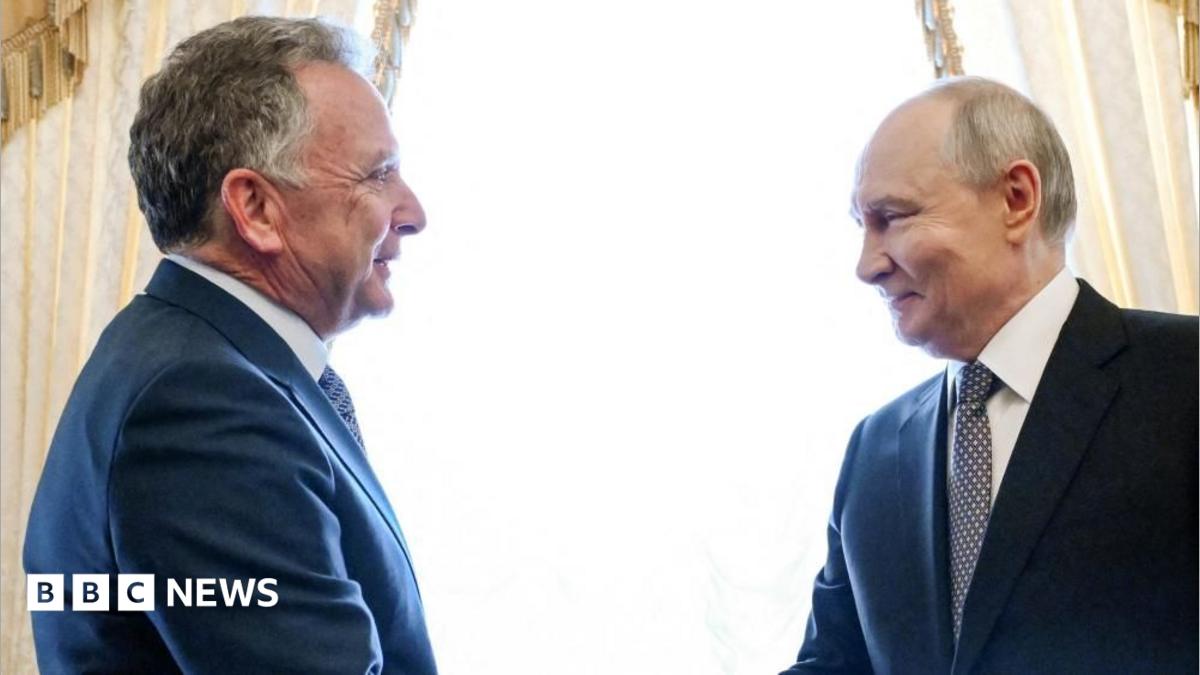
Moscow has announced its willingness to resume negotiations with Ukraine and the United States after Vladimir Putin met US envoy Steve Witkoff in St Petersburg.
Geopolitical & Core Developments
Moscow has formally indicated its readiness to re-engage in direct diplomatic negotiations with Ukraine and the United States, marking a potential pivot in the protracted conflict that has destabilized Eastern Europe since February 2022. The development followed high-level consultations in St Petersburg between Russian President Vladimir Putin and Steve Witkoff, special envoy to US President Donald Trump. While official details regarding the specific terms discussed remain closely guarded, the diplomatic overture represents the most direct bilateral engagement between high-level US and Russian representatives in recent months.
The strategic backdrop remains complex. The Kremlin has consistently maintained that any enduring political settlement must address its core security concerns, including Ukrainian neutrality and the recognition of territorial realities on the ground. Conversely, Kyiv and its Western allies have reiterated that territorial sovereignty and robust security guarantees must serve as non-negotiable foundations for any ceasefire. Despite these opposing positions, the opening of a diplomatic backchannel via a dedicated US envoy indicates a mutual recognition of the unsustainable geopolitical and military costs associated with prolonged attrition.
Global Trade & Economic Ripples
The prospect of diplomatic re-engagement has reverberated across international financial, energy, and commodity markets. Benchmark crude oil contracts exhibited immediate volatility, with Brent and West Texas Intermediate registering moderate downward pressure as traders priced in the potential long-term easing of supply-chain bottlenecks and geopolitical risk premiums across the Black Sea basin.
Agricultural commodity exchanges, particularly in Chicago and Paris, also reflected the development. Ukraine and Russia remain two of the world's most critical suppliers of wheat, corn, and sunflower oil. Any sustainable cessation of hostilities or formalized maritime security framework would stabilize navigation along the Black Sea trade corridor, lower maritime war-risk insurance premiums, and mitigate systemic food inflation across import-reliant economies in North Africa, the Middle East, and parts of Asia. However, institutional analysts caution that the dismantling of Western financial sanctions on Russian exports will require complex legislative procedures, precluding an immediate return to pre-war trade flows.
Related Intelligence: Middle Powers Forge Strategic Defense Axis Across Middle East and Asia
International Reactions & Diplomatic Stances
Reactions across global capitals reflect deep strategic divisions regarding the viability of renewed negotiations. In Washington, administration officials described the St Petersburg meeting as an exploratory step aimed at evaluating Moscow's diplomatic seriousness. European capitals, led by London, Paris, and Berlin, adopted a more cautious stance, emphasizing that any negotiated framework must fully involve Ukrainian leadership and avoid compromising continental security architecture.
Multilateral bodies, including the United Nations, welcomed the prospect of dialogue, urging all parties to adhere strictly to international law and the UN Charter. Within Kyiv, officials reiterated that peace cannot come at the expense of national sovereignty, calling on Western partners to maintain defensive assistance and financial stability measures until verifiable security arrangements are guaranteed. Analysts at leading international policy institutes note that while dialogue reduces acute escalation risks, significant bridging mechanisms are necessary to reconcile fundamentally divergent demands.
Strategic Outlook & Future Scenarios
The trajectory of future engagements will depend heavily on whether preliminary technical teams can establish a concrete agenda for formal bilateral or multilateral summits. Over the medium term, baseline projections point toward a dual-track strategy where exploratory diplomatic contacts run parallel to intense theater-level operations as both sides seek to optimize their leverage ahead of structured talks.
Key inflection points over the coming quarters include potential draft frameworks for local ceasefires, the stabilization of critical infrastructure, and structured prisoner-of-war exchanges. Should negotiations stall over territorial disputes or NATO membership parameters, market risk premiums across energy and agricultural sectors could snap back rapidly. Conversely, if high-level working groups produce actionable de-escalation protocols, international trade corridors may witness structural recalibration, paving the way for gradual sanctions adjustments and economic normalization.
Join Our Official WhatsApp Channel
Receive live commodity alerts, policy changes, and commercial intelligence directly on WhatsApp.