
Pakistan Links Regional Peace to Afghan Stability at SCO Council Meeting
At the Shanghai Cooperation Organisation summit, Pakistan emphasized that sustainable regional connectivity and trade expansion depend on economic stability and normalization in Afghanistan.
The Core Development
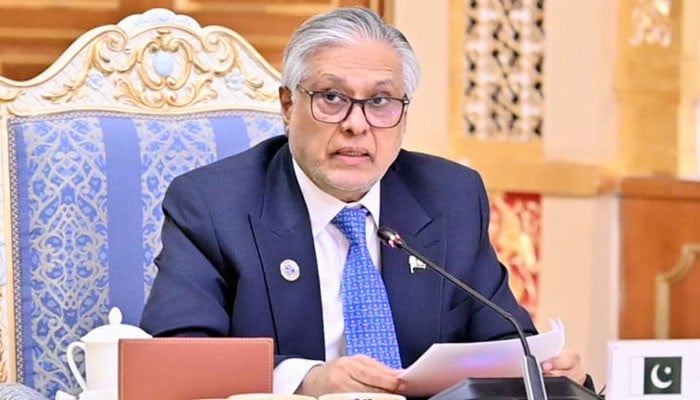
Addressing the Council of Heads of Government of the Shanghai Cooperation Organisation (SCO), Pakistan's Deputy Prime Minister and Foreign Minister Ishaq Dar underscored that a peaceful and stable Afghanistan remains indispensable for broader regional integration and long-term socio-economic progress. Speaking before delegates and foreign ministers across Eurasia, Dar articulated Islamabad's strategic doctrine: regional security, transit infrastructure, and economic resilience cannot be realized while Afghanistan remains politically isolated and economically distressed.
Dar urged the international community and multilateral institutions to extend humanitarian assistance, unfreeze Afghan sovereign foreign reserves, and support the revival of standard banking channels within Kabul. The Deputy Prime Minister cautioned that persistent economic deprivation across the border fuels extremist elements, unregulated migration, and cross-border security challenges, which collectively undermine the economic objectives of the SCO member states.
Commercial & Economic Implications
For Pakistan's commercial ecosystem, stability in Afghanistan is an economic necessity rather than merely a diplomatic preference. Afghanistan serves as the primary land bridge connecting Pakistan's ports in Karachi and Gwadar to the resource-rich markets of Central Asian republics, including Uzbekistan, Tajikistan, and Turkmenistan. Persistent border closures, security checks, and cargo clearance disputes at the Torkham and Chaman border crossings have historically driven up logistics overheads for domestic logistics providers, freight forwarders, and wholesale trading houses.
Wholesale distributors of fast-moving consumer goods, cement, pharmaceuticals, and agricultural staples in Khyber Pakhtunkhwa and Balochistan experience severe inventory backlogs whenever transit corridors stall. A normalized and secure Afghanistan would unlock direct transit agreements, reduce freight insurance premiums, and stabilize supply chains for bilateral barter and transit trade. Conversely, lingering instability depresses official export volumes, incentivizes illicit smuggling networks, and distorts retail pricing across border districts in Pakistan.
Related Intelligence: Albania Youth Revolt Escalates Pressuring Prime Minister Edi Rama
Stakeholder Perspectives & Market Reactions
Commercial chambers, notably the Pakistan-Afghanistan Joint Chamber of Commerce and Industry (PAJCCI) and the Federation of Pakistan Chambers of Commerce and Industry (FPCCI), echoed the diplomatic push, calling for institutionalized mechanisms to de-link trade facilitation from geopolitical tensions. Business leaders have frequently argued that non-tariff barriers, banking restrictions, and abrupt border shutdowns cost bilateral traders millions of dollars each month in demurrage and cargo spoilage.
Diplomatic analysts noted that Dar's intervention at the SCO aims to build consensus among regional powerhouses, notably China and Russia, to incorporate Afghanistan into major transport connectivity projects such as the China-Pakistan Economic Corridor (CPEC) and the Trans-Afghan Railway. Economists maintain that unless Kabul is integrated into formal financial and trade arrangements, local retail and wholesale commerce along Pakistan's western corridor will remain constrained by volatile cross-border regulatory shifts.
Forward Outlook & Key Watchpoints
Moving forward, market participants must monitor multilateral progress regarding the Trans-Afghan Railway project, which aims to link Termez, Kabul, and Peshawar. Tangible advancement will depend heavily on the Afghan interim administration's willingness to address international security concerns, counter regional terrorist groups, and demonstrate inclusive governance.
Over the coming quarters, the market will observe whether SCO members formulate a coordinated financial engagement framework for Kabul. Domestically, Pakistani wholesale distributors and freight operators will look for streamlined electronic clearance protocols at Torkham and Chaman to reduce vehicle turnaround times. If diplomatic engagements yield formal trade regularizations, Pakistan's transit industry could experience significant volume growth through the remainder of the fiscal year.
Join Our Official WhatsApp Channel
Receive live commodity alerts, policy changes, and commercial intelligence directly on WhatsApp.