
Pakistan Kicks Off Critical IMF Reviews for $8.4 Billion Funding Package
Pakistan initiated crucial review talks with an IMF mission in Islamabad to evaluate progress on the $8.4 billion combined Extended Fund Facility and Resilience and Sustainability Facility programs.
The Core Development
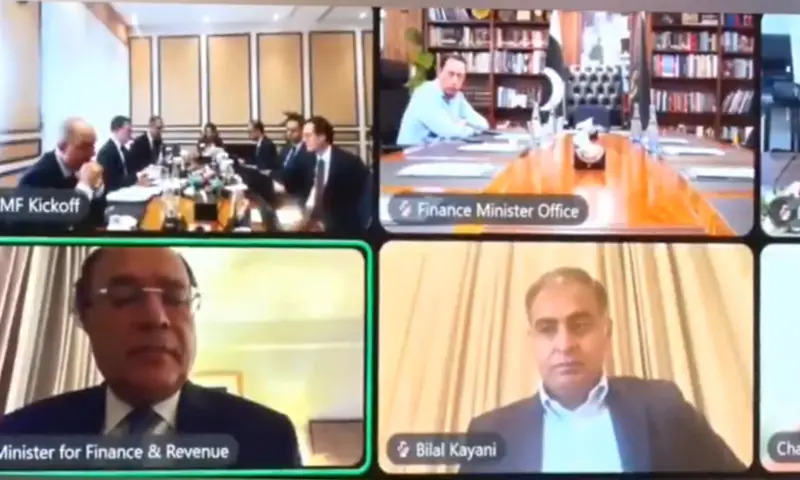
Minister for Finance and Revenue Muhammad Aurangzeb formally initiated high-stakes negotiations with a visiting staff mission from the International Monetary Fund (IMF) in Islamabad on Tuesday. The IMF delegation, led by mission chief Iva Petrova, has arrived in the federal capital to conduct dual evaluations: the fourth review of Pakistan's ongoing $7 billion Extended Fund Facility (EFF) arrangement and the third review of the recently integrated $1.4 billion Resilience and Sustainability Facility (RSF).
During the virtual kick-off session, Minister Aurangzeb provided the international lenders with a comprehensive briefing on Pakistan's latest macroeconomic performance indicators. The discussions centered on fiscal consolidation measures, structural revenue reforms, and preliminary data regarding external account stabilization. The government delegation emphasized that despite external vulnerabilities and domestic structural bottlenecks, core fiscal targets for the preceding quarters have largely remained on track, supported by stringent expenditure controls and enhanced tax documentation efforts led by the Federal Board of Revenue.
Commercial & Economic Implications
For Pakistan's broader commercial landscape, wholesale distributors, and retail trade sectors, the ongoing IMF review carries profound implications. A successful staff-level agreement and subsequent executive board approval are vital for unlocking the next multi-billion-dollar tranche, which directly bolsters the central bank's foreign exchange reserves and stabilizes the local currency. Currency stability remains a cornerstone for controlling imported inflation, which directly dictates the pricing of raw materials, energy tariffs, and essential consumer goods across domestic markets.
However, meeting the stringent performance criteria and structural benchmarks demanded under the EFF and RSF frameworks often necessitates austere fiscal policies. Measures such as rationalizing subsidies, adjusting power and gas tariffs, and expanding the tax net continue to exert cost-push pressures on manufacturing and retail supply chains. While these painful structural adjustments are designed to restore macroeconomic equilibrium, they temporarily squeeze consumer purchasing power and challenge operational margins for commercial enterprises operating within Pakistan.
Related Intelligence: Gaza Healthcare Collapse Triggers Global Humanitarian and Economic Alarm
Stakeholder Perspectives & Market Reactions
Business councils, corporate leaders, and trade associations have maintained a cautious yet watchful stance as the negotiations progress. Representatives from major chambers of commerce have repeatedly stressed the need for a balanced approach that protects industrial growth and export competitiveness while meeting multilateral revenue targets. High borrowing costs, driven by a tight monetary policy stance, remain a primary grievance for commercial borrowers seeking capital for expansion.
On the official front, economic managers remain optimistic. The finance ministry underscored recent upward adjustments in Pakistan's sovereign credit ratings by international agencies and a gradual improvement in domestic investor sentiment. Authorities argue that structural reforms in the energy sector and state-owned enterprises, though politically and economically challenging, are indispensable for laying the groundwork for sustainable, non-inflationary growth.
Forward Outlook & Key Watchpoints
Over the coming days, the IMF mission is scheduled to hold technical and policy-level discussions with various government ministries, including the State Bank of Pakistan, the Ministry of Energy, and the Federal Board of Revenue. Key watchpoints for financial markets will include definitive announcements regarding revenue collection targets, power sector circular debt management plans, and structural benchmarks concerning privatization timelines for state-owned entities.
A successful conclusion to these reviews will not only ensure the continuous disbursement of financial support but also signal to international capital markets and bilateral partners that Pakistan remains firmly committed to its structural reform agenda, paving the way for enhanced foreign direct investment and long-term economic resilience.
Join Our Official WhatsApp Channel
Receive live commodity alerts, policy changes, and commercial intelligence directly on WhatsApp.