
Pakistan Declares Indian Water Diversion an Act of War at UNGA
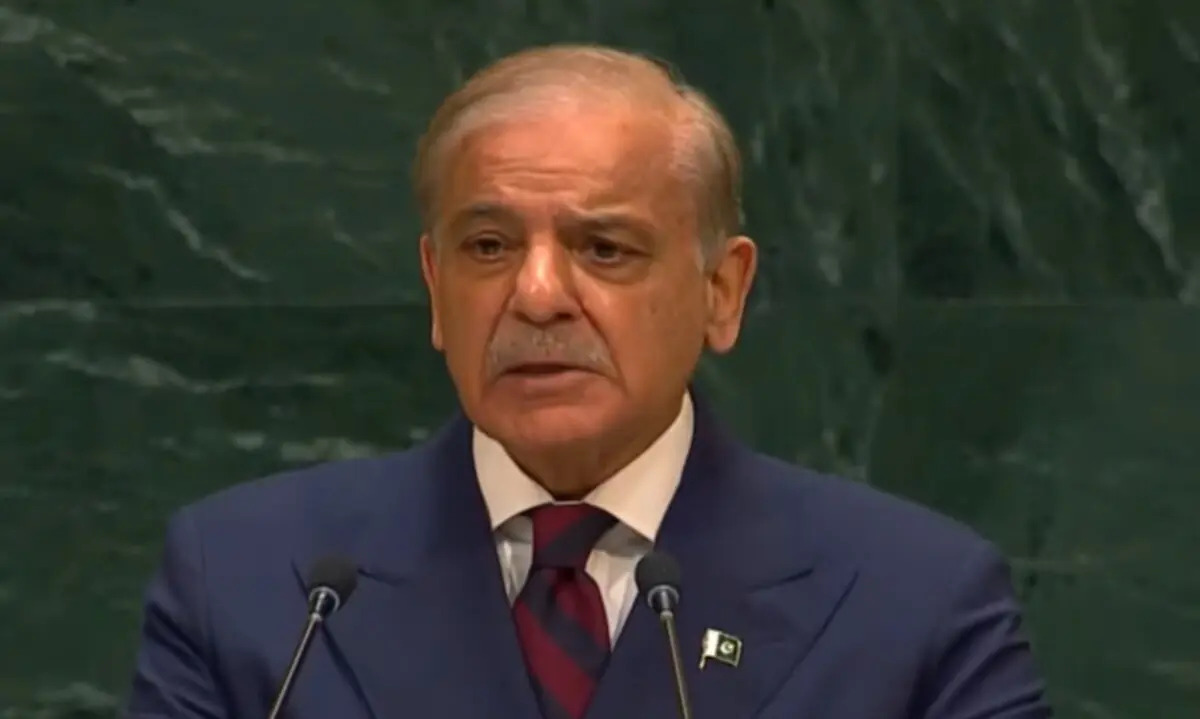
Prime Minister Shehbaz Sharif warned the UN General Assembly that any Indian attempt to divert Pakistan's water share will be treated as an act of war.
The Core Development
Addressing the 81st session of the United Nations General Assembly in New York on Friday, Prime Minister Shehbaz Sharif delivered an unequivocal warning regarding regional stability and transboundary water rights. Declaring that any attempt by India to stop, impede, or divert Pakistan's share of waters would be treated directly as an act of war, the premier emphasized that New York must take note of Islamabad's red lines. Prime Minister Sharif underscored that water must never be weaponized, asserting that international rivers should serve to nourish neighboring populations rather than act as instruments of division. Grounding his address in Pakistan's founding ethos, he referenced Quaid-i-Azam Muhammad Ali Jinnah's early declarations of support for the UN Charter, framing Pakistan's foreign policy within a framework of peaceful coexistence while maintaining absolute deterrence. Beyond bilateral hydro-politics, the prime minister also expanded his address to touch upon escalating conflicts in the Gulf region and the wider Middle East, condemning the widespread loss of civilian lives and calling for immediate international intervention to restore regional security.
Commercial & Economic Implications
For an agrarian economy like Pakistan, any disruption to transboundary water flows under the Indus Waters Treaty framework poses an existential threat to macroeconomic stability, commercial agriculture, and consumer price inflation. The agricultural sector, which accounts for a substantial share of national employment and raw material supply for the textile and manufacturing industries, relies heavily on predictable water allocation from the Indus Basin river system. A perceived or actual threat to water security directly impacts wholesale agricultural commodity markets, dampens domestic private investment, and heightens inflationary pressures on staple food items. Furthermore, heightened geopolitical tensions between the two nuclear-armed neighbors disrupt cross-border supply chain expectations, inflate sovereign risk premiums, and complicate foreign direct investment inflows into Pakistan's retail, logistics, and industrial sectors.
Related Intelligence: Netanyahu UN Address Deepens Diplomatic Rifts and Shakes Commodity Markets
Stakeholder Perspectives & Market Reactions
Business councils, agricultural associations, and legal experts across Pakistan have overwhelmingly backed the prime minister's assertive stance, viewing water security as a non-negotiable prerequisite for national survival and economic viability. Domestic trade bodies and chambers of commerce point out that protracted uncertainty over water rights undermines long-term planning for commercial farming, agro-processing units, and heavy industrial output. Legal analysts specializing in international water law argue that New Delhi's repeated calls for modifications to the decades-old Indus Waters Treaty violate bilateral cooperation norms, leaving Islamabad little choice but to draw firm diplomatic and strategic lines at premier global forums such as the United Nations.
Forward Outlook & Key Watchpoints
As diplomatic reverberations from the UNGA address settle, policymakers, economic analysts, and international monitors are closely watching for potential diplomatic fallout or retaliatory policy postures between Islamabad and New Delhi. Key watchpoints include future bilateral engagements under the Permanent Indus Commission, reactions from multilateral lenders regarding climate and water infrastructure funding in Pakistan, and any formal legal maneuvers in international courts of arbitration concerning contested hydroelectric projects. Domestic agricultural planners will simultaneously monitor seasonal river discharge volumes and meteorological forecasts to safeguard domestic food security against ongoing climate vulnerabilities and geopolitical friction.
Join Our Official WhatsApp Channel
Receive live commodity alerts, policy changes, and commercial intelligence directly on WhatsApp.