
Pakistan Brokers Iran-US Accord as Pezeshkian Reaffirms Islamabad MoU
Prime Minister Shehbaz Sharif announced that Iranian President Masoud Pezeshkian has reaffirmed full commitment to the Islamabad MoU, signaling a breakthrough in regional diplomacy and trade corridors.
The Core Development
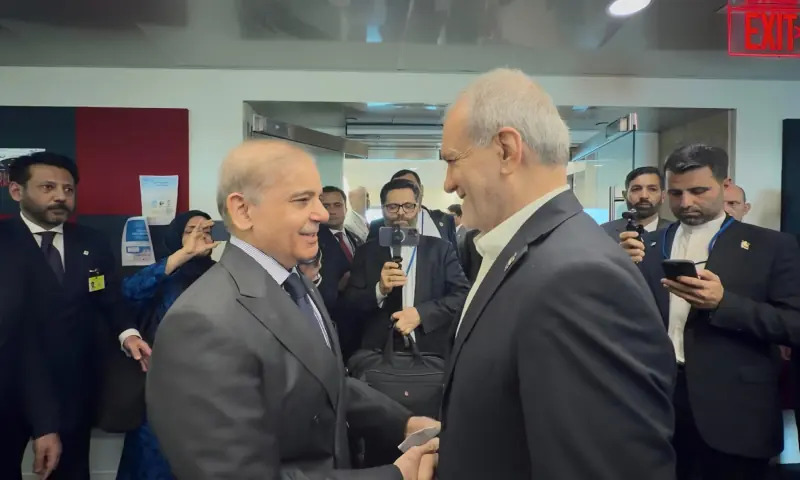
In a significant diplomatic breakthrough on the sidelines of the 81st session of the United Nations General Assembly in New York, Prime Minister Shehbaz Sharif held extensive, high-level consultations with Iranian President Masoud Pezeshkian. The core focus of the bilateral engagement centered on the implementation status of the Islamabad Memorandum of Understanding (MoU), a pivotal 14-point interim framework originally formulated to defuse mounting geopolitical tensions and ongoing conflicts involving the United States and Iran.
Prime Minister Sharif revealed that President Pezeshkian explicitly stated that the Islamabad MoU remains entirely acceptable to Tehran and that the Iranian administration stands fully prepared to advance its provisions. Pakistan played a central mediating role in brokering this agreement, which was electronically signed in June. The framework stipulates immediate de-escalation measures, including the immediate reopening of the critical Strait of Hormuz by Tehran in exchange for the immediate lifting of economic and maritime blockades by Washington.
Commercial & Economic Implications
For Pakistan’s domestic economy, particularly for commercial hubs represented by Kalyar Traders, the reactivation of the Islamabad MoU carries monumental commercial significance. The potential reopening of vital maritime trade arteries and the normalization of Iranian commercial traffic are projected to immediately alleviate severe supply chain bottlenecks that have plagued regional commerce.
Lower shipping risks and the resumption of direct trade routes are expected to drive down soaring import costs for essential commodities, energy supplies, and industrial raw materials. In retail and wholesale markets across Pakistan, this diplomatic progress offers a promising trajectory toward mitigating inflationary pressures, stabilizing local currency valuations against erratic external shocks, and restoring consumer purchasing power. Reduced transport and insurance premiums in the Persian Gulf corridor will directly benefit local importers and exporters dealing in cross-border goods.
Related Intelligence: Australia Unveils Major OpenAI Breach on Global Stage at United Nations
Stakeholder Perspectives & Market Reactions
Business councils, trader associations, and industrial federations across Pakistan have expressed cautious optimism following the Prime Minister's announcement at the UNGA. Representatives from major chambers of commerce noted that a stable diplomatic environment between Washington and Tehran, facilitated by Islamabad, enhances Pakistan's strategic positioning as a regional economic mediator.
Legal and financial experts emphasize that while the political intent is robust, the practical execution hinges on verifiable compliance by all signatory parties. Market analysts observe that domestic equities and commodity futures reacted with measured stability, awaiting formal notifications regarding the rollback of economic sanctions and the complete resumption of normal banking channels tied to cross-border trade.
Forward Outlook & Key Watchpoints
As Islamabad and Tehran prepare to take the next steps, policymakers and business leaders will closely monitor several critical milestones over the coming weeks. Key watchpoints include the formal administrative timeline for lifting maritime blockades, the resumption of unhindered transit through the Strait of Hormuz, and the establishment of secure financial settlement mechanisms to facilitate bilateral and transit trade.
The successful operationalization of the Islamabad MoU will serve as a definitive test of regional diplomacy, offering a blueprint for sustainable economic integration and long-term price stability across South and West Asia.
Join Our Official WhatsApp Channel
Receive live commodity alerts, policy changes, and commercial intelligence directly on WhatsApp.