
Abbas Warns UN That Israeli Policies Threaten Palestinian Survival
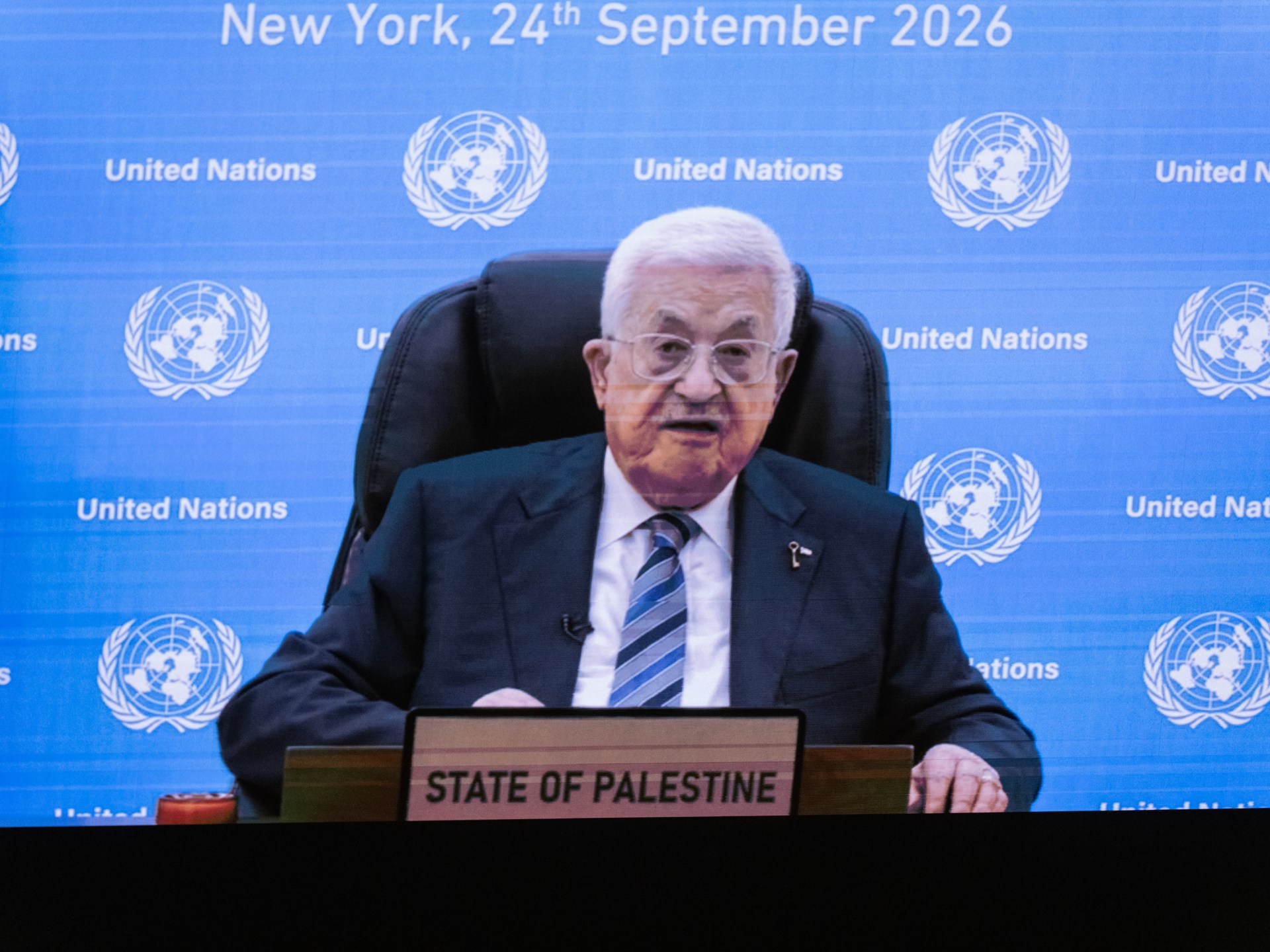
Palestinian President Mahmoud Abbas warned the United Nations that Israeli policies threaten the physical existence of Palestinians, asserting that preserving the two-state solution depends on safeguarding ancestral lands.
Geopolitical & Core Developments
Addressing the international community at a high-level diplomatic forum, Palestinian President Mahmoud Abbas issued a stark and uncompromising warning regarding the trajectory of the decades-long Israeli-Palestinian conflict. Abbas declared that current Israeli administrative and territorial policies threaten the very existence of the Palestinian population, framing the situation as an existential crisis that extends far beyond localized territorial disputes. He stressed that saving the dwindling prospects of a two-state solution is no longer a matter of mere diplomatic rhetoric, but an urgent operational imperative that begins with halting land expropriations, settlement expansions, and the displacement of indigenous communities. The speech drew a sharp line under the deteriorating security and political conditions in the West Bank and Gaza, highlighting a systemic breakdown in the peace process and a growing vacuum in multilateral governance.
Global Trade & Economic Ripples
While the immediate crisis is fundamentally humanitarian and geopolitical, the escalation of tensions in the Levant carries profound implications for global trade, commodity pricing, and regional economic stability. Sustained friction in the Middle East consistently reverberates through global energy markets, introducing a persistent risk premium to crude oil benchmarks. Insurance and freight costs for maritime trade traversing the Eastern Mediterranean and adjacent critical chokepoints face upward pressures as shipping operators reassess regional risk profiles. Furthermore, prolonged instability undermines investor confidence across the broader Middle East and North Africa (MENA) economic zone, impacting foreign direct investment, suppressing local currency values, and complicating fiscal planning for emerging market economies dependent on regional energy flows and trade corridors.
Related Intelligence: UN General Assembly Walkout During Netanyahu Address Deepens Diplomatic Crisis
International Reactions & Diplomatic Stances
The international community remains deeply fractured over the rhetorical escalation and the practical path forward. Representatives from various United Nations member states voiced profound concern over the deepening impasse, with traditional allies of the Palestinian cause reiterating calls for strict adherence to international law and relevant UN resolutions. Conversely, Western governments continue to balance expressions of humanitarian concern with steadfast diplomatic commitments to Israel's security, calling repeatedly for renewed bilateral negotiations rather than unilateral declarations. Multilateral bodies and economic analysts note that the widening chasm between Western diplomatic postures and Global South consensus is hardening trade negotiations, stalling multilateral frameworks, and complicating broader geopolitical alignments in international forums.
Strategic Outlook & Future Scenarios
Looking ahead, the trajectory of the Israeli-Palestinian conflict points toward heightened diplomatic polarization and potential localized escalations. Upcoming international summits and UN General Assembly debates are expected to feature intense lobbying over recognition of Palestinian statehood and accountability mechanisms. Observers warn that without a radical shift in enforcement mechanisms by the UN Security Council and major global powers, the two-state paradigm may become entirely unviable, paving the way for protracted unrest, intensified legal challenges at international tribunals, and secondary economic shocks across global commodity and energy sectors.
Join Our Official WhatsApp Channel
Receive live commodity alerts, policy changes, and commercial intelligence directly on WhatsApp.