
Oldest Shipwreck Discovery off Turkiye Reshapes Mediterranean Maritime History
Archaeologists have discovered the world's oldest known shipwreck off Turkiye's coast, with cargo analysis revealing advanced early Mediterranean mercantile corridors linking Anatolia directly with the Jordan Valley.
Geopolitical & Core Developments
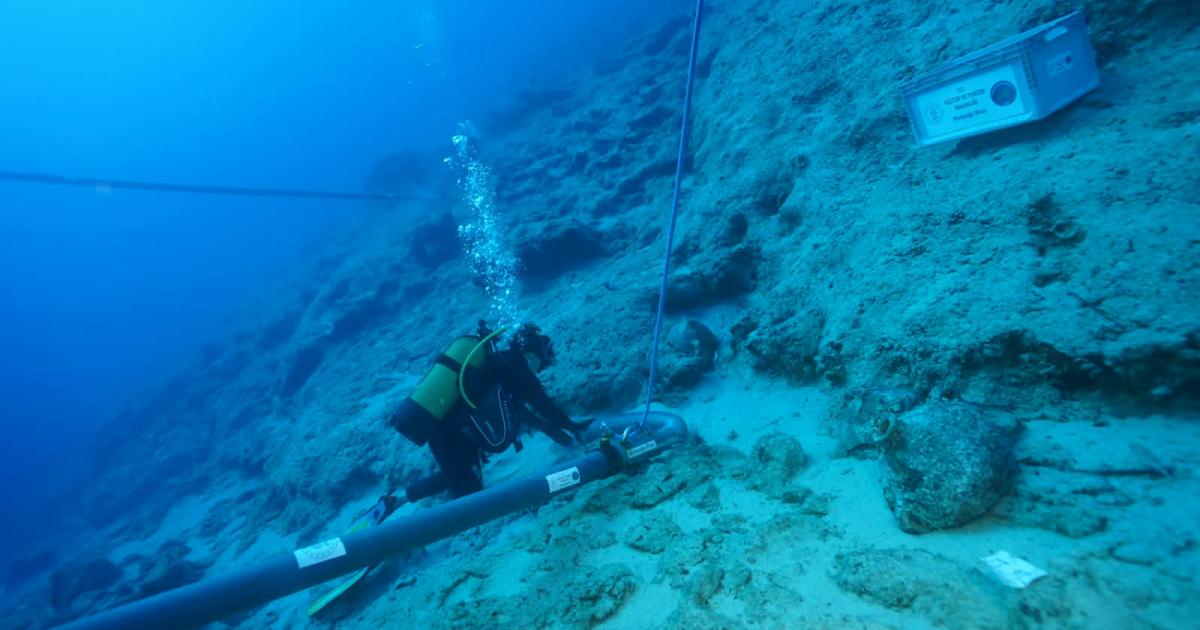
Marine archaeologists working off the Mediterranean coastline of southern Turkiye have unveiled the discovery of what is documented as the world's oldest known shipwreck. Led by multidisciplinary research teams collaborating with Turkish cultural authorities, the underwater excavation recovered intact storage jars whose provenance provides transformative data on early human statehood and inter-regional commerce.
Rigorous petrographic and compositional clay analysis conducted on the recovered ceramic storage jars has definitively traced their manufacture back to workshops situated across the Jordan Valley. This scientific determination establishes that institutionalized maritime corridors operated across the Eastern Mediterranean far earlier than established chronological frameworks indicated. Rather than rudimentary coastal cabotage, the vessel's trajectory points to structured, planned nautical transport connecting the Levant and Anatolian power centers. Turkish authorities have framed the find as an essential chapter in understanding Mediterranean connectivity, emphasizing the strategic importance of coastal Anatolian waterways across human civilization.
[Global Trade](/news/yemen-war-scenarios-houthi-red-sea-trade-impact) & Economic Ripples
While the discovery itself is archaeological, the revelation carries profound historical and economic implications for maritime trade theory. It illustrates that the foundational architecture of contemporary commercial sea lanes—linking agrarian production hubs to distant consumer markets via optimized maritime corridors—predates modern economic infrastructure by thousands of years. The Jordan Valley ceramic vessels functioned as the ancient world's standardized shipping containers, engineered specifically for bulk sea freight carrying agricultural commodities such as olive oil, wine, and resins.
The commercial ripple effects manifest primarily in cultural heritage tourism, maritime research development, and international museum economies. The Mediterranean basin continues to leverage its dense archaeological landscape as a strategic asset to attract institutional research investment and high-value cultural tourism. Moreover, the technologies applied in this deep-water recovery—ranging from autonomous underwater vehicles to remote high-resolution sonar scanning—demonstrate dual-use commercial applications that are actively mirrored in modern subsea pipeline maintenance, deep-water energy exploration, and undersea telecommunications cable deployment.
Related Intelligence: Pakistan and Oman Deepen Strategic Ties Amid Rising Middle East Tensions
International Reactions & Diplomatic Stances
International heritage bodies, maritime historians, and academic institutions have responded with widespread enthusiasm. Representatives aligned with UNESCO cultural heritage frameworks observed that the discovery emphasizes the universal value of underwater cultural assets and the urgency of protecting deep-sea beds from unregulated industrial dredging and seabed exploitation.
In Ankara, cultural ministry officials highlighted the discovery as a testament to the nation's pivotal position as the historic crossroads of global trade. Diplomatic representatives from Middle Eastern and European partner states have praised the scientific collaboration involved in the clay spectrometry, noting that shared archaeological heritage serves as a rare vector of cooperative cultural diplomacy across the traditionally contested waters of the Eastern Mediterranean basin.
Strategic Outlook & Future Scenarios
The trajectory of the excavation will move toward exhaustive deep-water mapping of the remaining hull structures and complete sedimentary sampling. Analysts anticipate that further recovered organic residues within the amphorae will clarify specific commodity pricing, barter standards, and agrarian trade volumes of the era.
Looking ahead, the successful deployment of advanced subsea survey platforms off Turkiye is likely to accelerate competing marine research initiatives across neighboring maritime sectors, notably near Greece, Cyprus, and Egypt. The project is anticipated to prompt new multilateral academic partnerships while simultaneously reinforcing sovereign interest in comprehensive seabed mapping across strategic Mediterranean shipping lanes.
Join Our Official WhatsApp Channel
Receive live commodity alerts, policy changes, and commercial intelligence directly on WhatsApp.