
Norway Wealth Fund Faces Pressure to Overhaul Ethical Defense Investment Rules
An independent review has recommended that Norway's $1.7 trillion sovereign wealth fund ease ethical restrictions on defense investments, including nuclear weapons manufacturers, amid shifting geopolitical realities and controversies surrounding Middle Eastern holdings.
Geopolitical & Core Developments
Norway's Government Pension Fund Global, the world's largest sovereign wealth fund with approximately $1.7 trillion in assets under management, faces a pivotal shift in its operational mandate. A government-appointed expert commission has recommended that the fund re-examine and ease its strict ethical exclusion policies regarding defense contractors, notably those involved in the production of nuclear weapons and modern military systems.
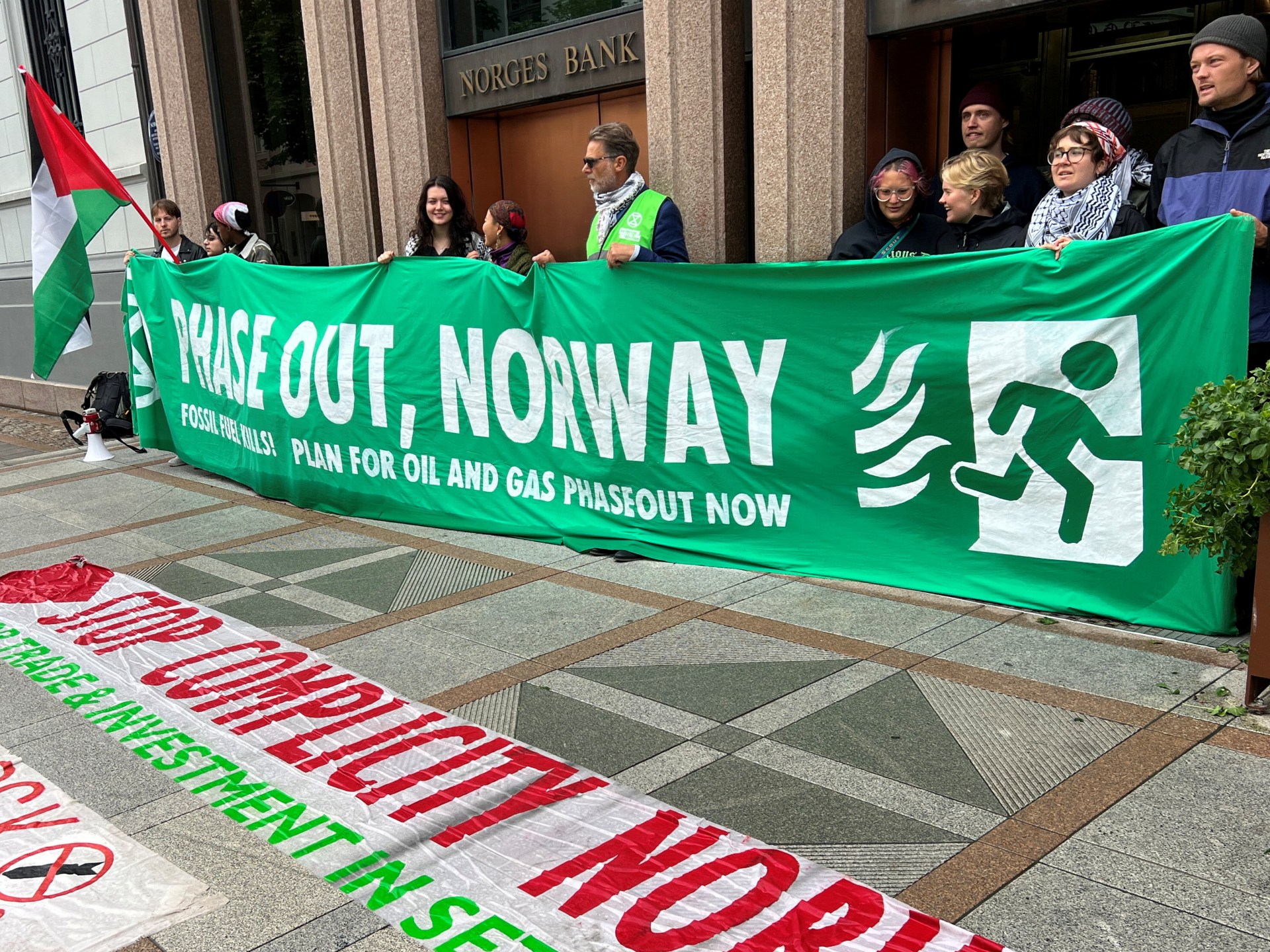
Established to preserve Norway's oil and gas revenues for future generations, the fund has historically operated under rigid ethical guidelines overseen by an independent Council on Ethics. These rules have long barred investment in companies manufacturing nuclear weapons, cluster munitions, and anti-personnel mines, as well as firms linked to severe environmental degradation or human rights violations. However, the geopolitical fallout from the ongoing conflict in Gaza—where the fund faced intense scrutiny and public protests over its minority holdings in companies supplying the Israeli military—precipitated a comprehensive reassessment of how ethical guidelines are administered.
The review argues that the post-Cold War security architecture that informed these ethical constraints has fundamentally dissolved. Following the full-scale Russian invasion of Ukraine and rising tensions across the Indo-Pacific, European states have increasingly come to view defense capabilities not as moral compromises, but as essential public goods necessary to safeguard national sovereignty and international law.
Global Trade & Economic Ripples
Given the massive scale of the Norwegian fund—which holds roughly 1.5 percent of all globally listed equities—any realignment in its investment portfolio generates immediate ripples across global financial markets. A relaxation of ethical exclusions would potentially unlock billions of dollars in institutional capital for Tier-1 aerospace and defense contractors based in North America and Western Europe, many of which are partially involved in nuclear triad maintenance and advanced missile systems.
For international capital markets, this recalibration directly challenges the institutional dominance of Environmental, Social, and Governance (ESG) frameworks that have dominated European finance for over a decade. European sovereign funds, pension managers, and private asset allocators have increasingly struggled to reconcile ESG prohibitions with the European Union's heightened defense procurement targets.
Moreover, defense technology supply chains—reliant on specialized commodities such as titanium, rare earth elements, and advanced semiconductor packaging—stand to benefit from sustained institutional capital inflows. Institutional validation from the world's premier sovereign investor could lower capital costs for defense primes, accelerating industrial expansion across NATO member states.
Related Intelligence: New Delhi Clamps Down on Protests Over Disenfranchisement Allegations
International Reactions & Diplomatic Stances
Market analysts and institutional observers view the commission's proposal as an acknowledgment of realpolitik. Financial analysts at European investment banks noted that removing blanket bans on multi-role defense contractors would significantly expand the fund's investable universe in strategic sectors currently outperforming broader equity benchmarks.
Conversely, non-governmental organizations, humanitarian watchdogs, and anti-nuclear proliferation coalitions have strongly condemned the recommendations. Representatives from the International Campaign to Abolish Nuclear Weapons (ICAN) warned that legitimizing nuclear arms manufacturers through state sovereign funds undermines decades of multilateral disarmament treaties, including the Treaty on the Prohibition of Nuclear Weapons.
Diplomatically, the Norwegian Ministry of Finance and the Storting (parliament) maintain that no final legislative changes have been enacted. Several coalition lawmakers have indicated that while defense preparedness must be supported, any revision permitting direct ownership in dedicated nuclear weapons programs faces significant parliamentary resistance.
Strategic Outlook & Future Scenarios
The Norwegian parliament is expected to deliberate on the commission's recommendations during the upcoming legislative session, where the government will present an updated white paper on fund management. The debate will serve as a bellwether for sovereign asset management across democratic states navigating an increasingly fragmented global order.
Should the Storting approve these regulatory amendments, other major European institutional funds—including sovereign vehicles and public pension systems across the Nordics and the Benelux region—are likely to follow suit, systematically dismantling legacy defense exclusions. This structural shift signals an era where state-backed institutional capital is increasingly deployed to reinforce allied defense industrial bases rather than adhering to rigid post-Cold War moral imperatives.
Join Our Official WhatsApp Channel
Receive live commodity alerts, policy changes, and commercial intelligence directly on WhatsApp.